
A new result from the MicroBooNE neutrino experiment has dashed hopes for a neat resolution to several puzzles for physicists.
Articles on Standard model of particle physics
Displaying 21 - 40 of 54 articles
Particle physicists might be on the brink of a major breakthrough.

Record precision measurements at Cern may help explain why the universe has more matter than antimatter.
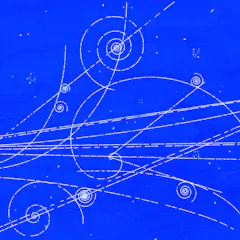
For 15 years, there has been a mismatch in physics. A particle called the muon wasn’t behaving the way theory predicted it should. A new theory and new experiment might solve this problem.

New particles or forces may exist that aren’t accounted for in the standard model.
A transcript of episode 9 of The Conversation Weekly podcast, including an update on the situation for Rohingya refugees in Myanmar living in camps in Bangladesh.
Plus why the situation for Rohingya Muslims living in Bangladesh has gone from bad to worse. Listen to episode 9 of The Conversation Weekly podcast.
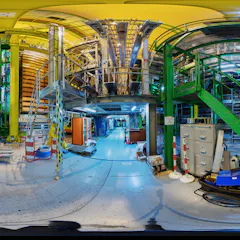
A long-sought crack in the Standard Model of particle physics may have been spotted.
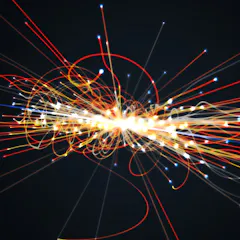
If the finding really is the result of new fundamental particles then it will finally be the breakthrough that physicists have been yearning for for decades.
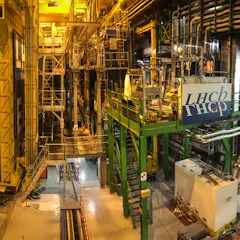
The theory of tiny particles isn’t complete. But new discoveries are helping scientists expand it.

The compact accelerators are 100 times smaller than traditional ones, and could easily fit inside hospitals and laboratories.

New physics may be needed to explain why there’s more matter than antimatter in the universe.
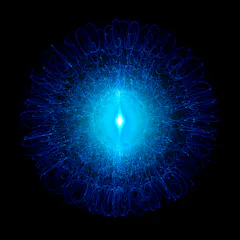
A recent experiment with atomic nuclei is hard to square with our current understanding of physics.
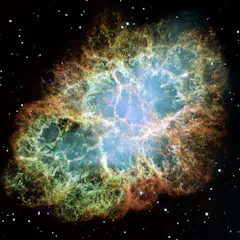
If we want an improved theory of particle physics, understanding neutrino masses is key.
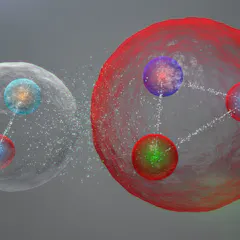
The LHCb experiment at CERN has discovered three new ‘pentaquark’ particles being created in high energy particle collisions at the Large Hadron Collider.
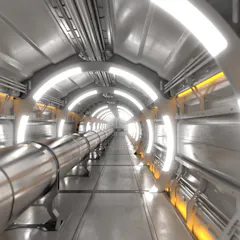
A new collider at CERN could push particle physics deep into an unexplored microscopic realm.
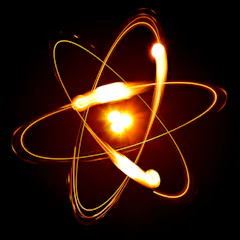
What shape is an electron? The answer, believe it or not, has implications for our understanding of the entire universe, and could reveal whether there are mysterious particles still to be discovered.
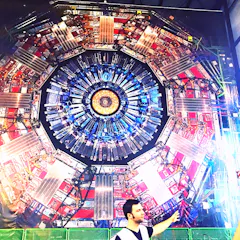
Scientists at Cern’s Large Hadron Collider have seen something that may force us to abandon everything we thought we knew about the world on the level of particles.
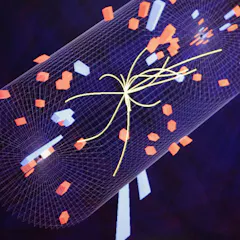
The Large Hadron Collider has generated mind-blowing science in the last decade – including the Higgs boson particle. Why is the LHC so important, and how will physicists use it in the years to come?
A particle physicist explains just what this keystone theory includes. After 50 years, it’s the best we’ve got to answer what everything in the universe is made of and how it all holds together.
Top contributors
-

Particle physicist, University of Cambridge
-
Head of School for Physics, University of Sydney
-
Professor of Physics, Head of Department, Lancaster University
-
UKRI Future Leaders Fellow, School of Physics and Astronomy, University of Edinburgh
-
Post Doctoral Research Associate, Centre for the Subatomic Structure of Matter, Adelaide University
-
Doctoral Student, College of Community and Public Affairs, Binghamton University, State University of New York
-
Professor, Philosophy of Science, The University of Melbourne
-
Associate Professor of Physics, Durham University
-
Senior Lecturer in Physics, University of Manchester
-
Professor of High Energy Physics, The University of Melbourne
-
Royal Society University Research Fellow and Lecturer in Particle Physics, UCL
-
Research Professor and Director of the International Institute for Accelerator Applications, University of Huddersfield
-
Reader in Particle Physics, Lancaster University
-
Senior Lecturer in Particle Physics Informatics, Brunel University of London
-
Marie Curie Fellow in Theoretical Physics, Queen Mary University of London