
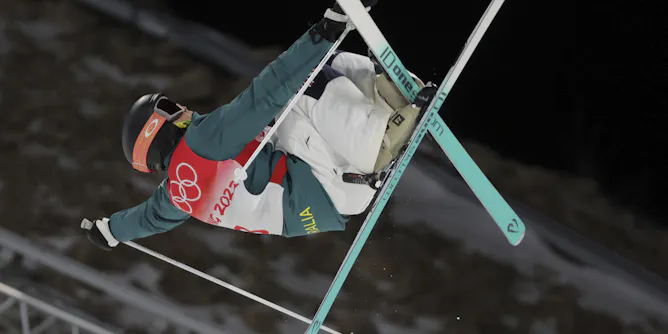
Executing the perfect manoeuvre on the slopes requires foresight, technical skill and being able to think on the go.
Articles on Sports science
Displaying 21 - 40 of 73 articles

High pressure during penalties can cause a whole range of problems before striking the ball, both psychological and physical.

Gymnasts need to carefully calibrate their leg muscles to gain optimum spring from the floor, springboard or beam. And their arms are crucial for balance and creating the right amount of rotation.
Plus, the troubled 1920 Antwerp Olympics and the parallels they have for Tokyo. Listen to The Conversation Weekly.

While a line of defensive players complicates a free kicker’s task to shoot on target, new research suggests it could also impede the goalie.

Our research with athletes suggests there may be two zones: an effortless ‘flow state’ and a more purposeful ‘clutch state’. Here’s how to decide which zone you need to be in — and how to get there.
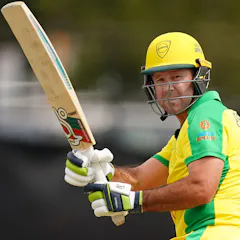
It’s what batsmen do on the pitch in between a bowler’s delivery that helps make them an expert in the game. They also need routines.
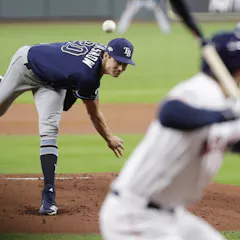
In baseball, a pitcher can throw a ball that seems to curve away just as it crosses the plate. How do they do it? It’s all about aerodynamics.
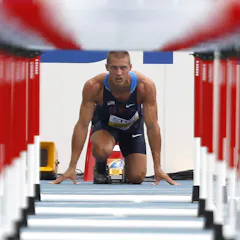
Coaches have long thought hurdlers and sprinters start their races differently – our research suggests they need to adjust their thinking.
Conspiracy theories help sports fans make sense of unexpected events – like when a whole rugby team becomes sick before a world cup final, or the retirement of Michael Jordan from basketball.
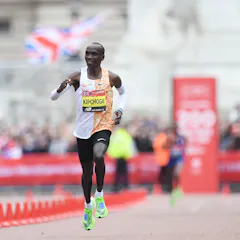
Many factors have been suggested to explain the dominance of Kenyan middle and long distance runners, and many have been disproved

The Greek body - white, muscular, masculine and middle class - dominated as an ideal type. This dominance continues today.

Elite football teams that do not have a winter break lose on average 303 more player-days per season to injuries than those teams that do.

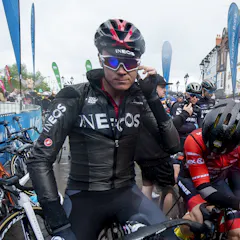
Most long distance road cycling events are won or lost in the final sprint of any race stage. Here’s one tip that could give you an extra 5kph advantage.

It’s not all about tiki-taka football. Our new research revealed how a unique philosophy, excellent coaching and cutting edge sports science help FC Barcelona get the best from its players.

Sports science suggests not.

Each player needs a tailor-made strategy based on his own physiology.

The continual breaking of World Records is the result of complex interactions between genetics, talent, equipment, training and nutrition.

There are many factors that set elite runners apart from other runners, including training volume, physiology, tendon function and running technique.
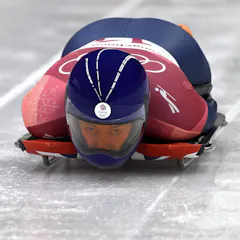
The science behind the suits that gave Britain’s medal-winning athletes a crucial speed boost.
Top contributors
-

Honorary Associate, Faculty of Business, School of Management, University of Technology Sydney
-
Professional Practice Fellow, University of Otago
-
Associate Professor of Sports Technology, Bournemouth University
-
Professor of Biomechanics, Edith Cowan University
-
Professor of Sports Science, Institute of Sport, Exercise and Active Living (ISEAL), Victoria University
-
Professor of Engineering Practice, Purdue University
-
Senior Lecturer in Sport and Exercise, Teesside University
-
PhD Candidate, Victoria University
-
Lecturer in Sports Biomechanics, Victoria University
-
Lecturer, School of Sport, Rehabilitation and Exercise Sciences, University of Essex
-
Digital journalism coordinator, Monash University
-
Professor of Health Sciences, Adelaide University
-
Doctoral Student (EdD) and a Teaching Fellow in Sport, Coaching and Pedagogy, University of Bath
-
PhD Candidate in Biomechanics and Skill Acquisition, Victoria University
-
Associate Professor in Exercise, Health and Sport Psychology, The University of Western Australia