
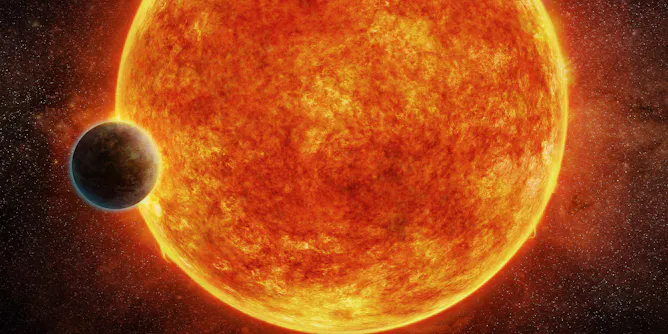
The exoplanet LHS 1140b may have a temperature that could allow for liquid water on its surface. Just possibly, it could support the existence of life.
Articles on Spectroscopy
Displaying 1 - 20 of 28 articles
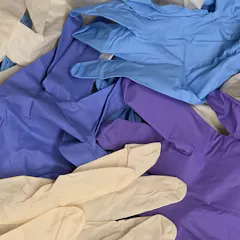
Tiny particles from certain lab gloves look like microplastics, and they can contaminate samples, new study finds.
Scientists on the African continent have made notable contributions to photonics research.
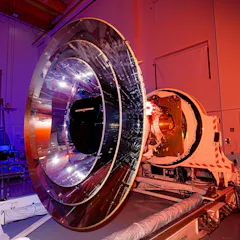
The SPHEREx mission will image 1 billion galaxies, 100 million stars, and 10,000 asteroids – and help to answer some of the biggest scientific mysteries.
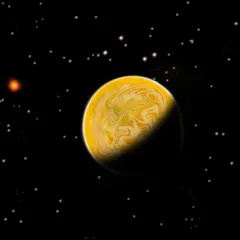
Astronomers have detected possible signs of gases released by volcanic activity.
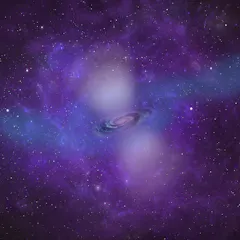
Today we’re able to finally reveal the first detailed picture of the gas shroud around a galaxy, extending 100,000 light years out into ‘empty’ space.
Nanoplastics are the smallest microplastics, far narrower than a human hair. Very little is known about their composition, structure or how they break down in the environment.
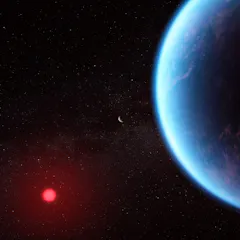
The James Webb Space Telescope has detected key carbon-bearing molecules on the potential ocean world K2-18b, including tantalising hints of a substance produced by tiny plankton on Earth.
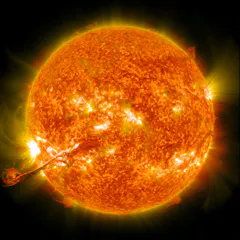
A new study of ‘solar twins’ shows a fundamental constant appears to be the same throughout our local galactic neighbourhood.
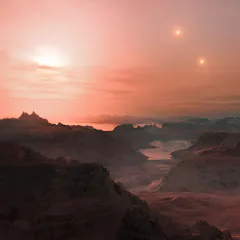
New telescope allows us to study the atmospheres of planets orbiting stars other than our Sun in unprecedented detail.

A new laser technique that measures the chemical make-up of whisky may help fight cancers.
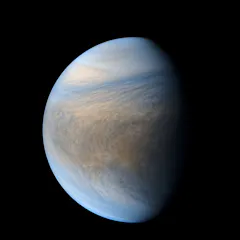
The discovery of phosphine in the acidic clouds of Venus can’t be explained by any known chemical or geological processes.
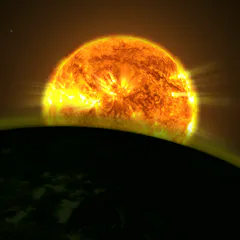
New research expands the pool of habitable worlds to include super-Earths with hydrogen-rich atmospheres.
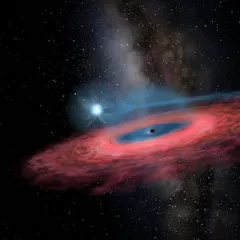
Astronomers using a new technique to hunt black holes found one 70 times as heavy as the Sun
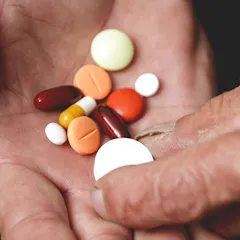
The technology to identify pills is getting cheaper and smaller. That means it could also be used to test the make-up of illegal pills at festivals and other events.

The latest version of the Spider-Man video game offers insights into how science could be taught more effectively to today’s college students, a researcher and video game enthusiast suggests.
Proteins guard their secrets closely, but once you get them to “sing”, there’s an enormous amount to learn.
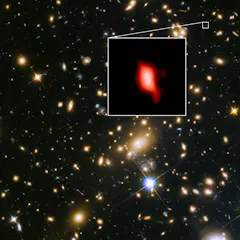
Astronomers have indirectly spotted some of the first stars in the universe by making their most distant detection of oxygen in a galaxy that existed just 500m years after the Big Bang.
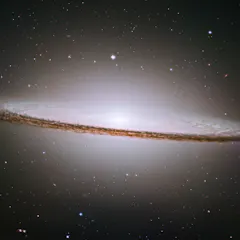
As galaxies get older they get rounder, and fall victim to the middle-aged spread that catches many of us humans here on Earth.
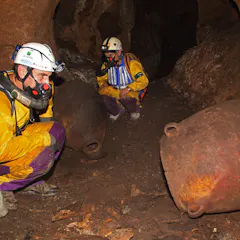
Growing grapes and making wine come with a lot of implications about a culture’s capabilities. Apparently, Sicily of 6,000 years ago was more sophisticated than archaeologists had given it credit for.
Top contributors
-

Associate Professor of Astronomy, Swinburne University of Technology
-
Head of Education and Public Outreach LSST, Australian Astronomical Observatory
-
Professor of Astronomy, Vanderbilt University
-
Senior Research Scientist, Pacific Northwest National Laboratory
-
Associate Dean Research, Faculty of Engineering and Information Sciences, University of Wollongong
-
Assistant Professor of Chemistry, Trinity University
-
Professor of Astrophysics and Royal Society University Research Fellow, University of Hertfordshire
-
Professor of Digital Humanities, Department of History, University of South Florida
-
Professor of Astrophysics, The Open University
-
Postdoctoral researcher in photosynthesis, Vrije Universiteit Amsterdam
-
Assistant Professor of Galaxy & Black Hole Astrophysics, ETH Zurich
-
Assistant Professor oif Civil and Environmental Engineering, University of Wisconsin-Madison
-
Associate Professor in Biophysics, University of Pretoria
-
Professor, National Astronomical Observatories, Chinese Academy of Sciences
-
Professor (Astrophysics), University of Southern Queensland