
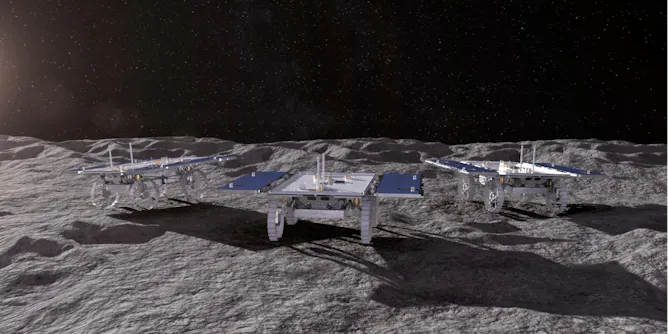
NASA’s CADRE mission will test a small team of autonomous rovers that can function without constant communication with Earth.
Articles on Spacecraft
Displaying 1 - 20 of 46 articles
A new mission to save NASA’s Swift observatory shows why catching a satellite that was never designed for rescue is one of the hardest jobs in spaceflight.
A data center could get more solar power and be kept much colder in space, but it would be extremely difficult to repair and update.
To travel between solar systems, a spacecraft would need extremely sophisticated – if not impossible – technology.

The twin spacecraft Blue and Gold could open a new era in space exploration and planetary science, powered by commercial partnerships and innovations.
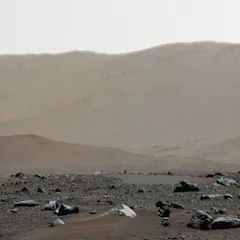
The Viking missions paved the way for future Mars missions and helped researchers understand the red planet’s climate and geology.
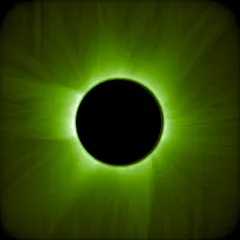
This solar eclipse was created by 2 satellites flying in formation, allowing astronomers to photograph the Sun’s corona.
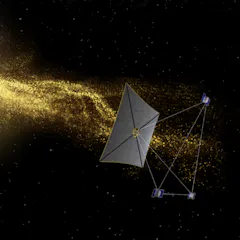
As more satellites are launched into orbit, space agencies are looking at how to predict space weather events that could harm them.
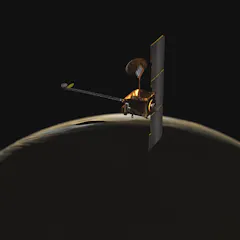
An aerospace engineer explains why NASA, Space Force and other agencies are using or testing aerobraking for more fuel-efficient spacecraft.
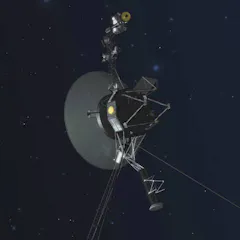
When a spacecraft is too far from the Sun to use solar panels, it needs a different reliable source of power.
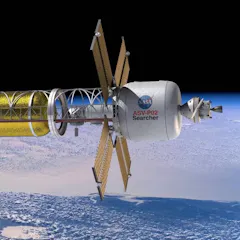
Sending a nuclear fission reactor into space means lots of technical questions. One research group is coming up with models that could improve how a nuclear rocket starts up and powers down.
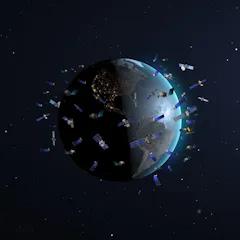
The space missions of the future will need to coordinate multiple satellites and spacecraft − and figure out how to refuel, repair and even replace them in orbit.

Spacecraft exteriors that automatically heal from radiation damage would change the game − one material shows promise.

When you’re an astronaut landing on the Moon, you can’t rely on the same gravitational cues we have on Earth. But regimented training with sensory devices could one day prevent spatial disorientation.

You can’t bring your AC to space, unfortunately, but innovative flow boiling and condensation research might lead to lighter, more efficient heating and cooling on spacecraft.
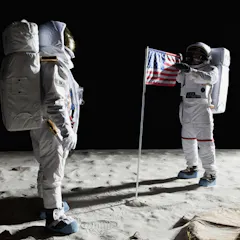
China has invested massively in its space capabilities in recent years and is now a major competitor with the US. But according to a space policy expert, the US still dominates space by most measures.
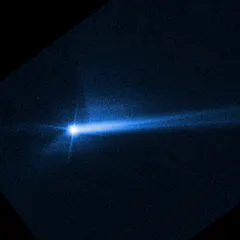
DART has forever changed the orbit of a small asteroid – and done so with much greater success than expected.

Both Virgin Galactic and Blue Origin are sending spacecrafts – and their billionaire founders – into suborbital flight. But what differentiates a suborbital flight from a trip around Earth?
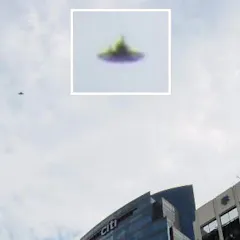
Some UFO sightings appear to demonstrate ‘advanced technology’. The Pentagon has confirmed some threaten flight safety, and potentially national security.

A minuscule particle of asteroid dust has helped reveal how celestial rocks like Earth might have sprouted life.
Top contributors
-

Associate Professor in Archaeology and Space Studies, Flinders University
-
Senior Lecturer in Space Systems Engineering, University of Glasgow
-
Ph.D. Candidate in Aerospace Engineering, University of Florida
-
Professor of Hypersonic Aerodynamics, The University of Queensland
-
Lecturer in Astronomy, Nottingham Trent University
-
Associate Professor, University of Texas Rio Grande Valley
-
Research Associate, The Open University
-
Assistant Professor, Northumbria University, Newcastle
-
Professor of Aeronautics and Astronautics, University of Southampton
-
Professor of Planetary Science and Astronomy, George Mason University
-
Professor of Sleep and Physiology and Director of Surrey Sleep Research Centre, University of Surrey
-
Professor of Planetary Geosciences, The Open University
-
Professor of Physics and Astronomy, UCL
-
Spacecraft Engineer, University of Bristol
-
Professor of Planetary and Space Sciences, The Open University