
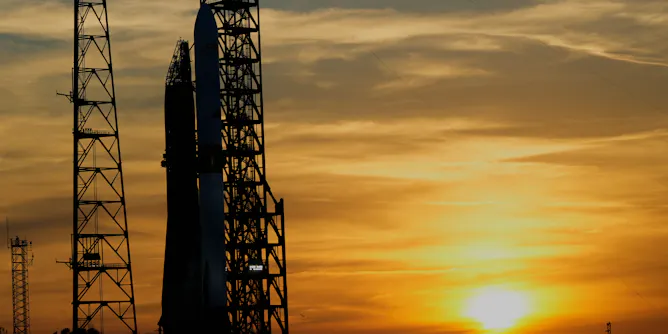
NASA has several contracts with Blue Origin as part of its Artemis program – this setback for the company could delay the program.
Articles on Rocket science
Displaying 1 - 20 of 37 articles
The first in a new series dedicated to little-known but highly influential scientists.
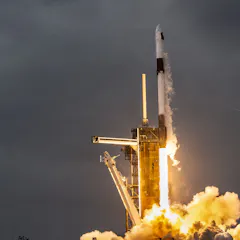
A rocket needs to overcome the force of gravity to leave Earth behind.
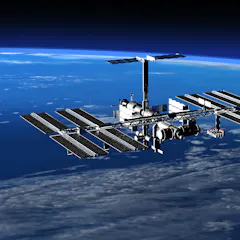
The plans to destroy a space station as large as the ISS have never been carried out before.
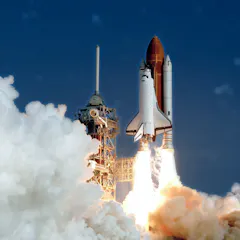
In some ways, a space rocket and a passenger aircraft fly much the same. But there is one big reason we can’t just take an aircraft into space.
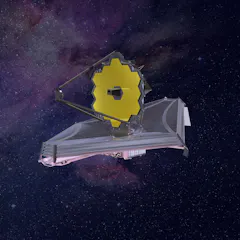
It will be a nail-biting wait as scientists launch and deploy the most complex observatory ever built.
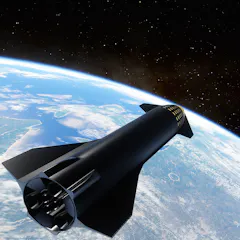
Three private companies have recently been commissioned to develop nuclear fission thermal rockets for use in orbit around the Moon.
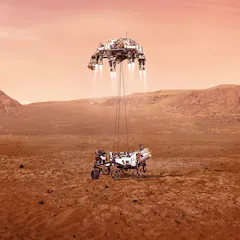
Scientists preparing to land the Rosalind Franklin rover in a few years are nervously awaiting the landing of Nasa’s Perseverance rover.
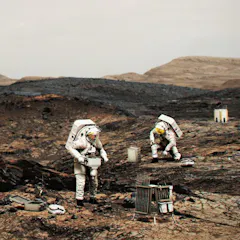
We’ve already sent probes to land on Mars. The challenge now is to get people there and bring them home again.
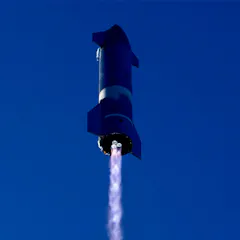
Starship’s groundbreaking design will help it land safely on Mars one day.
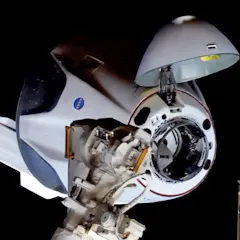
Extreme velocities and temperatures makes the return flight to Earth the most perilous part of a space mission.
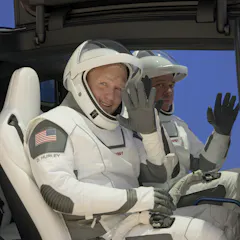
To intercept the ISS, the capsule must match the station’s speed, altitude and inclination.
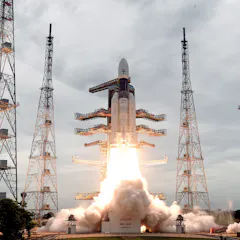
India’s Moon shot isn’t just about prestige. As launch costs fall, the space economy is poised to boom. A lengthening list of nations is eyeing the sky.

An equation from the 1890s can help us work out how high Hughes can actually reach with his homemade rocket.
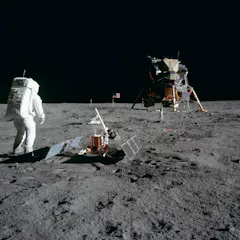
The technologies behind weather forecasting, GPS and even smartphones can trace their origins to the race to the Moon.
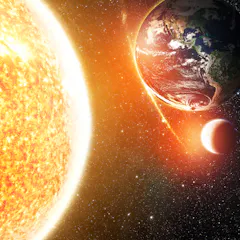
Even if we can prevent a global warming apocalypse, our planet won’t be safe forever – the sun will one day expand. So should we try to move the Earth to a wider orbit?
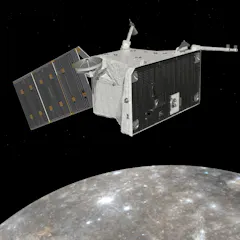
It will take more energy to get the BebiColombo spacecraft inro a stable orbit around Mercury than it would to send it all the way to Pluto.
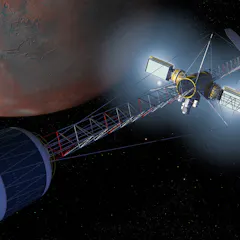
It is possible to split water into oxygen and hydrogen gas in zero gravity using sunlight, shows new study.
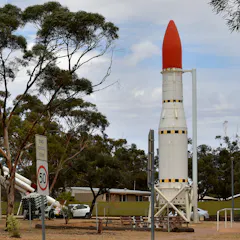
We’ve launched rockets from Woomera in South Australia, but in reality Australia could support multiple launch sites. And the closer to the equator, typically the better.

The launch of Elon Musk’s Falcon Heavy rocket is undoubtedly a spectacular feat of engineering - but the release of a sports car into orbit also says something about our values as human beings.
Top contributors
-

Senior Lecturer in Physics, Nottingham Trent University
-
Professor of Hypersonic Aerodynamics, The University of Queensland
-
Postdoctoral Fellow in Aeromechanics, The University of Texas at Austin
-
Senior Lecturer, Centre for Hypersonics, School of Mechanical and Mining Engineering, The University of Queensland
-
PhD candidate in Computational Physics, University of Cambridge
-
Ph.D. Candidate in Mechanical and Aerospace Engineering, University of California, Los Angeles
-
Postdoctoral research associate, University of Oxford
-
Professor of Engineering Dynamics and Vibration, University of Cambridge
-
Senior Lecturer, The University of Queensland
-
Associate Dean, Research Management, University of Sydney
-
Professor of Planetary Geosciences, The Open University
-
Ph.D. Candidate in Aerospace Engineering, Georgia Institute of Technology
-
Head of structural testing, Advanced Manufacturing Research Centre, University of Sheffield
-
Associate Professor, University of Texas Rio Grande Valley
-
Ph.D. Candidate in Public Policy, RAND School of Public Policy