

Rappers have been taking listeners on lyrical journeys to outer space for decades. A hip-hop scholar says their music helps inspire more students to pursue careers among the stars.
Articles on Space travel
Displaying 41 - 60 of 145 articles
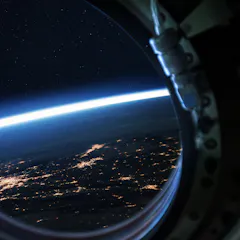
Several spaceflights scheduled over the next few years will take non-astronauts to space. But it’s not certain this privilege will ever extend to anyone beyond the extremely wealthy.
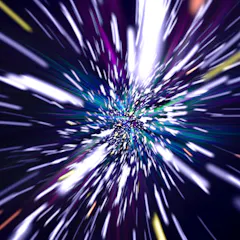
Bending space into warp bubbles to travel faster than light may never be a reality, but distorting the flow of time just might be possible.
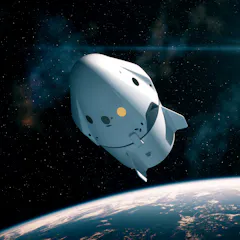
Exercise is important for astronauts to prevent weak muscles.
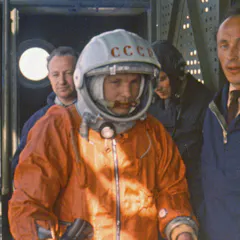
It’s 60 years since Gagarin’s world-first return from space. The cosmonaut never did make it to Australia, but his huge feat was celebrated here by many, despite tensions with the USSR.
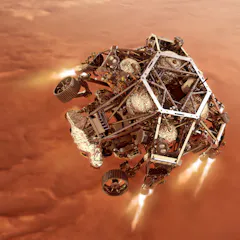
Perseverance follows in the tracks of Curiosity. The latter’s touchdown on Martian soil in 2012 marked the first successful use of several pioneering space technologies.
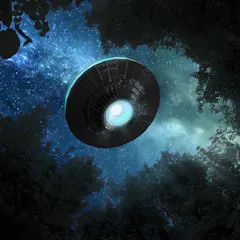
Aliens might want to contact us for the same reasons we are looking for them.
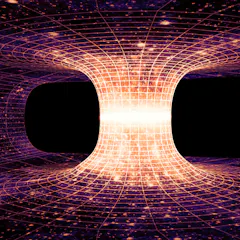
Calculations show that wormholes should create a spectacular display of gamma rays that we could try to observe.
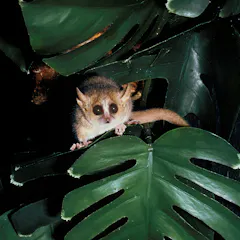
Gray mouse lemurs are more closely related to humans than mice. They also have the ability to hibernate, and researchers are hoping to learn how to transfer that ability to humans.
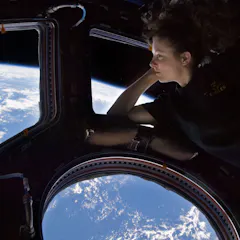
After two decades as a home to astronauts, the International Space Station still has plenty to teach us about how humans can live away from Earth.
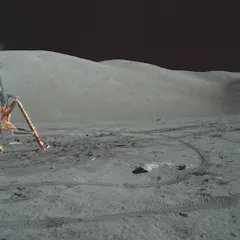
When it comes to managing the tussle for resources on the Moon, we might take lessons from New Zealand environmental law and TikTok ‘witches’.
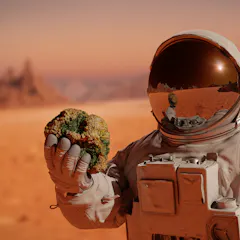
Bacteria can become more deadly and antibiotic-resilient in space. And while more research is needed to figure out how severe the risks are, they could be catastrophic.
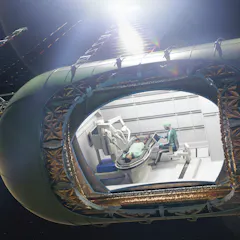
Space agencies are seeking new ways to be prepared for a surgical emergency on a mission to Mars.
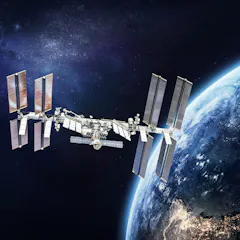
The distance between the ISS and Earth is the same as about 3,850 football fields. To bring the station down, rockets will lower it a bit, and then gravity will send it crashing the rest of the way.
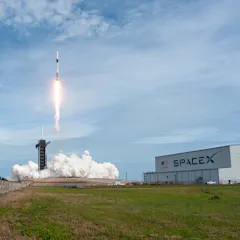
About 770 Australian entities are already developing space-related infrastructure, most of which are privately owned.
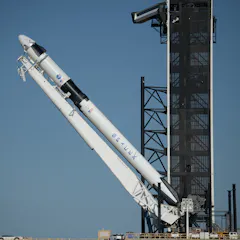
SpaceX’s launch of astronauts to the International Space Station will make it the first private company to launch humans to space. The effort has ramifications for NASA and spaceflight in general.
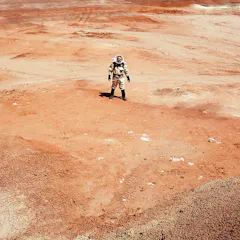
Understanding isolation’s effects on regular people, rather than those certified to have ‘the right stuff,’ will help prepare us for the future, whether another pandemic or interplanetary space travel.
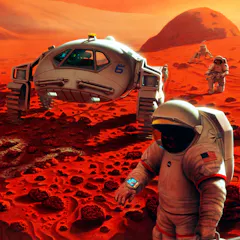
An expert explains the challenges of a mission to Mars for younger readers.
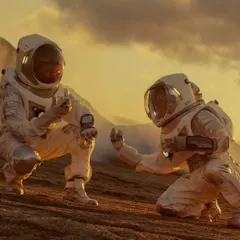
The first Martian might just be a human being.

An equation from the 1890s can help us work out how high Hughes can actually reach with his homemade rocket.
Top contributors
-

Associate Professor in Archaeology and Space Studies, Flinders University
-
Professor of Planetary and Space Sciences, The Open University
-
Professor of Aerospace Medicine and Rehabilitation, Northumbria University, Newcastle
-
Professor of Hypersonic Aerodynamics, The University of Queensland
-
Senior Lecturer, Centre for Hypersonics, School of Mechanical and Mining Engineering, The University of Queensland
-
Kevin Orrman-Rossiter is a Friend of The Conversation.
Sterrenkenner, History & Philosophy of Science, The University of Melbourne
-
Professor of Astrobiology, UNSW
-
Associate Dean of Innovation and Engagement, Swinburne University of Technology
-
Space Plasma Physicist, Imperial College London
-
Senior Lecturer in Physics, Nottingham Trent University
-
Associate Professor, University of Texas Rio Grande Valley
-
Associate Professor of Hip-Hop, University of Virginia
-
Reader in Astrophysics, Keele University
-
Senior Lecturer in Space Systems Engineering, University of Glasgow
-
Professor of Strategy, Warwick Business School, University of Warwick