
In the future we might get sick of hearing people tell their stories about going to the Moon. Perhaps the Moon will just be like thinking about today’s Antarctica – a remote but accessible place.
Articles on Space junk
Displaying 41 - 60 of 73 articles
There needs to be an international approach regarding the management and disposal of space junk.
On 27 March, India announced it had successfully conducted an anti-satellite missile test, Mission Shakti. India is now the fourth country in the world displaying this capability.
This year the Apollo 11 mission turns 50 - but what does the future hold for the Moon? The ephemeral shadows cast by human artefacts may soon be joined by more permanent scars of lunar mining.

In the space beyond Earth’s atmosphere, countries are focusing on nationalist pursuits and ignoring the consequences for the rest of humanity. How can we keep the peace and build a sustainable future?
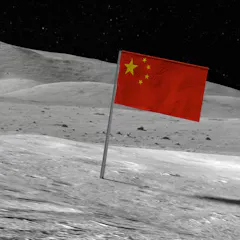
China just became the first country to land a probe on the far side of the moon. It’s a technological achievement and another sign of China’s capabilities and ambitions in space.
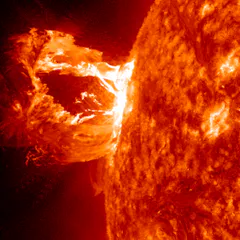
At the end of the day, the problem is that no-one on Earth wants nuclear waste stored near them, and it’s not safe or cost-effective to blast it into space.
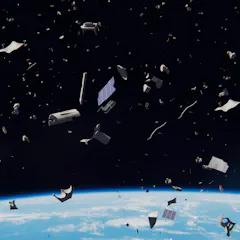
Countries developing technology that removes or blasts away space junk may appear to be doing a public service. But those same technologies can destroy military and communications satellites.
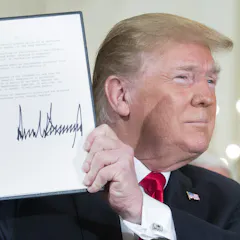
The Outer Space Treaty has guided global exploration and use of outer space since 1967. Trump’s ‘Space Force’ may not be a good fit.
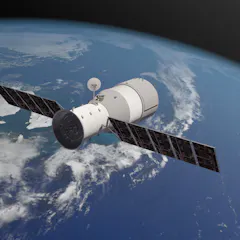
China’s space station Tiangong-1 is about to crash back to Earth any day now. It’s out of control too so no one really knows where it will land. So what if it hits you or your house?
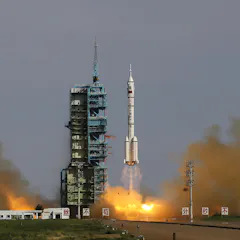
Air resistance makes it near impossible to predict the path of a crashing satellite.
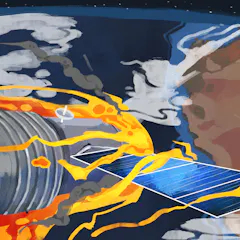
China’s Tiangong-1 space station is hurtling around Earth out of control and about to come crashing down. It’s just one of thousands of pieces of space junk left orbiting our planet.
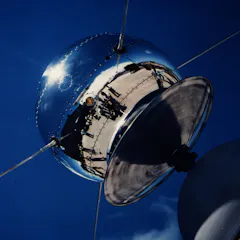
When Vanguard 1 – the “grapefruit satellite” – was launched in 1958, its only companions were Explorer 1 and Sputnik 2. Soon it may have thousands of descendants swarming around it.

The launch of Elon Musk’s Falcon Heavy rocket is undoubtedly a spectacular feat of engineering - but the release of a sports car into orbit also says something about our values as human beings.
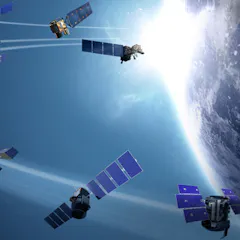
By taking on the role as leader in space traffic management, Australia can gain international power and exploit commercial opportunities.
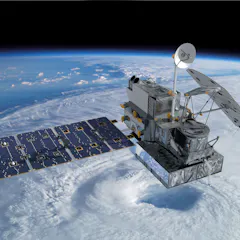
We’ve all seen videos of satellites being blasted off into space - but once they’re locked in orbit around the earth, how do we bring them back down?

Protecting culturally significant spacecraft enables people on Earth to feel connected to space as the common heritage of humanity.
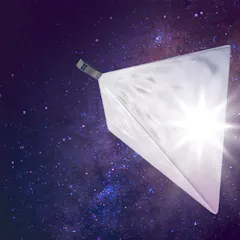
It promises to be one of the brightest objects in the night sky once the Mayak satellite unfolds a giant pyramid reflector. But what is it going to do?
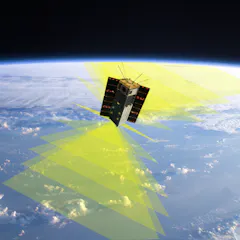
As technology advances, tiny satellites no bigger than a loaf of bread have advanced from just proving they work to being big contributors in answering science questions.
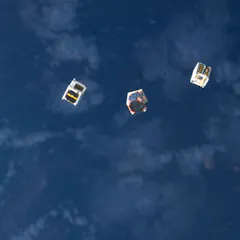
Just about anyone can get a tiny, cheap satellite into orbit these days. As we consider how to deploy them responsibly, inspiration comes from an amateur community of enthusiasts.
Top contributors
-

Associate Professor in Archaeology and Space Studies, Flinders University
-
Professor of Strategy and Security Studies, Air University
-
Associate Professor, Astronomy, University of Regina
-
Professor, Physics and Astronomy, University of British Columbia
-
Associate Dean of Innovation and Engagement, Swinburne University of Technology
-
Associate Professor in Astronomy, Monash University
-
Professor and Associate Dean (Environment and Sustainability in Faculty of Science), The University of Melbourne
-
Emeritus Professor of International Law, Western Sydney University
-
Associate Professor, RMIT University
-
Professor of Planetary Science, University of Arizona
-
Professor, Swinburne University of Technology
-
Professor, Adelaide University
-
Senior Lecturer in International Relations, University of Bristol
-
Professor of computer science, University of Liverpool
-
Professor of International Studies; Adjunct Professor of Law, University of Washington