
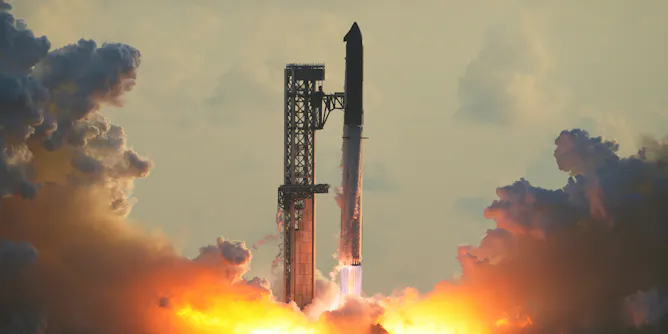
Starship’s heat shield is made of up of an array of ceramic tiles. Each is a small component, but together they have large consequences.
Articles on Earth orbit
Displaying 1 - 20 of 46 articles

Would you guess that the Earth is spinning at 1,000 mph around its axis and at the same time hurtling through space on its orbit around the Sun at 67,000 mph? Here’s why you don’t feel all that motion.
The success of Jinan-1 points the way towards networks of quantum microsatellites, making secure global communication a real possibility.
August 5 was a whole millisecond shorter. Strap in for the full explanation.
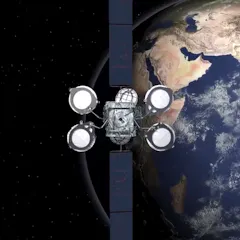
The Intelsat 33e communications satellite unexpectedly broke up in orbit, creating at least 20 fragments. How do we track the growing amounts of orbital debris?

The tilt of the Earth and your distance from the equator are just 2 reasons why summer’s not year-round.
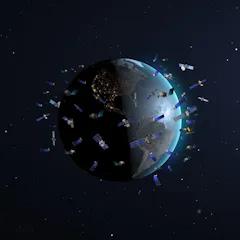
The space missions of the future will need to coordinate multiple satellites and spacecraft − and figure out how to refuel, repair and even replace them in orbit.
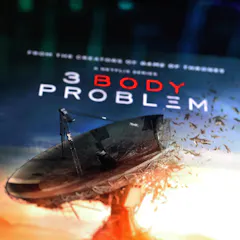
The Netflix series ‘3 Body Problem’ is based on Liu Cixin’s scifi novel that follows what happens to the alien residents of a planet that orbits two stars.
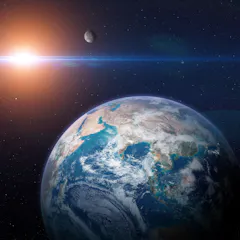
2024 is a leap year, when the shortest month mops up a bit of leftover time. But the extra day also tells us about space – and our place in it.
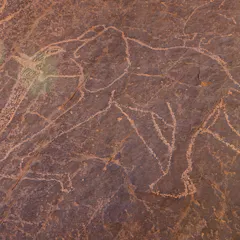
The Sahara Desert is green and vegetated every 21,000 years. A climate model shows why.
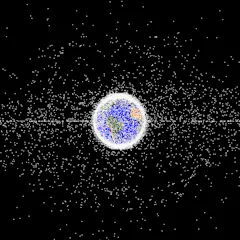
Earth’s orbits are getting more and more crowded. To keep track of everything and avoid collisions and catastrophes, we need a new field: space domain awareness.
An astronomer takes us on a tour of the universe to learn about the birth of stars and planets and how they get their spin.
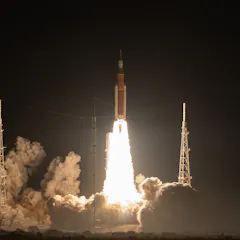
When the Orion Crew Capsule orbits the Moon there will be no one on board. But the mission will mark a key step in bringing humans back to Earth’s dusty sidekick.

Current trends suggest that powerful nations are defining the rules of resource use in space and satellite access in ways that will make it hard for developing nations to ever catch up.

The winter solstice is past, but bundle up – January is when winter really arrives in many parts of the Northern Hemisphere.

Activities in space today are far more numerous and complicated compared to 1967, before humans had landed on the moon or Elon Musk had been born. Two experts explain the need for better laws to keep space peaceful.

The largest orbital telescope ever made will allow astronomers to study the atmospheres of alien planets, learn about how stars form in the Milky Way and peer into the farthest reaches of the universe.
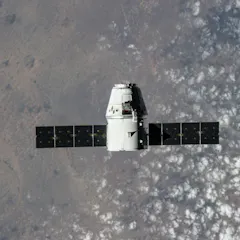
The Inspiration4 mission sent four civilians to space for three days. Though still funded by a billionaire, the mission is a step forward in the nascent space tourism industry.
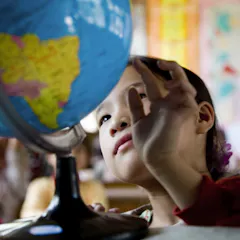
The Earth is constantly changing in natural ways, but most of those changes are very slow. Humans are speeding up other changes with global warming.
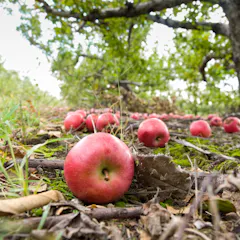
Gravity is something every person on Earth intuitively understands: It is what keeps you on the ground. But how come gravity pulls down, rather than pushes up? Einstein came up with the answer.
Top contributors
-

Director of the Abrams Planetarium, Michigan State University
-
Professor, Swinburne University of Technology
-
Associate Dean of Innovation and Engagement, Swinburne University of Technology
-
Professor (Astrophysics), University of Southern Queensland
-
Associate Professor in Archaeology and Space Studies, Flinders University
-
Clinical Professor of Space Leadership, Policy and Business, Arizona State University
-
Professeur , Sciences de la Terre et de l'atmosphère, Université du Québec à Montréal (UQAM)
-
Professor of Astronomy, UMass Amherst
-
Assistant Professor in Foundation Engineering and Physical Sciences, University of Nottingham
-
Professor, School of Engineering and Technology, CQUniversity Australia
-
Professor of Air and Space Law, University of Mississippi
-
Senior Curator (Astronomy), Museums Victoria Research Institute; The University of Melbourne
-
Emeritus professor, Physics, Carleton University
-
Associate Professor, RMIT University
-
Postdoctoral Fellow in Aeromechanics, The University of Texas at Austin