
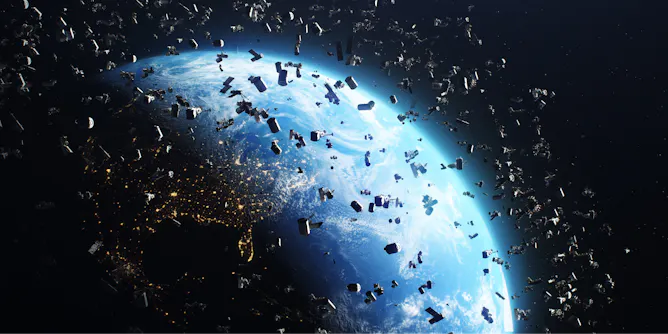
Countries have submitted applications for hundreds of thousands of new satellites to be launched. The scale poses challenges for overcrowding orbit, with environmental and safety challenges.
Articles on Space junk
Displaying 21 - 40 of 73 articles
Earth’s orbits are getting more and more crowded. To keep track of everything and avoid collisions and catastrophes, we need a new field: space domain awareness.
Treaties meant to ensure sustainability in space don’t currently regulate private companies, and not every country has signed on to an agreement for sustainable space exploration.

A mysterious hunk of space junk buzzed through Australian skies last night. It may have been the third stage of a Soyuz 2 rocket just launched by Russia.
Rockets used to launch satellites fall back to Earth, and as their number grows, the risk faced by people living on the ground — or flying in airplanes — increases.
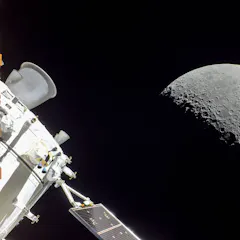
With more than 100 lunar missions planned in coming years, space junk near the Moon could become an issue for humanity. No agency tracks lunar space junk, so two astronomers decided to do it themselves.
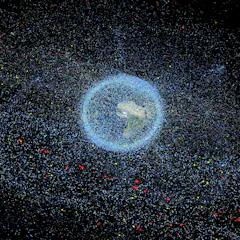
To date, not a single orbiting object has been recovered from space successfully. But several methods are in development to reduce the overpopulation of Earth’s orbit by man-made debris.
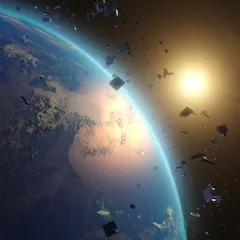
The southern hemisphere is more likely to be hit by space debris than the northern one.
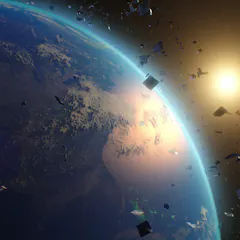
Russia’s testing of an anti-satellite weapon risked the life of astronauts on the International Space Station and could have astronomical impacts on Earth.
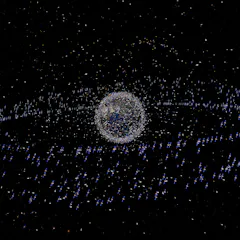
A Russian satellite has been destroyed in a missile strike, creating a vast amount of debris that joins the tens of thousands of pieces already in orbit around the Earth.
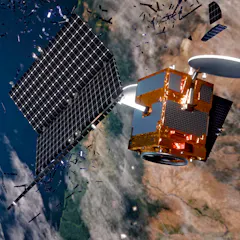
Russia destroyed one of its old satellites during a successful test of an anti-satellite weapon. A space security expert explains what this weapon was and the dangers of the expanding debris field.
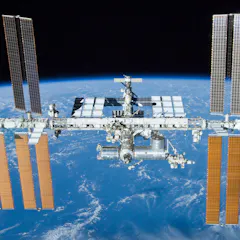
A close call for the International Space Station highlights the growing problem of space junk putting satellites at risk.
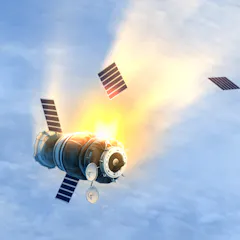
Chances are small that space junk will destroy property or harm a person, and existing space law could deal with such an event. But current law doesn’t address the bigger problem of space pollution.

China’s Long March 5B rocket, after a successful blast-off in April to deliver a space station module, is now on track to crash-land somewhere with a latitude between New York and New Zealand.
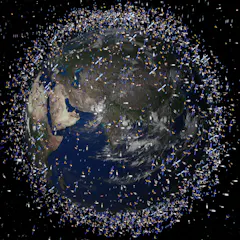
Earth orbit is filling up with satellites and space junk. Technological fixes can only go so far to deal with the problem.
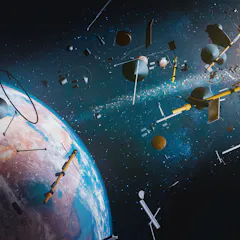
The shift toward mega-constellations is a challenge for global space governance.

SpaceX’s satellites will populate the night sky, affecting how we observe the stars. And this is just the beginning of private satellite mega-constellations.
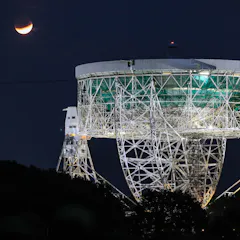
Radio telescopes are incredibly sensitive to phone network interference.
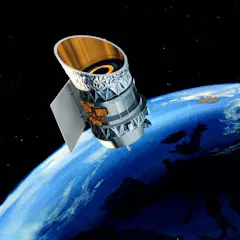
Two defunct satellites passed within metres of one another, prompting renewed focus on the dangers of space debris. But with many satellites treated as military secrets, how do we track the hazards?
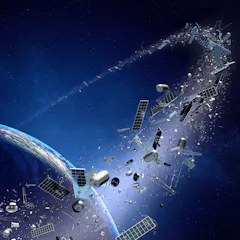
Satellites monitor climate change, guide people with GPS and keep us connected through texts and social media, but they’re under threat.
Top contributors
-

Associate Professor in Archaeology and Space Studies, Flinders University
-
Professor of Strategy and Security Studies, Air University
-
Associate Professor, Astronomy, University of Regina
-
Professor, Physics and Astronomy, University of British Columbia
-
Associate Dean of Innovation and Engagement, Swinburne University of Technology
-
Associate Professor in Astronomy, Monash University
-
Professor and Associate Dean (Environment and Sustainability in Faculty of Science), The University of Melbourne
-
Emeritus Professor of International Law, Western Sydney University
-
Associate Professor, RMIT University
-
Professor of Planetary Science, University of Arizona
-
Professor, Swinburne University of Technology
-
Professor, Adelaide University
-
Senior Lecturer in International Relations, University of Bristol
-
Professor of computer science, University of Liverpool
-
Professor of International Studies; Adjunct Professor of Law, University of Washington