
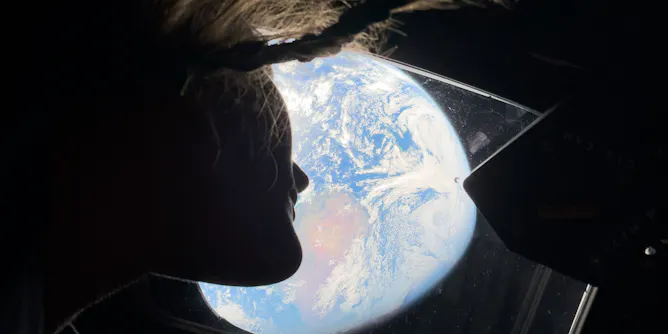
A space historian explains how the Artemis II crew reimagined some Apollo-era photos and found spectacular new angles.
Articles on Space history
Displaying all articles
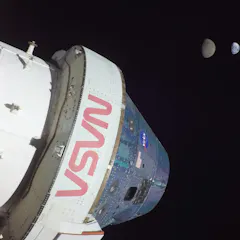
NASA’s Artemis II mission took decades of policymaking, engineering and financial support.
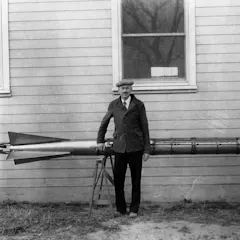
From World War II to the Apollo era, the space shuttle program and today’s privately developed commercial rockets, the landscape of spaceflight has changed dramatically.

Radio astronomy opened up the universe for scientists. They could map new elements across galaxies and also search for signals from extraterrestrial civilizations.
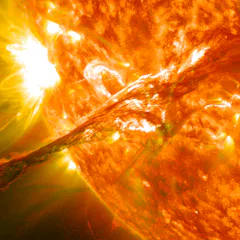
From communications outages to a brush with nuclear war, solar events like flares and coronal mass ejections have shaped human history.
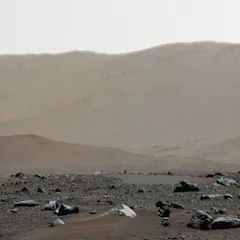
The Viking missions paved the way for future Mars missions and helped researchers understand the red planet’s climate and geology.
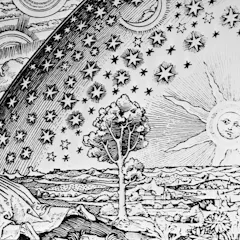
In the 19th century, astronomers could see Mars through telescopes, but not clearly. Some used their imaginations to fill in what the blurry images couldn’t convey.
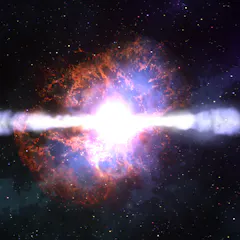
The discovery of an ancient star in the Milky Way’s halo is providing evidence for another source that would have produced the galaxy’s heavy elements.
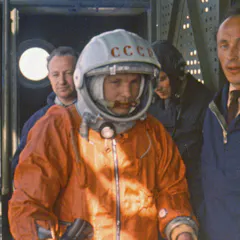
It’s 60 years since Gagarin’s world-first return from space. The cosmonaut never did make it to Australia, but his huge feat was celebrated here by many, despite tensions with the USSR.
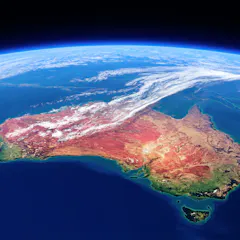
Australia was a significant global space player during the 1950s and 1960s. Now we’re one of only two OECD countries not to have a space agency. What happened?
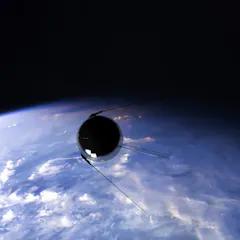
Launched by the Soviet Union in 1957, Sputnik 1 became the world’s first artificial satellite – a “simple” battery-powered radio transmitter inside an aluminium shell about the size of a beach ball. This…
Top contributors
-

PhD candidate, UNSW
-
Research Fellow/Reader in Planetary Physics, Lancaster University
-
Emeritus Professor of Astronomy, Australian National University
-
Academic, Research School of Astronomy and Astrophysics, Australian National University
-
Associate Professor in Archaeology and Space Studies, Flinders University
-
Curator, Planetary Science and Exploration, Smithsonian Institution
-
Research Professor of Applied Science, William & Mary
-
Professor of History, Miami University
-
Associate Professor of Environmental History, Georgetown University
-
Guggenheim Postdoctoral Fellow, Smithsonian Institution
-
Curator of Contemporary Spaceflight, National Air and Space Museum, Smithsonian Institution
-
Curator of the National Air and Space Museum, Smithsonian Institution