

Taking inspiration from Leonardo da Vinci’s studies of friction, the ‘sneaker squeak’ question cuts to a deep problem in physics.
Articles on Sounds
Displaying 1 - 20 of 28 articles
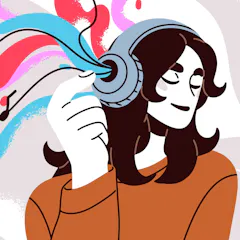
What has changed is not only how we listen, but what listening is for.

New research shows that even the sound of a name can influence how job candidates are judged.

A project carried out at the University of Birmingham has collected recordings from Ukraine that can help outsiders understand how the war has damaged it.
AI can streamline the painstaking work of mixing and editing tracks. But it’s also easy to see how AI-generated music will make more money for giant streaming services at the expense of artists.

Sounds such as sniffing, chewing and pen clicking are common tigger sounds for people with misophonia.

Here are some tips of how to rethink the sound of your leaking tap, which should help bring you a decent night’s sleep. Or you could just fix the tap.

Brown noise sounds like the ocean and some people say it helps them sleep. Here’s what the science actually says.

In today’s episode, we look at how sound and noise are used as tactics of protest and how practitioners are using environmental soundscapes to protest against racism and police brutality.

Recent research on Danish shows that not only is it hard for Danish children to learn their mother tongue, but adult Danes use their native language differently than speakers of other languages.

If you’ve ever cringed after hearing a recording of yourself, you’re not alone.

There is not much information on artefacts used by Stone Age humans to make sound and music – but the first comprehensive survey is a good start.

With people staying in, the world around them is becoming more quiet. In one Canadian city, natural sounds are being heard more often.
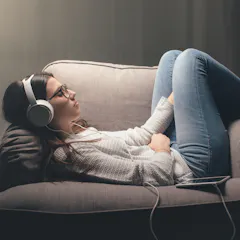
The music we choose to listen to not only allows us to retreat into a place of peace and privacy, but also helps frame our daily routines and interactions with others.

The human scream – a response we share with our primate relatives – is more nuanced than you might think.

CC BY-NC-ND4.84 MB (download)
The sounds our ancestors made are important because they teach us about spaces and behaviour and rituals of the time.
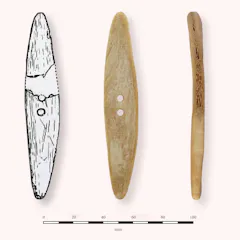
Working with bone artefacts from archaeological sites in South Africa’s southern Cape region, we’ve been able to show that some implements might have been used for sound production in the past.

When a sound is made, it spreads. And when it hits a hard surface that is far away, it bounces back and comes back to where the sound was made. That’s what we call an echo.

Sound, as a still relatively unexplored medium of urban design, provides an obvious starting point in the search for new relationships and identities in the contemporary city.
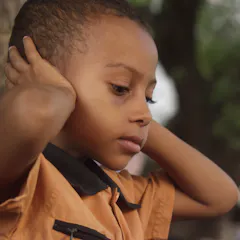
Communities have an increasing desire to be informed and included in local art, design and infrastructure projects. This has inspired new ways of dealing with noise-afflicted areas.
Top contributors
-

Postdoctoral fellow, University of Tübingen
-
Adjunct Senior Lecturer, Justice and Society, UniSA, Adelaide University
-
Research Fellow, School of Design, RMIT University
-
Associate Dean and Associate Professor in Social Sciences, University of Canberra
-
Professor, University of the Witwatersrand
-
Associate professor, University of Wollongong
-
Leading Education Professional, UNSW
-
Assistant Professor of Ethnomusicology, Washington University in St. Louis
-
Space Plasma Physicist, Imperial College London
-
GMAT and GRE Specialist, Former Lecturer, University of British Columbia
-
PhD Candidate, University of Wollongong
-
Professor of the Graduate School, University of California, Berkeley
-
Professor, Te Herenga Waka — Victoria University of Wellington
-
PhD candidate in Communication Studies, Concordia University
-
Associate Professor of Psychology, Vanderbilt University