
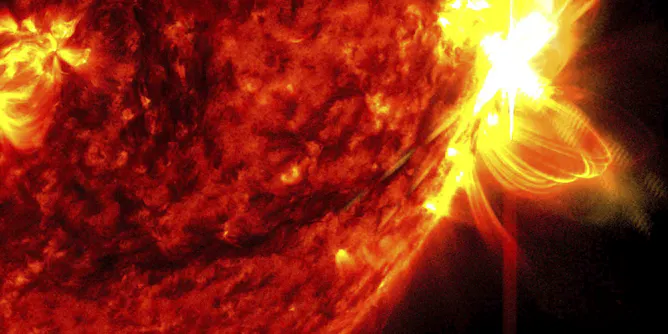
A massive solar flare could seriously disrupt life on Earth – but new NASA missions and others in development will help monitor the Sun.
Articles on Solar maximum
Displaying all articles
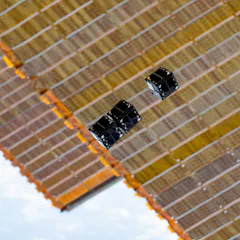
The Sun’s activity is what gives us beautiful auroras – but it also has dramatic negative effects on satellites that go around Earth in a low orbit.
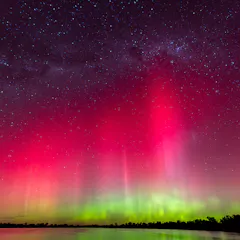
Australians were in for a Mother’s Day treat as auroras swept the skies. But there was little warning, and the spectacle didn’t repeat.

The sun is expected to reach its solar maximum in 2025. Recent auroras suggest that the maximum may be bigger than predicted.

A curious kid asks: Why are the northern lights only spotted at areas around the poles?
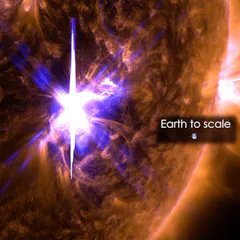
At a time in the sun’s cycle when space weather experts expect less solar activity, our star is going bonkers with solar flares and coronal mass ejections. What effects will Earth feel?
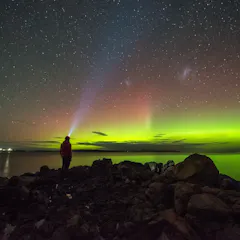
Over the past few months night sky watchers in the southern parts of Australia have been presented with lots of beautiful displays of the Aurora Australis or Southern Lights. So what causes the impressive…
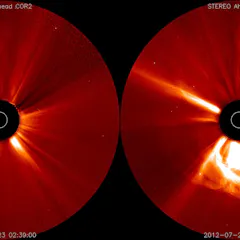
A sobering study published this month in Space Weather warns why we need to get better prepared for disruptive space weather events - particularly coronal mass ejections. The current solar maximum - a…
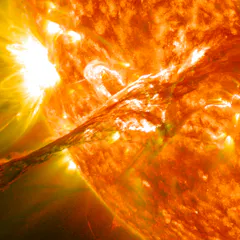
Over the past few months our planet has been impacted by an increasing number of solar explosions that have erupted from the sun’s surface. Even though next year’s predicted solar maximum – the period…
Top contributors
-

Associate Professor, RMIT University
-
Adjunct Researcher, University of Tasmania
-
Research Officer, RMIT University
-
Director, Laboratory for Atmospheric and Space Physics, University of Colorado Boulder
-
ARC Future Fellow, Physics, University of Newcastle
-
Associate Professor, Astronomy, University of Regina
-
Professor of Astronomy, Mathematics, and Physics, Athabasca University
-
PhD Candidate in Aerospace Engineering, Curtin University
-
Research Scientist, Laboratory for Atmospheric and Space Physics, University of Colorado Boulder
-
Researcher in Astrophysics, Smithsonian Institution
-
Researcher in Astrophysics, Smithsonian Institution
-
Astrophysicist, Smithsonian Astrophysical Observatory, Smithsonian Institution
-
Assistant Research Scientist in Climate and Space Sciences and Engineering, University of Michigan
-
Associate Professor of Space Systems, West Virginia University
-
Researcher in Physics and Astronomy, Dartmouth College