
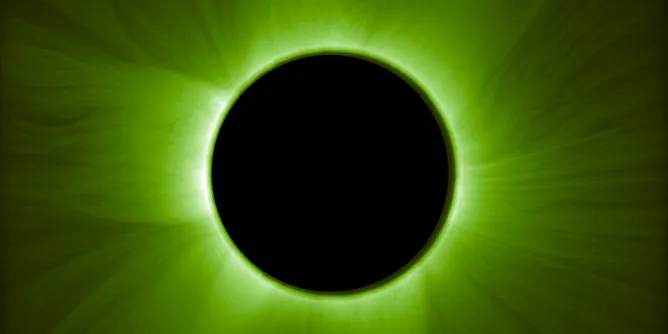
There’s a pressing need to understand and respond to what’s known as “space weather”.
Articles on Aurora
Displaying all articles
Four big outbursts from the Sun mean skies may light up much further from the poles than usual.

What’s so special about a supermoon? Hardly anything. There are better things to observe in the night sky, according to a professional astronomer.
Aurora forecasting is notoriously tricky. But there are ways to know where and when you should be looking – from email alerts to 30 minute forecasts.
Here’s what’s going on to cause more widespread northern and southern lights.

The aurora was noticeable with the naked eye – but was spectacular through a camera lens.
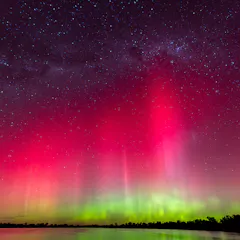
Australians were in for a Mother’s Day treat as auroras swept the skies. But there was little warning, and the spectacle didn’t repeat.
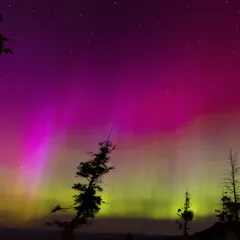
The electric rainbow of the aurora happens when excited atoms relax via ‘forbidden transitions’.

The sun is expected to reach its solar maximum in 2025. Recent auroras suggest that the maximum may be bigger than predicted.
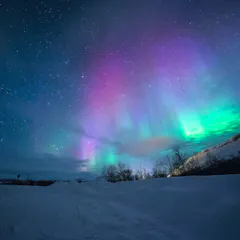
The aurora is one of nature’s most spectacular sights, a dazzling glow in the upper atmosphere driven by space weather.

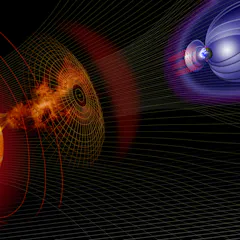
It’s often said that the aurora, or the northern lights, is caused by ‘particles from the Sun’. But in reality things are more complicated.
Researchers have found the first Australian evidence of this global event, during which people on Earth would have witnessed a multitude of spectacular auroras.
Top contributors
-

ARC Future Fellow, Physics, University of Newcastle
-
Associate Professor, RMIT University
-
Professor of Astronomy, Mathematics, and Physics, Athabasca University
-
Professor of Chemistry, UNSW
-
Honorary Research Fellow, Physics and Astronomy, University of Glasgow
-
Reader in Physical Sciences, Aberystwyth University
-
Professor of Physics, UCL
-
Lecturer in Orbital Mechanics, Surrey Space Centre, University of Surrey
-
Lecturer, Physics and Astronomy, University of Sussex
-
Space Physicist, NASA
-
Associate Professor in Astronomy, Monash University
-
Senior Lecturer in Physics, Nottingham Trent University
-
Postdoctoral Researcher in Radio Astronomy, University of Sydney
-
McKenzie Research Fellow in Earth Sciences, The University of Melbourne