

Economists try to create and use maps to navigate the world of human choices. But in some ways, these maps are limited.
Articles on Social sciences
Displaying 41 - 60 of 76 articles

Le Guin’s father, Alfred Kroeber, was at a forefront of a movement that rejected social Darwinism and cultural superiority. In his daughter’s fiction, we see these ideas come to life.
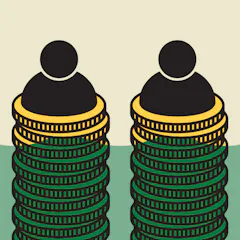
What if governments paid everyone a certain amount of money to cover basic needs?

If leaders of educational institutions are concerned about the employability of graduates, they should avoid over-investing in STEM subjects and stop snubbing liberal arts.

A new government program will create 10,000 work placements for undergraduates in only business and STEM subjects. Why not fund students to innovate in the social sector too?

Island philosophies can be used to decolonise university courses and teaching. They can also advance sustainable development models and, ultimately, achieve responsible tourism.

Most law schools frown upon their students questioning how laws were originally conceived. But a Canadian law school once argued convincingly that law should be taught as a social science.

Try thinking of exercise as fun and something to enjoy with friends.
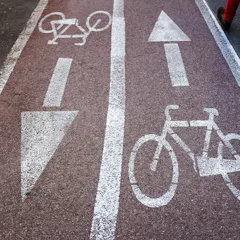
Successful policy interventions, especially those in the social realm influenced by the vagaries of human behaviour, don’t seem to travel well.

It’s become fashionable to suggest that generational designations are arbitrary or a ‘myth.’ But social scientists can pinpoint generational and cultural changes with a surprising degree of accuracy.
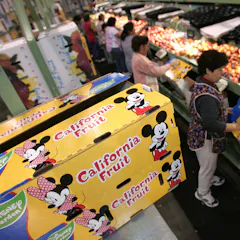
Defaults are powerful tools that policymakers and marketers can use to nudge us to make certain choices, whether in our interest or in theirs. How do we ensure they’re used responsibly?

The Anthropocene most likely started long before the 1950s.

Research has found people with relationship experience, all else being equal, tend to be more romantically desirable than people without relationship experience.
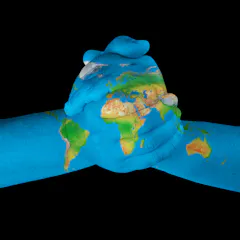
African academics living in the diaspora have access to resources that can really help their peers working on the continent.

The thousands of Wells Fargo low-wage employees who defrauded customers likely knew how it felt to face unfair overdraft fees or a deteriorating credit rating. So why did they do it?

What happens when you ‘brown-nose’ your boss is more complicated than you think – and can change how she’s perceived by colleagues.

Talking about food is a productive way to understand a complex world. The dinner table is a place where the shame of poverty is most acutely experienced.

On Twitter’s 10th birthday, we look at how researchers have used the platform for a range of studies, from predicting the next flu outbreak to identifying the happiest city in America.
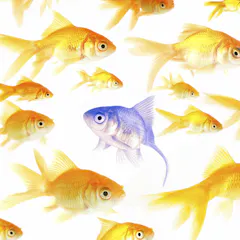
It’s a common quirk of human psychology to make the mental leap that the way things are is the way things ought to be. New research into how we explain the world around us sheds light on the phenomenon.

Irony can provide new theoretical insights. Social scientists should embrace it.
Top contributors
-

Adjunct professor, The University of Western Australia
-
Professor Emeritus, Education and History, York University, Canada
-
Professor of Public Ethics, Charles Sturt University
-
African Centre for Epistemology and Philosophy of Science (ACEPS), Philosophy Department, University of Johannesburg
-
Associate Professor of Marketing, Washington University in St. Louis
-
Professor of Mechanical Engineering, The University of Melbourne
-
Assistant Professor of Computer Science, McGill University
-
Professor and Chair of Philosophy, Wageningen University
-
Associate Professor in Management, Concordia University Research Chair in Resilience & Institutions, Concordia University
-
Associate Professor, School of Arts and Media, UNSW
-
Professor of Law, University of Oregon
-
Ph.D. Student in Developmental Psychology, University of Illinois Urbana-Champaign
-
Doctoral Student, University of Florida
-
Professor of Earth System Science, UCL
-
Lecturer in the Discipline of Psychology, James Cook University