

Lateral reading, self-nudging and a persistent refusal to feed the trolls are some of the ways one can better manage information.
Articles on Social networks
Displaying 21 - 40 of 174 articles

Social media and publishing platform users have generated vast amounts of data. This data remains online long after people have stopped using the platforms, and can impact people’s lives.

A new experimental task reveals distinct styles of engagement on social networking sites associated with different perceptions of social connectedness.

While other social media giants are floundering, this one is doing rather well.

The energy consumption of Internet use has multiplied by a thousand-fold in 20 years. So how can we better visualise our energy ‘spending’ and reduce carbon emissions?

Research on Hurricane Harvey found that flood insurance and strong social networks were key factors in determining how quickly people recovered, regardless of socioeconomic status.

The Chinese-owned app TikTok continues its growth as one of the most popular social media networks. After pandemic health measures were lifted, other social media networks saw a decline in use.

A study of more than 20 million LinkedIn users shows acquaintances you have about 10 friends in common with are the most likely to help you get a new job.

Scuttlebutt is an entirely decentralised social network – and it shows we can learn to make the internet better.
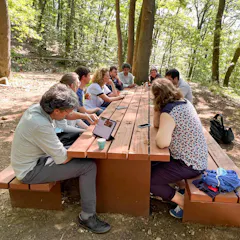
To think about new ways of transmitting science and to really innovate how we teach, the first step is creating an appropriate dialogue format. From there, everything becomes possible.

A mathematical method of analyzing networks can spot hidden features such as people who wield soft power in organizations.

Networking involves a skillset that can be learned and practised. Doing so – online or in person – is crucial to career advancement.

While many progressive movements have organised online, conservatives dominate because of better organisation, capital, and social inequality. France’s presidential elections are a case in point.

Discord was initially a service to let gamers voice and text chat while playing. Most of its current users build and maintain online communities, though not always very big ones.
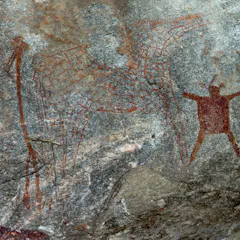
A new study doubles the age of ancient DNA in sub-Saharan Africa, revealing how people moved, mingled and had children together over the last 50,000 years.

People have formed tribes since the dawn of time and, in the digital age, online tribes are helping members deal with all the uncertainties and decisions involved in getting kids ready for school.

Zoom parties are one thing. Harder for organisations to replicate online are ‘casual collisions’ between colleagues.

The network collectively applied ingenuity to provide essential care and support to vulnerable people.

Ready to party post-pandemic, but at the same time feeling shy? Here’s how social isolation affects the brain – and what research suggests about the effects of resocialization.

Maasai in Tanzania use their mobile phones all the time – usually to communicate with people they already know. But dialing errors can also breed friendships and business opportunities.
Top contributors
-

Professor of Political Science, Public Policy and Urban Affairs, Northeastern University
-
Director of UWA Centre for Software Practice, The University of Western Australia
-
Professeur en marketing, EM Lyon Business School
-
Professor of Evolutionary Psychology, Department of Experimental Psycology, University of Oxford
-
Senior Research Fellow, Max Planck Institute for Innovation and Competition
-
Digital Sociologist, Sciences Po Paris, Sciences Po
-
Associate Professor, UCT School of Economics; South African Reserve Bank Research Chair in Financial Stability Studies, University of Cape Town
-
Research Professor of Computer Science, University of Southern California
-
Professor, UCL
-
Research Associate, Durham University
-
RFIEA Fellows 2017-2018, IEA Paris, Researcher in Literary theory, University of Verona
-
Associate Vice President for Entrepreneurship and Innovation, Clemson University
-
Researcher, University of Sydney
-
Former postdoctoral researcher on machine learning applied to chemical engineering and currently science communicator for the National Museum of Emerging Science and Innovation (Miraikan), University of Tokyo
-
Professor of Digital Culture, Business and Computing, Durham University