

As companies strive to take advantage of the selfie phenomenon, they’re also realizing that consumers’ self-portraits constitute a whole new form of brand co-creation.
Articles on Social networks
Displaying 101 - 120 of 174 articles

Along with machine learning, data mining and statistics, visualisations are playing an important role in current-day data analytics.

Simply copying Snapchat might not be enough to keep the biggest social network relevant.

Incidents that may have been mere hiccups a few years ago today can go viral in an instant, causing a massive backlash and leaving some of the biggest companies wrong-footed.
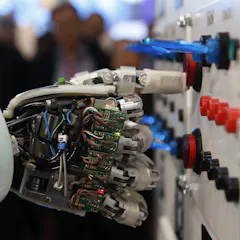
Artificial intelligence is surrounded by fear and mystery because very few understand its inner workings. But it’s actually rather intuitive and far simpler than it seems.

Disaster preparations often focus on gear and logistics, but research in Japan after the 2011 earthquake and tsunami shows that strong social ties played a key role in helping communities rebound.

After witnessing a streamed suicide, users could sue for emotional harm. But it’s tricky to prove – and even trickier to hold Facebook accountable.

Social networks built on blockchain technology, such as Steemit, promise a far more democratic experience.

The defining characteristics of our species will make us and our labour relevant in a new era.

The scientific impact of a research paper increases with every additional commenter who provides feedback – particularly if the comment came from a well-connected academic.

College is a time for friendships. But how can students best leverage the power of those friendships? First, by learning how those networks work.

If the site is increasingly where people are getting their news, what could the company do without taking up the mantle of being a final arbiter of truth?

Online social networking technologies have been linked with increased risky sexual behaviour – and Swaziland is no different.

Only a small percentage of people actually contribute to online social discussions.

Capitalism has become focused on expanding the proportion of social life that is open to data collection and processing – as if the social itself has become the new target of capitalism’s expansion.

Research suggests how your online friends experienced the housing collapse affected how you perceived your local real estate market.

On Twitter’s 10th birthday, we look at how researchers have used the platform for a range of studies, from predicting the next flu outbreak to identifying the happiest city in America.

With LinkedIn showing little evidence of growth, Microsoft’s reasons for its US$26 billion spend on the company are explored.

Who’s more likely to help you find a job, your close friends or the casual acquaintance you see at the gym? An examination of Facebook friends offers some clues.

Those closest to you might not be able to get you back on your feet.
Top contributors
-

Professor of Political Science, Public Policy and Urban Affairs, Northeastern University
-
Director of UWA Centre for Software Practice, The University of Western Australia
-
Professeur en marketing, EM Lyon Business School
-
Professor of Evolutionary Psychology, Department of Experimental Psycology, University of Oxford
-
Senior Research Fellow, Max Planck Institute for Innovation and Competition
-
Digital Sociologist, Sciences Po Paris, Sciences Po
-
Associate Professor, UCT School of Economics; South African Reserve Bank Research Chair in Financial Stability Studies, University of Cape Town
-
Research Professor of Computer Science, University of Southern California
-
Professor, UCL
-
Research Associate, Durham University
-
RFIEA Fellows 2017-2018, IEA Paris, Researcher in Literary theory, University of Verona
-
Associate Vice President for Entrepreneurship and Innovation, Clemson University
-
Researcher, University of Sydney
-
Former postdoctoral researcher on machine learning applied to chemical engineering and currently science communicator for the National Museum of Emerging Science and Innovation (Miraikan), University of Tokyo
-
Professor of Digital Culture, Business and Computing, Durham University