

The Australian sea lion’s unique breeding cycle may give sea lion mothers more time to teach their pups life skills.
Articles on Social learning
Displaying all articles

New research has found that rural Zambians are much more likely to adopt solar power if they see it working for their neighbours.

Animals can learn from each other, maintaining their cultures for long periods of time. What sets people apart may be the uniquely open-ended ways we invent new ideas and share and build on them.

Social media companies’ drive to keep you on their platforms clashes with how people evolved to learn from each other. One result is more conflict and misinformation.

Collaboration is often promoted as a tool for harnessing collective intelligence. But sometimes working solo is the best option.
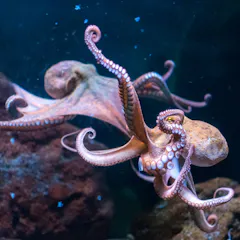
How the social lives of animals help them survive.
Understanding sarcasm is related to the ability to recognize the thoughts and emotions of others, to empathize and to consider two things being simultaneously true.
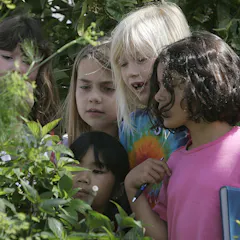
Students who took part in the program scored 8% higher on the state science test than students who received traditional instruction, and demonstrated greater social and emotional learning.
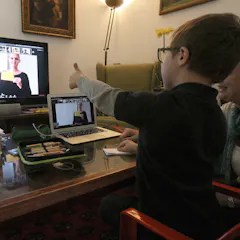
These are difficult and dire times, but holding on to the myth of childhood innocence won’t make this crisis any easier.
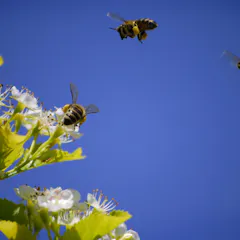
Humans are social animals who like to communicate and copy each other. But key to this collective intelligence is flexibility and a little non-conformity.

Human beings seem to be born wearing rose-colored glasses. Psychologists are interested in how this bias toward the positive works in the very young – and how it fades over time.

Persistence and self-control are valuable traits that can help kids succeed in school and beyond. A new study suggests infants can learn stick-to-itiveness by watching adults persist in a difficult task.

Humans spend an enormous amount of time and effort thinking about other people. Like primates, birds and even ants, we often learn skills and information from others. In the past, research has extensively…
Top contributors
-

Ph.D. Student in Brain and Cognitive Sciences, Massachusetts Institute of Technology (MIT)
-
BBSRC AFL Fellow, University of Oxford
-
Professor of Neuroscience, Royal Holloway, University of London
-
Lecturer, School of Biology, University of St Andrews
-
Professor of Science Education, Michigan State University
-
JSPS Research Fellow, School of Biology, University of St Andrews
-
Professor of Teacher Education, University of Toronto
-
Professor of Psychology, Western University
-
Professor of Education and Sociology, Michigan State University, Michigan State University
-
Professor of Psychology, University of North Carolina – Greensboro
-
Workday Professor of Technology and Society, Trinity College Dublin
-
Assistant Professor of Management and Organizations, Northwestern University
-
PhD Candidate in Ecology and Evolutionary Biology, Adelaide University
-
Doctoral Candidate in Evolutionary Anthropology, University of California, Davis
-
Associate Professor in Sustainable Urban Systems, University of Reading