
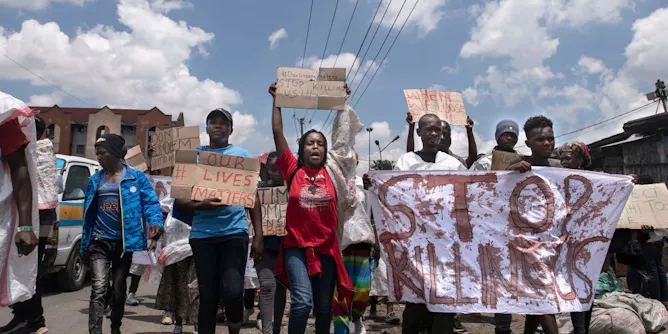
To move towards justice and peace, Kenya must disband all police units implicated in unlawful violence and punish criminal officers.
Articles on Social justice
Displaying 121 - 140 of 485 articles
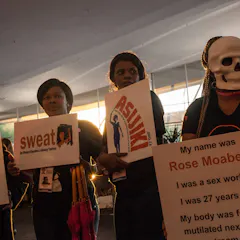
Regulating the sex work industry is the only way to protect sex workers from abuse and violence.
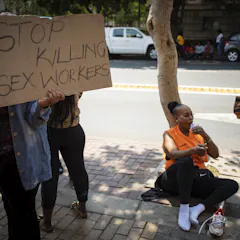
The conflation of sex work and human trafficking fuels support for the continued criminalisation of sex work.

Art stolen from African kingdoms is a knowledge system plundered by colonialists, who must take historical responsibility.
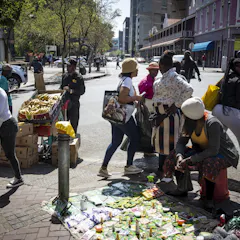
The city’s street trading management approach is mainly restrictive. Relocations, harassment and confiscation of of traders’ stock are common.
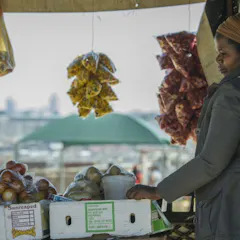
An unfunded expansion of the social transfer system could lead to even worse economic outcomes — the medicine should not be worse than the disease.

Women’s studies programs should continue to be supported to ensure the fight for women’s rights are not reversed or forgotten.
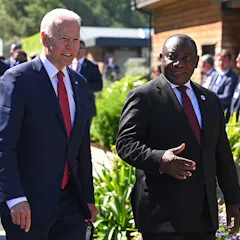
Both presidents are committed democrats operating in hostile environments. They are also committed to forging mutually beneficial ties.

Food insecurity is a social justice issue tied to social determinants of health. Historically marginalized people like 2SLGBTQ+ youth are at risk, and more likely to be food insecure during COVID-19.

Whether it is the war in Ukraine or other devastating news, people find it hard to sustain their attention. A scholar who studies crisis fatigue explains why that is so and what we can do.
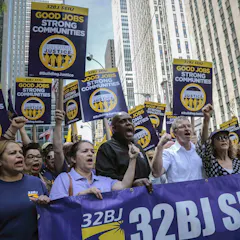
Often overlooked in the immigration debate are the contributions of migrants, such as how they helped organize workers in the 1990s.
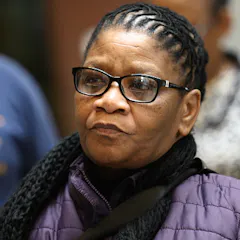
South Africa’s foreign policy is supposed to be guided by the principle of ubuntu (humanness), so a visit to an aggressor is hard to explain.

The lack of sexuality education, and common myths and misconceptions about the sexuality of people with intellectual disability can lead to caregivers being reluctant ‘jailers’.
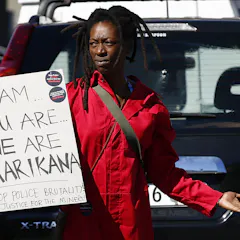
Individual beliefs about the past and its relevance to the present strongly influenced awareness of the Marikana tragedy.

The country urgently needs more people who are committed to living decently to undo the systemic humiliation caused by political and economic institutions.
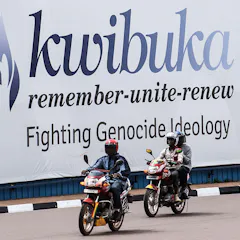
In 2003, Rwanda adopted a policy of ethnic non-recognition. However, for 100 days in a year, it centres ethnicity in the country’s psyche.
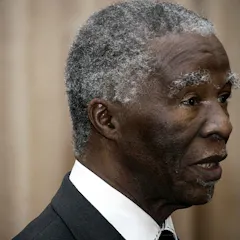
Every South African who cares about the future of the country will agree with former president Mbeki that, to avert disaster, something must be done urgently about its deep socio-economic problems.

The country is still a very different political space. It’s a noisy democracy with a free media, lots of dissenting voices, and insulting the government doesn’t carry any overt sanction.
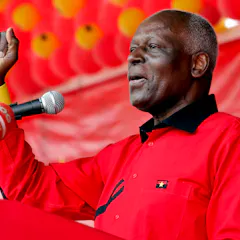
Dos Santos died as he had lived and governed: in silence. His silence, and what he accomplished with it, is his most enduring legacy.
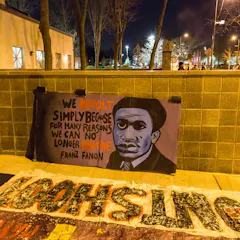
Fanon left a remarkable imprint, his views influencing many in the field of mental illness as well as pan-Africanist and anti-colonialism thinkers.
Top contributors
-

Extraordinary Professor, Department of Political Sciences, University of Pretoria
-
Emeritus Associate Professor in Public Law, UCT. Visiting Adjunct Professor, WITS School of Governance; Director, Africa Programme, University of Cambridge Institute for Sustainability Leadership, University of Cambridge
-
Professor of Political Studies, University of Johannesburg
-
Professor of International Human Rights Law, Centre for Human Rights, and acting SARChI Chair in International Constitutional Law, University of Pretoria
-
Associate Professor in Public Law, University of Cape Town
-
Professor and Research Theme Leader of the Flourishing Life Research Theme, University of the Free State
-
Chief Research Specialist., Human Sciences Research Council
-
Professor of Sociology, University of the Witwatersrand
-
Head of Department, Public and Environmental Law Department, University of Limpopo
-
Professor of Political Science and Chair of the South African Research Initiative in Gender Politics, Stellenbosch University
-
Research Director: Developmental, Capable and Ethical State (DCES) research division, and Coordinator of the South African Social Attitudes Survey (SASAS), Human Sciences Research Council
-
Professor of Social Development Studies, University of Johannesburg
-
Professor of African legal pluralism, University of the Western Cape
-
Professor/Senior Research Fellow, Centre for Advancement of Scholarship, University of Pretoria
-
Professor of Urban Governance, University of the Witwatersrand