
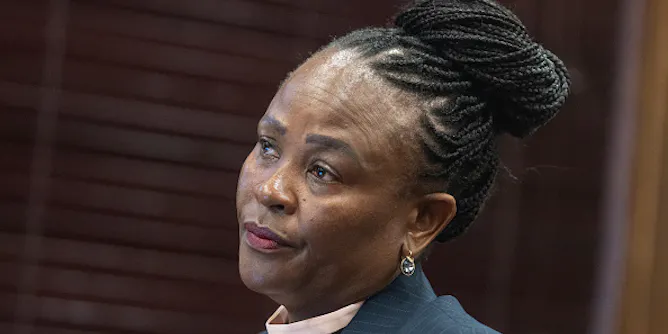
Awarding punitive costs against legal practitioners would make them think twice about facilitating delaying tactics and malicious lawsuits.
Articles on Social justice
Displaying 61 - 80 of 485 articles
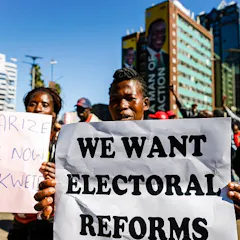
Zimbabwe’s 2023 elections look like their predecessors: stolen. But this one is a bit different. Opposition strategies and regional responses have changed too. What does this mean for the future?

Armed police interventions are unconstitutional and incapable of addressing housing and safety in the inner city.
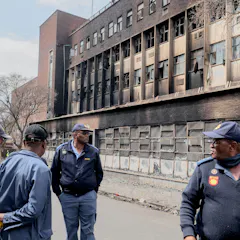
Inner city occupations and shack settlements alike are the inevitable consequence of the fact that huge populations of people have to get by without a living wage.
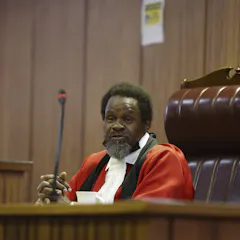
The challenges facing South African judges have been well documented for decades. They include the high number of unfilled vacancies and poor working conditions.

Women’s representation in Zimbabwe’s parliament has declined in spite of a quota imposed in 2013.

Women’s Day is used to draw attention to the issues women still face in South Africa.

The Marriage Bill should strike a balance between preserving non-discriminatory cultural and religious practices and promoting liberal values.

Opposition activists have previously been accused of treason and unpatriotic behaviour for expressing concerns about human rights abuses.

South Africa needs a new social contract whose core aim is the creation of dynamic economy.
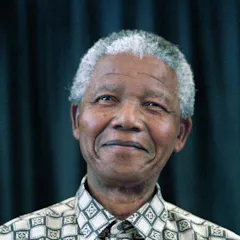
There is never going to be a final assessment of Mandela’s legacy. How it is regarded will continue to change, depending on the destination South Africa travels to.
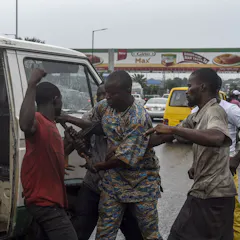
A new book focuses on the politics of road transport, the everyday corruption and the hard-living world of transport workers in Lagos, Nigeria.

More than being the social problem they are often made out to be, gangs are an indication of larger problems present in their societies.
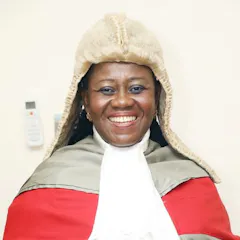
Ghana’s judiciary has a public relations problem that requires an urgent fix.

In parts of Nigeria and Mozambique, the central governments and state institutions are either absent or unable to address the dire socio-economic conditions and related instability.

The Zondo Commission was globally unique in scope and scale. The book selects and explains its key findings and recommendations.

This is an opportunity for Deaf people to finally be properly educated in a language they understand.
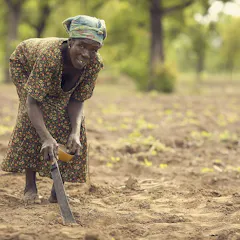
Reforms to land policies and regulations are enabling the traditional custodians of the land in Ghana to transfer ownership. Communal land users could lose their basic rights.

Kabuga’s release raises questions about the international community’s commitment to delivering justice for genocide victims.

The proportional representation system has long outlived its relevance. Its negative extremes abound in local government.
Top contributors
-

Extraordinary Professor, Department of Political Sciences, University of Pretoria
-
Emeritus Associate Professor in Public Law, UCT. Visiting Adjunct Professor, WITS School of Governance; Director, Africa Programme, University of Cambridge Institute for Sustainability Leadership, University of Cambridge
-
Professor of Political Studies, University of Johannesburg
-
Professor of International Human Rights Law, Centre for Human Rights, and acting SARChI Chair in International Constitutional Law, University of Pretoria
-
Associate Professor in Public Law, University of Cape Town
-
Professor and Research Theme Leader of the Flourishing Life Research Theme, University of the Free State
-
Chief Research Specialist., Human Sciences Research Council
-
Professor of Sociology, University of the Witwatersrand
-
Head of Department, Public and Environmental Law Department, University of Limpopo
-
Professor of Political Science and Chair of the South African Research Initiative in Gender Politics, Stellenbosch University
-
Research Director: Developmental, Capable and Ethical State (DCES) research division, and Coordinator of the South African Social Attitudes Survey (SASAS), Human Sciences Research Council
-
Professor of Social Development Studies, University of Johannesburg
-
Professor of African legal pluralism, University of the Western Cape
-
Professor/Senior Research Fellow, Centre for Advancement of Scholarship, University of Pretoria
-
Professor of Urban Governance, University of the Witwatersrand