
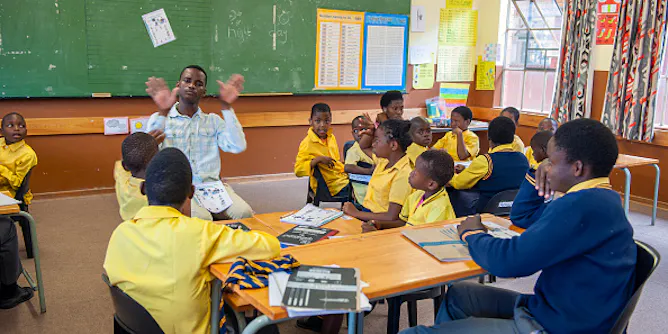
Making South African Sign Language official is more symbolic than useful in the lives of a very marginalised community.
Articles on Social justice
Displaying 81 - 100 of 485 articles
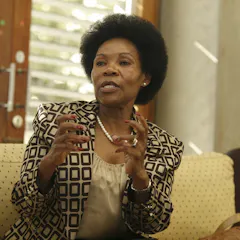
Justice Mokgoro’s advocacy for group solidarity and reconciliation is discernible in several of her judgments.
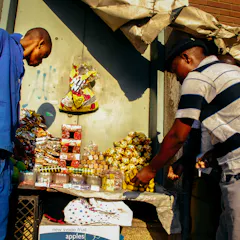
As much as 31% of grant beneficiaries engage in informal work to ‘grow’ their income.
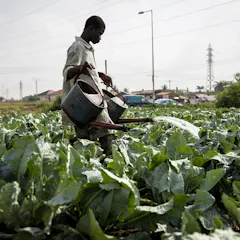
Children working on family farms is often mistaken for harmful child labour.

The Zimbabwe Exemption Permit gave holders the right to live and work in the country but did not grant them the right to permanent residence.
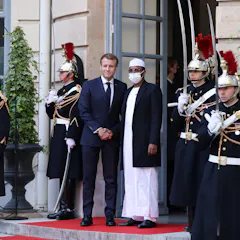
Expulsion of the German ambassador could be a way of warning other embassies, especially France, to steer clear of Chadian politics and support for the opposition.

For some teens on social media, TikTok and Twitter aren’t all about selfies or the latest craze in online “challenges.” Some teens are using social media to advocate for social justice.
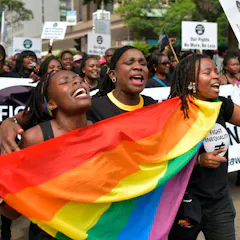
The criminalisation of same-sex sexual relations among consenting adults in Kenya worsens social disparities and inequalities.

The Head & The Load finally reaches Johannesburg after delays caused by the COVID pandemic.

Most farmworkers were not even aware that the farm they worked on was Fairtrade certified.

Criminalisation of medical judgment may interfere with appropriate medical decision making.

Making the green energy transition a success requires governments to pay attention to environmental factors and socioeconomic imperatives.

Food forests are urban oases that pack a lot into small spaces, including food production, local cooling and social connections.
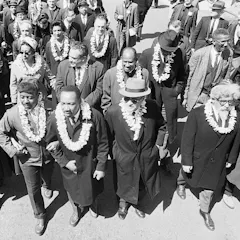
Religious pluralism and social justice were at the core of King’s campaigns – a vision shaped by influences as diverse as Gandhi, the Black church, Greek classics and Buddhism.
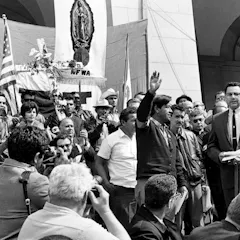
A scholar of religion looks at how faith helped guide the labor rights icon in his organizing endeavors.
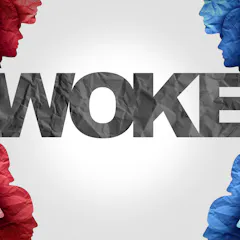
The word ‘woke’ has increasingly become caught up in the rhetoric of the culture war. But debates around wokeness and what it means are drawing attention away from the real issues.
Thirty years ago the World Bank recognised that its position was untenable. It put in place mechanisms to make the bank more accountable to ordinary people.

Discrimination against anyone based on their sexual orientation or gender identity is not an African value.
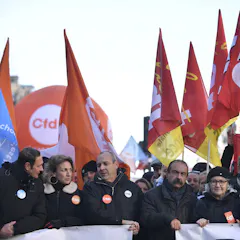
France’s trade unions have managed to galvanise the largest movement in decades in opposition to pension reform. What will happen to them once the bill has been passed or abandoned?
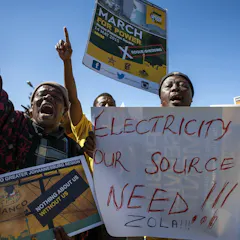
South Africa’s courts are likely to set a high bar in cases brought against the government’s most recent state of disaster declaration.
Top contributors
-

Extraordinary Professor, Department of Political Sciences, University of Pretoria
-
Emeritus Associate Professor in Public Law, UCT. Visiting Adjunct Professor, WITS School of Governance; Director, Africa Programme, University of Cambridge Institute for Sustainability Leadership, University of Cambridge
-
Professor of Political Studies, University of Johannesburg
-
Professor of International Human Rights Law, Centre for Human Rights, and acting SARChI Chair in International Constitutional Law, University of Pretoria
-
Associate Professor in Public Law, University of Cape Town
-
Professor and Research Theme Leader of the Flourishing Life Research Theme, University of the Free State
-
Chief Research Specialist., Human Sciences Research Council
-
Professor of Sociology, University of the Witwatersrand
-
Head of Department, Public and Environmental Law Department, University of Limpopo
-
Professor of Political Science and Chair of the South African Research Initiative in Gender Politics, Stellenbosch University
-
Research Director: Developmental, Capable and Ethical State (DCES) research division, and Coordinator of the South African Social Attitudes Survey (SASAS), Human Sciences Research Council
-
Professor of Social Development Studies, University of Johannesburg
-
Professor of African legal pluralism, University of the Western Cape
-
Professor/Senior Research Fellow, Centre for Advancement of Scholarship, University of Pretoria
-
Professor of Urban Governance, University of the Witwatersrand