
In most developing countries hearing services are not available at primary healthcare clinics and those who need it the most are not screened for hearing loss.
Articles on Smartphone apps
Displaying 21 - 38 of 38 articles

Why we love our phones so much might be related to our basic yearnings as human beings, explains a scholar, who is also a pastor.

Smart appliances, which let you control lights and power outlets via your phone, promise to cut energy bills. But research suggests these gadgets are confusing, and can just as easily raise power use.
The iPhone changed the game not because of the technical details of the device, but rather as a result of its creators’ imagination and courage.
When smartphone apps get permission to access your location or other activity, they often share that data with other companies that can compile digital profiles on users.
Developers working on apps to help monitor and improve our health could accidentally find themselves on the wrong side of the law.
How we use our smartphone can say a lot about our behaviour. But can such tech be trusted to track our mental health?
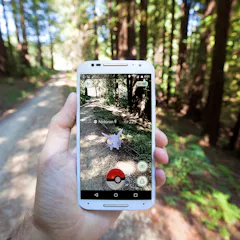
You might worry that people care more about what’s on their smartphone than what’s in their local wildlife park. But what if we could get them to care about both at the same time?
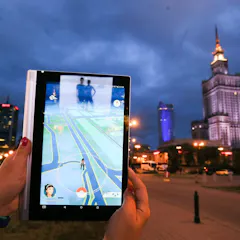
What if the most interesting thing the Pokémon Go phenomenon offered was where it leads you?

Pokémon’s new augmented reality app reveals the challenges we’ll face when robots and other autonomous technologies become commonplace.
With an estimated 100,000 health and fitness apps available, it seems there is an app for everything – from tracking your bowel movements to practising your pimple-popping technique.
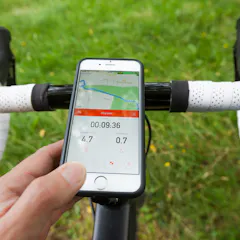
If you use one of the many apps to map your walking, jogging or cycling route then you could be giving away information that could be abused by others.

Police brutality is an ongoing problem in South Africa. Police-worn body cameras may help reduce such incidents by improving accountability. They may also contribute to the safety of officers.

If apps aren’t proven to make users’ mental health better they could end up making it worse.

The data tell the story: mobile ads work.

It’s not all isolation and cyber-bullying: technology offers access to communication and therapies that could help sufferers of mental illness.

Apps can help us make sense of all the health messages out there.

South Korean students have consistently been at the top of global standardized tests. But the high grades have come at a tremendous cost.
Top contributors
-

Senior Research Scientist at the Australian E-Health Research Centre, CSIRO
-
Quality of life researcher and occupational therapist, The University of Queensland
-
Professor of Environmental and Geographical Sciences, Bournemouth University; University of Reading
-
Professor of Cyber Security and Policy, Tufts University
-
Professor of Clinical Neuropsychology, University of Cambridge
-
Professor of Data Science, Bournemouth University
-
Associate Professor in Urban Planning, The University of Queensland
-
Professor of Information, University of Wisconsin-Madison
-
Professor, Emerging Technologies Research Lab, Monash University, Monash University
-
Honorary Professor of Planning, The University of Queensland
-
Professor of Religion, Psychology and Culture, Vanderbilt University
-
Health economist, University of Liverpool
-
Senior lecturer, The University of Melbourne
-
The University of Queensland
-
Iris S. Wolstein Professor of Management Design, Case Western Reserve University