

The new agreement gives Australia and India a chance to become much needed AI chip material suppliers – and an alternative to China.
Articles on Silicon
Displaying all articles
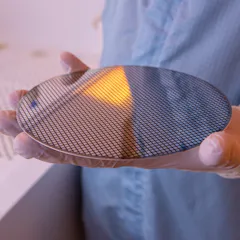
A new wave of companies are focusing on microchips designed for clean energy technology.
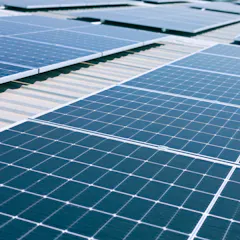
Solar is becoming a major player in electricity generation and scientists are trying to boost its efficiency still further.
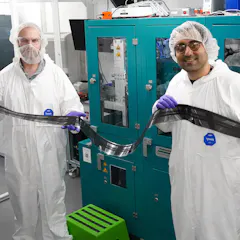
A new generation of flexible solar cells has been pioneered using a material known as perovskite.
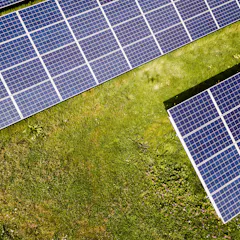
The world’s solar panels rely on technology pioneered in Australia. Now our researchers are working on ultra-low-cost, high efficiency solar cells.

There are ‘jewels’ among the piles of ash that remain once sugarcane’s fibrous material is burned.
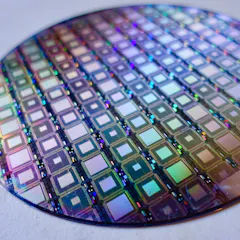
Semiconductor chips are electronic devices that store and process information. Today they can contain billions of microscopic switches on a chip smaller than a fingernail.

Silicon is cheap and a good semiconductor, but it’s bulky and rigid. Using organic polymers as semiconductors could yield solar panels with the physical characteristics of plastics.

Organic semiconductors could make possible energy-generating windows that double as movie screens or computer displays.

The fossil fuel era won’t last forever. And a new set of countries will find their reserves of lithium, copper and rare earth metals are in high demand.

As electronic transistors get tinier, they approach a point at which they won’t be able to get smaller. How can we keep shrinking our devices, and making them more powerful at the same time? Light.
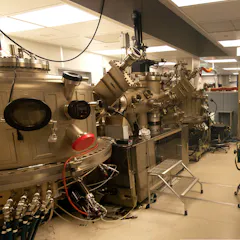
As we reach the limits of what can be done with silicon, the search for new and improved superconductors is on.
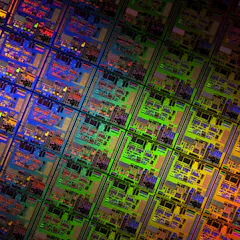
Silicon isn’t the perfect semiconductor, it’s just the one we’re using. How can we ensure our electronics keep get getting faster in the face of silicon’s natural physical limits?
In a major step forward for the field of optical communications technology, an international team at the University of Sydney…
Scientists at Stanford University in California have found a more efficient way to produce hydrogen by splitting water molecules…
A team of researchers have determined a new way to distinguish quantum bits in the eventual creation of a quantum computer…
Brigham and Women’s Hospital researchers in the US have found that synthetic silicate nanoplatelets induce stem cells to…
It may seem an impractical method, but a roadmap that lays out the potential limits of an “artificial leaf” could help further…
Quantum computers that can solve complex problems in finance, health, security and defence are a step closer after a team of Australian and British researchers created the first working quantum bit based…
Scientists have developed transparent, flexible memory chips which could aid the development of futuristic see-through gadgets…
Top contributors
-

Professor of Semiconductor Materials, University of Sheffield
-
Sêr Cymru Chair of Low Carbon Energy and Environment, Swansea University
-
Ph.D. student in Electrical Engineering, University of Michigan
-
Professor in Physics, The University of Queensland
-
Associate Professor of Electrical and Computer Engineering, Tufts University
-
Professor of Nanoengineering, University of California, San Diego
-
Researcher, National Renewable Energy Laboratory
-
Honorary Senior Lecturer, Macquarie University
-
Professor of Electrical Engineering, Arizona State University
-
Professor, UNSW Lead, Australian Centre of Advanced Photovoltaics, UNSW
-
Senior Research Officer at the SPECIFIC Innovation and Knowledge Centre, Swansea University
-
PhD, University of the Western Cape
-
Professor, University of the Western Cape
-
Associate Professor of Materials, University of Oxford
-
Research Manager, UNSW