

Today, China controls the vast majority of rare earths processing. That gives it enormous political leverage, and its trade truce with the US involving those minerals expires Nov. 10, 2026.
Massachusetts Institute of Technology (MIT)

The mission of MIT is to advance knowledge and educate students in science, technology, and other areas of scholarship that will best serve the nation and the world in the 21st century.
The Institute is committed to generating, disseminating, and preserving knowledge, and to working with others to bring this knowledge to bear on the world’s great challenges. MIT is dedicated to providing its students with an education that combines rigorous academic study and the excitement of discovery with the support and intellectual stimulation of a diverse campus community. We seek to develop in each member of the MIT community the ability and passion to work wisely, creatively, and effectively for the betterment of humankind.
The Institute admitted its first students in 1865, four years after the approval of its founding charter. The opening marked the culmination of an extended effort by William Barton Rogers, a distinguished natural scientist, to establish a new kind of independent educational institution relevant to an increasingly industrialized America. Rogers stressed the pragmatic and practicable. He believed that professional competence is best fostered by coupling teaching and research and by focusing attention on real-world problems. Toward this end, he pioneered the development of the teaching laboratory.
Today MIT is a world-class educational institution. Teaching and research—with relevance to the practical world as a guiding principle—continue to be its primary purpose. MIT is independent, coeducational, and privately endowed. Its five schools and one college encompass numerous academic departments, divisions, and degree-granting programs, as well as interdisciplinary centers, laboratories, and programs whose work cuts across traditional departmental boundaries.
Links
Articles
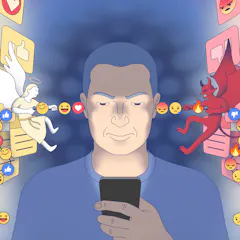
Algorithms on X tend to bring you posts that contradict your values, and it happens more to Democrats than Republicans.

About 1 in 3 US workers are in this predicament.

This federal budget recognises AI can’t transform Australia’s economy if we don’t have the local tech, tools and expertise to implement it.

Landing on the Moon can disturb its environment – people are discussing how to balance those concerns with political and economic goals.

Our engagement with AI is at a crossroads: Will we treat it as an all-knowing oracle or as a tool to expand our own way of seeing the world?

Even if you’ve never used these software tools, your employer probably has. Now, AI threatens to upend the systems businesses have relied on for years.

A atmosfera complicada, e temperaturas quentes em um local podem contribuir para tempestades brutalmente frias em outro lugar.

The atmosphere is a complicated place. Warm temperatures in one spot can contribute to brutally cold storms somewhere else.
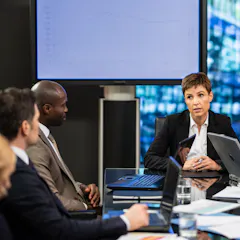
Expertise comes with training, experience and accreditation. And expert consensus is the best guide modern democracies have for making decisions about complicated challenges.

It can take years to collect evidence that shows effective uses of new technologies in schools. Unfortunately, early guesses sometimes go seriously wrong.

La foule intimide voire terrifie certaines personnes, car ses mouvements peuvent conduire à des drames. C’est pourquoi, mieux les comprendre est essentiel.

AI-powered chatbots can be used in health-care education to help providers practice encounters with patients who have vaccine questions.

During World War I, the US government designed and constructed entire communities for workers and their families, setting new standards for housing and neighborhood planning.
Alors que des informations importantes, notamment sur le changement climatique, disparaissent des sites fédéraux depuis l’investiture de Donald Trump, la résistance s’organise pour sauvegarder les données.

Several groups are working to preserve webpages, tools and data – some of which have already gone missing from government webpages since the start of the Trump administration.

The study looked at who used a household bicycle, who didn’t, and why.

Plus il fait chaud, plus les appareils mécaniques et électroniques ont du mal à garder la tête froide.

AI systems with deceptive capabilities could be misused in numerous ways by bad actors. Or, they may become prone to behaving in ways their creators never intended.

People aren’t the only ones harmed by heat waves. The hotter it gets, the harder it is for machines to keep their cool.
Authors
-

Research Scientist in Aeronautics and Astronautics, Massachusetts Institute of Technology (MIT)
-
Librarian for Energy and Environment, Massachusetts Institute of Technology (MIT)
-
Sloan Fellow, Massachusetts Institute of Technology (MIT)
-
Professor of Mechanical Engineering, Massachusetts Institute of Technology (MIT)
-
Professor, Management Science and Brain and Cognitive Sciences, Massachusetts Institute of Technology (MIT)
-
Professor of Landscape Architecture and Urban Planning, Massachusetts Institute of Technology (MIT)
-
Post-doctorant, Massachusetts Institute of Technology (MIT)
-
Associate Professor of Business Information Systems, The University of Queensland; Massachusetts Institute of Technology (MIT)
-
Climate scientist, Massachusetts Institute of Technology (MIT)
-
Professor of Digital Media, Massachusetts Institute of Technology (MIT)
-
Postdoctoral Associate, Massachusetts Institute of Technology (MIT)
-
Research Scientist, MIT Libraries, Massachusetts Institute of Technology (MIT)
-
Professor Emeritus, MIT Sloan School, Massachusetts Institute of Technology (MIT)
-
Postdoctoral Associate at the Tegmark Lab, Massachusetts Institute of Technology (MIT)
-
Postdoctoral Associate in Social and Ethical Responsibilities of Computing, Massachusetts Institute of Technology (MIT)