
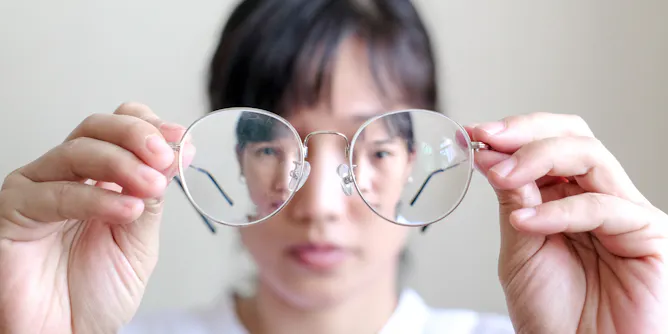
The study found 30% of adults born between 1965-1970 were short-sightedness.
Articles on Short-sightedness
Displaying all articles
Orthokeratology involves wearing a specially designed rigid contact lens overnight. There’s good evidence it can help slow the progression of myopia. But like all treatments, there are risks, too.

Researchers are still uncovering how modern lifestyles may be causing this increase.

The COVID-19 pandemic has resulted in children spending more time on digital devices, which may have a long-term impact on their vision, including the risk of myopia.

Too much studying and staying indoors are more likely to blame for the rise in the number of children with myopia, or short-sightedness.

Short-sightedness is a growing public health problem. Luckily, scientists are starting to find solutions.

Genes are important in predicting the risk of myopia, but they alone cannot explain the epidemic.
Top contributors
-

Lecturer in Optometry, University of Bradford
-
Frost Professor of Ophthalmology, King's College London
-
Senior lecturer, Aston University
-
Clinical Professor, School of Optometry & Vision Science and Clinical Scientist, Centre for Ocular Research & Education (CORE), University of Waterloo
-
MRC Clinical Research Fellow (Ophthalmology), King's College London
-
Professor of Ophthalmology, The University of Western Australia
-
Visiting Research Fellow in Optometry and Vision Science, Queensland University of Technology
-
Adjunct Senior Lecturer, UNSW
-
Optometrist and PhD Researcher, University of Bradford