
Europe’s share of the global microchip market has dropped from 44% to 8% in three decades.
Articles on Semiconductors
Displaying 41 - 60 of 67 articles

In the short term, the war is causing energy prices to soar and prompting fears of famine in some countries. In the long term, it could remake the modern global supply chain.
The story of how America’s great chipmaker’s main strength became an albatross around its neck.

Wingtech Technology is taking over Newport Wafer Fab for £65 million.
Shutdowns at microchip factories, panic-buying by electronics manufacturers, and legions of workers and home-schoolers needing new devices, have put a global squeeze on the electronics market.
Quantum communication has the potential to provide truly secure global communications.

Modern supply chains have become very efficient, but that means disruptions of any kind can lead to delays and shortages.
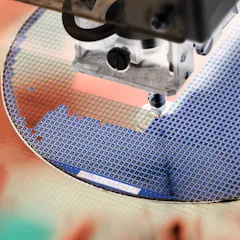
The high cost and long lead times for building computer chip factories makes it difficult for the U.S. to reverse the steady decline of its domestic semiconductor manufacturing capacity.

Welcome to the great silicon famine of 2021. And 2022. And 2023. And …
Arm defied the traditional notion of how a technology company competes in the global market place. That could all change.

These tiny nanoparticles might provide a new way to see what’s happening in the brain and even deliver treatments to specific cells – if researchers figure out how to use them safely and effectively.
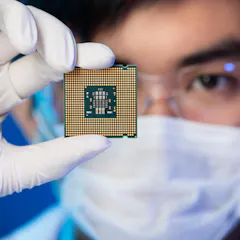
US actions do more than just keep Huawei away from critical infrastructure. They choke off the supply of semiconductors to China.

Historical grievances, domestic politics, the US-China trade war and a looming global recession are all at play.
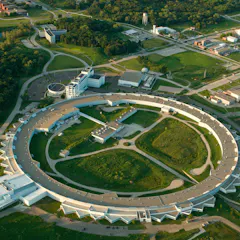
It turns out to be fairly complicated to figure out how electricity will flow through materials – a crucial question for designing new electronics and semiconductor materials.
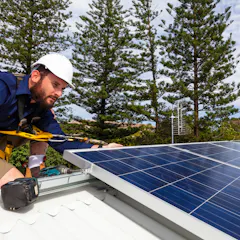
Silicon is cheap and a good semiconductor, but it’s bulky and rigid. Using organic polymers as semiconductors could yield solar panels with the physical characteristics of plastics.

Layering substances like graphene in new ways could help us to build quantum computers or transmit electricity over long distances.
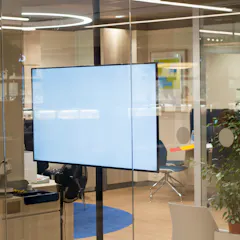
Organic semiconductors could make possible energy-generating windows that double as movie screens or computer displays.

Silicon Valley brought together natural surroundings, suburban homes and futuristic high-tech work. But industrial pollution betrayed the California dream.

The Cambridge-based chip designer offers a useful blueprint for others.

Molybdenum disulphide, hexagonal boron nitride and other materials yet to be discovered will be used to build the electronics of the future.
Top contributors
-

Professor of Management and Innovation, International Institute for Management Development (IMD)
-
Vice Dean, Global Engagement | Associate Professor in Political Economy and Entrepreneurship, King's College London
-
Lecturer in Strategy, Cambridge Judge Business School
-
Professor of Economics, Salisbury University
-
Associate Professor, Technology and Innovation, University of Technology Sydney
-
Professor of Innovation and Entrepreneurship, University of Huddersfield
-
A/Prof, UTS Chancellor's Postdoctoral Research and ARC DECRA Fellow, University of Technology Sydney
-
Professor of Economic Geography, Cardiff University
-
Researcher, National Renewable Energy Laboratory
-
Professorial Research Fellow, University of Surrey
-
Professor of Semiconductor Materials, University of Sheffield
-
Ph.D. Candidate in Chemical Engineering, University of California, Riverside
-
Researcher, Human Geography, University of Amsterdam
-
Assistant Professor of Operations Management, University of Manchester
-
Chair in Emerging Technologies, Heriot-Watt University