
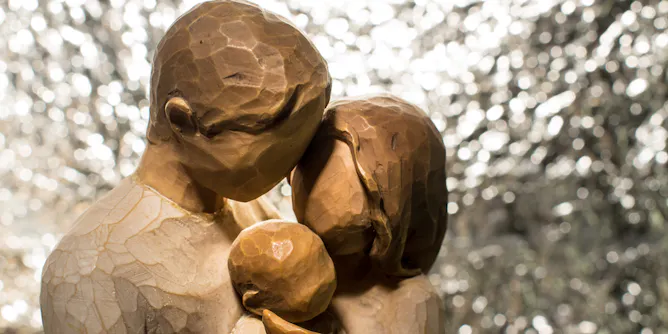
Baptisms, schools, church services – how ordinary families navigated love and marriage across taboo lines.
Articles on Sectarianism
Displaying 1 - 20 of 40 articles

As Hezbollah continues to fight Israel in southern Lebanon, the rest of the country is facing the prospect of civil conflict.
The PKK has been fighting the Turkish state for more than 40 years. Whether peace can take root will depend on each side’s commitment to a credible peace process.
Syria has become engulfed in a wave of sectarian violence.
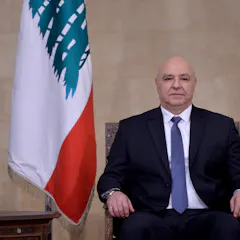
Lebanese lawmakers have elected Joseph Aoun, the head of Lebanon’s army, as the country’s new president.
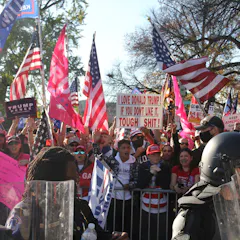
The American political landscape now finds itself at a point where difference is seen as antagonistic.
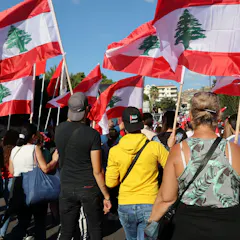
Hezbollah has pushed Lebanon to the brink of war, to the dismay of many of the country’s citizens.

Lebanon’s precarious sectarian balance is tipping as militias take hold again.
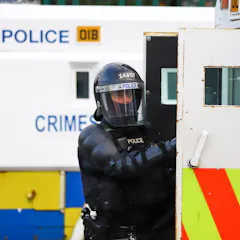
The attempted murder of an off-duty officer just a few months ago is clear evidence of what can happen when the personal information of PSNI staff becomes public.

Painting with renewed purpose at 65, Peter Howson has overcome his demons to take his place as one of Britain’s leading contemporary artists.
The cinematic epic hinges on a very specific, and contentious, interpretation of early Islamic history.
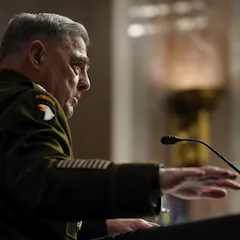
This summer’s disintegration of the Afghan government and continuing political turmoil in Iraq provide valuable lessons for the U.S. and its mission to impose democracy on the rest of the world.
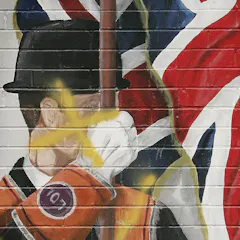
Northern Ireland’s Orange Order will take to the streets on July 12 to commemorate a Protestant military victory. A scholar explains why this year the risk of unrest is heightened.
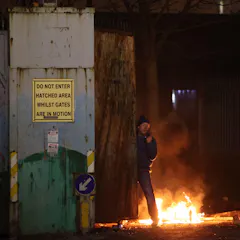
Loyalist groups stand accused of encouraging young people to riot. Research suggests paramilitary groups do continue to wield significant power in certain areas of Northern Ireland.
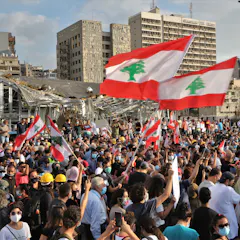
How can the international community help Lebanon’s people not its power-sharing regime?
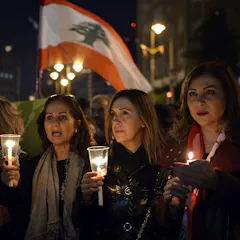
A power-sharing agreement that shares power between Lebanon’s different sectarian communities is no longer fit for purpose.
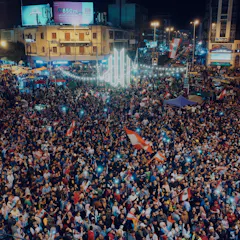
Site of some of the most iconic images from the ongoing protests, Lebanon’s second largest city, Tripoli is a place of contrasts and extremes.
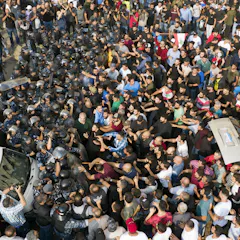
Why the armed group, Hezbollah, doesn’t want ongoing protests to upset the ruling coalition in Lebanon.
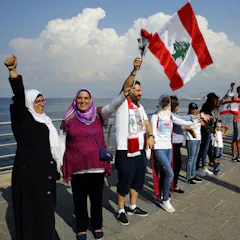
Lebanon’s 1989 peace deal ended a civil war by sharing political power between religious factions. That created a society profoundly divided by religion – something today’s protesters hope to change.
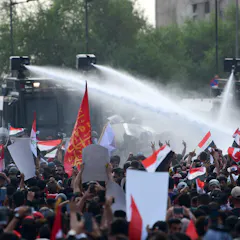
Iraq’s 2005 constitution created a flawed political system built on sectarianism.
Top contributors
-

Professor in Sociology, Queen's University Belfast
-
Professor of International Relations, Lancaster University
-
Associate Professor, Department of Political Science, Lund University
-
Scholar at Centre for the Study of Ethnic Conflict, Queen's University Belfast
-
Honorary Research Fellow, Department of International Politics, City St George's, University of London
-
Reader in Political Science and International Relations, Aston University
-
Honorary Associate Professor, Journalism, University of Wollongong
-
Visiting Fellow in History, Anglia Ruskin University
-
Senior lecturer, National School of Arts, Australian Catholic University
-
Research Fellow, Institute of Development Studies
-
Associate Professor Conflict Resolution, Trinity College Dublin
-
Director of Middle Eastern Studies and Professor of Conflict Studies, King's College London
-
Professor of Peace Studies, University of Bradford
-
Assistant Professor, Florida Atlantic University
-
Lecturer in International Security, City St George's, University of London