
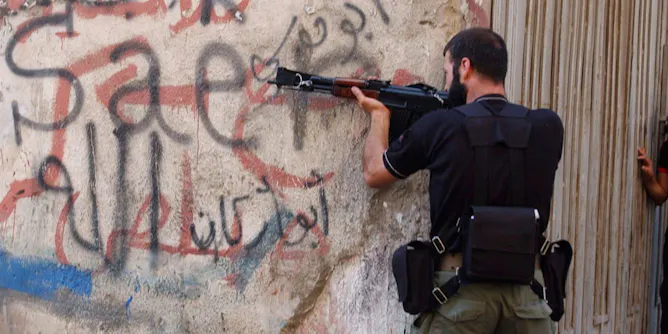
Lebanon’s precarious sectarian balance is tipping as militias take hold again.
Articles on Lebanon protests
Displaying all articles
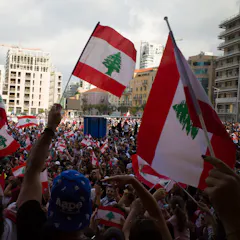
Conflict between Lebanon and Israel looms – it would throw the Lebanese economy further into crisis.
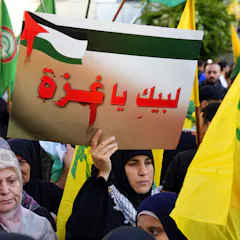
Hezbollah dominates Lebanon’s sectarian political system, giving the paralyzed government little choice if the militant group chooses to join Hamas’ war against Israel.
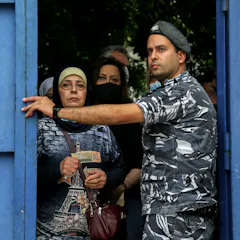
The election of independent parliamentarians in Lebanon is a move away from sectarian politics, say experts.
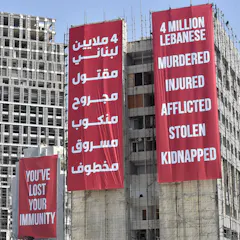
Lebanon is in the depths of one of the worst financial crises in history.
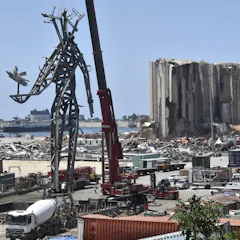
Lebanon is in trouble: a million Syrian refugees, one of the worst financial crises in more than 100 years and a corrupt and divided political system.
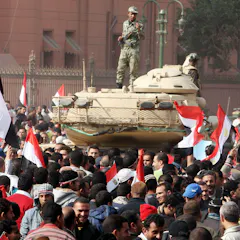
The underlying issues of inequality, corruption and poverty are still dogging the region, ten years after the protests.
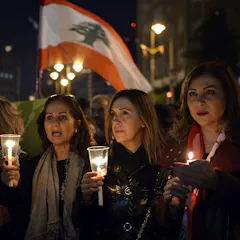
A power-sharing agreement that shares power between Lebanon’s different sectarian communities is no longer fit for purpose.
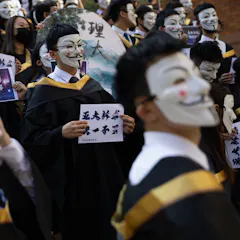
From Chile to Lebanon and Iraq to Hong Kong, the same masks have become a common language to register dissent.
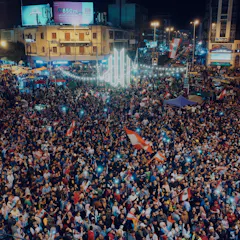
Site of some of the most iconic images from the ongoing protests, Lebanon’s second largest city, Tripoli is a place of contrasts and extremes.
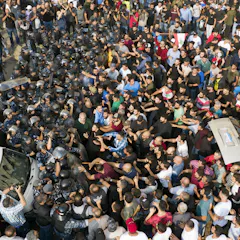
Why the armed group, Hezbollah, doesn’t want ongoing protests to upset the ruling coalition in Lebanon.
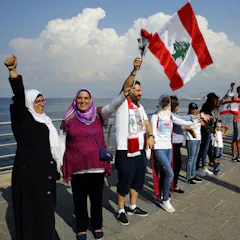
Lebanon’s 1989 peace deal ended a civil war by sharing political power between religious factions. That created a society profoundly divided by religion – something today’s protesters hope to change.
Top contributors
-

Professor in Sociology, Queen's University Belfast
-
Scholar at Centre for the Study of Ethnic Conflict, Queen's University Belfast
-
Associate Professor of Political Science, Aalborg University
-
Associate Professor, Department of Political Science, Lund University
-
PhD Candidate in the Department of War Studies, King's College London
-
Senior Lecturer, School of International Relations, University of St Andrews
-
Senior Lecturer in English, The Ohio State University
-
Professor of History and Peace Studies, University of Notre Dame
-
Professor of Political Science, Brandon University
-
Professor of International Politics at Institute for Diplomacy and International Governance, Loughborough University
-
Professor of International Relations, Lancaster University