
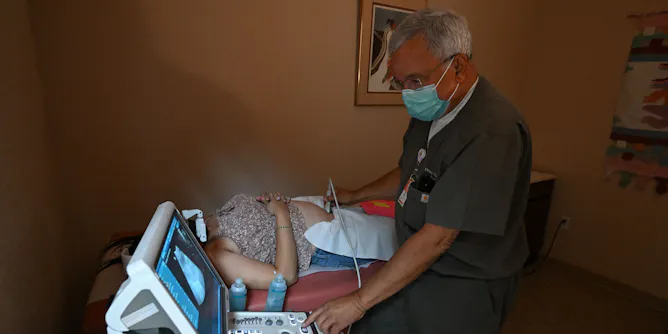
A moral philosopher explains what’s at stake in second-trimester abortions – and why they’ll increase in a post-Roe world.
Articles on SCOTUS
Displaying 41 - 60 of 109 articles
Many people do not realize they are delivering at a Catholic hospital, and others may not have a choice. But where one receives care has a profound impact on the birth control options they’re offered.

Kennedy v. Bremerton, a case about a public school teacher’s prayer, helps close out a Supreme Court term in which religion was often in the spotlight.
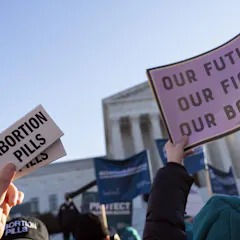
Scholars explain why many see abortion access as a religious freedom issue and what the views of different faiths are on ‘ensoulment,’ the point at which the soul is believed to enter the fetus.
Once again, the court has expanded the legal ways that public funds can be used for students at religious institutions.
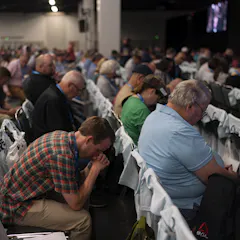
A scholar writes about how the Southern Baptist Convention’s views on abortion changed during the 1980s, when a more conservative wing seized control of the denomination.
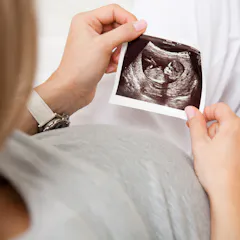
For women with a family history of serious genetic disorders, abortion is a critical option: a security feature that allows them to consider having children.
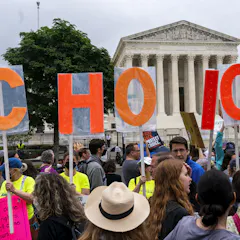
Restricting abortion access has negative effects on parents, as well as children and families, including increased poverty, unemployment, pregnancy-related deaths and higher health risks in children.
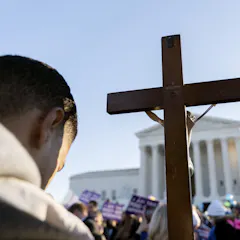
A scholar of constitutional law and American religious history explains how the abortion issue has been historically rooted in religious beliefs, giving a moral certainty that law cannot provide.
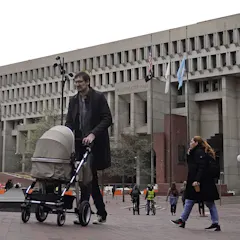
The Supreme Court ruled May 2, 2022, in Shurtleff v. Boston, a free speech case.

Scholars discuss the meaning of Ketanji Brown Jackson’s potential elevation to the highest court in the land.

The Supreme Court will hear oral arguments in Kennedy v. Bremerton School District, a case stemming from a football coach’s prayers on the field, on April 25, 2022.
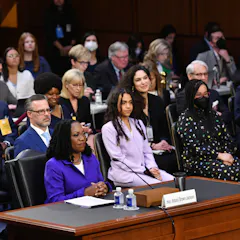
A constitutional law professor provides insight on what Judge Ketanji Brown Jackson, the first Black woman nominated to the Supreme Court, could mean for how that court works.
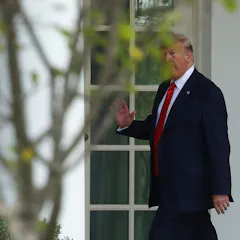
Justices have cleared the way for hundreds of Trump administration documents to be handed to a panel investigating the Jan. 6 attack. A law scholar explains what that means for executive privilege.
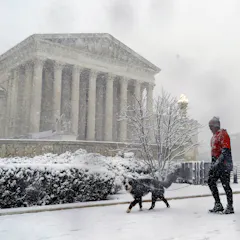
The court appears split over the future of vaccination mandates, with conservative justices skeptical of the Biden administration’s authority to enforce requirements.
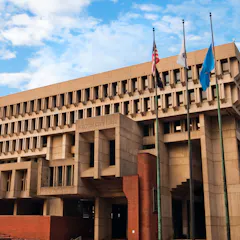
Shurtleff v. Boston, a case argued before the Supreme Court on Jan. 18, raises important questions about free speech and religion in public spaces.
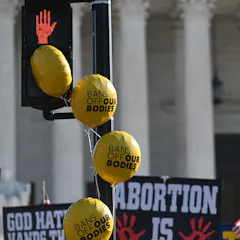
Arguments in a case that could fundamentally alter a woman’s right to abortion were heard at the Supreme Court. Justices’ questions suggest that Roe v. Wade is on shaky ground.

Carson v. Makin, a case from Maine about aid to students attending religious schools, goes to the Supreme Court on Dec. 8, 2021.
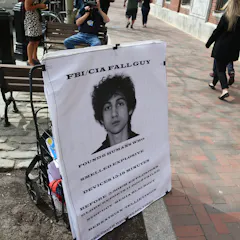
Punishment for crimes allows a society to express its values, but a theorist of criminal law and punishment argues it could also reinforce prejudicial stereotypes about racial and ethnic groups.
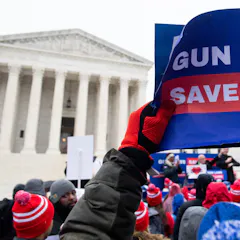
At issue is the right to carry handguns in public, not just keep them at home.
Top contributors
-

Joseph Panzer Chair in Education and Research Professor of Law, University of Dayton
-
Associate Professor of Intellectual Heritage, Temple University
-
Director of the Center for Religion, Law & Democracy, Willamette University
-
Professor of American Civics, University of Tennessee
-
Professor of Law, George Washington University
-
Professor of Law, University of Virginia
-
Associate Professor of Sociology, University of Nebraska-Lincoln
-
Associate Professor of Public Health, The Ohio State University
-
Associate Professor of Sociology and Women's and Gender Studies, University of Nebraska-Lincoln
-
Professor of Political Science, Purdue University
-
Professor of Women, Gender, and Sexuality Studies, Oregon State University
-
Associate Professor of Philosophy and Law, Wayne State University; Institute for Humane Studies
-
Associate Professor of Political Science, Oregon State University
-
Professor and director emeritus, Institute for Rural Journalism, University of Kentucky
-
Assistant Professor of Law and Director, Environmental and Regulatory Law Clinic, University of Virginia