

Science works at a much slower pace than social media, opening a large window for early findings to be taken at face value and misinformation to spread.
Articles on Scientific literacy
Displaying all articles

Science denial is not new, but researchers have learned a lot about it. Here’s why it exists, how everyone is susceptible to it in one way or another and steps to take to overcome it.

Students are taught isolated and impersonal facts without understanding the history and processes of how scientists know what we know — an education in scientific literacy.

The effective integration of science into policy-making improves legislation and leads to effective solutions for society — and not only during times of crisis like the coronavirus pandemic.

The internet has allowed pseudoscience to flourish. Artificial intelligence could help steer people away from the bad information.

Scientific articles are the way in which scientists communicate their results to their peers.
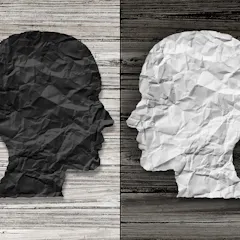
Why do some people reject scientifically accepted ideas? A psychotherapist points to black-and-white thinking as part of the explanation.
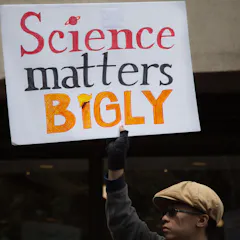
Scientists typically stay out of public policy debates, but an academic makes the case that they need to push back against politicians who distort research.

Quirks of human psychology can pose problems for science communicators trying to cover controversial topics. Recognizing what cognitive science knows about how we deal with new information could help.

The public loses when their only choices are inaccessible, impenetrable journal articles or overhyped click-bait about science. Scientists themselves need to step up and help bridge the divide.
Top contributors
-

Postdoctoral fellow, Kellogg School of Management, University of North Carolina at Chapel Hill
-
Holcim (US) Professor of Sustainable Enterprise, Ross School of Business, School for Environment & Sustainability, University of Michigan
-
Adjunct Assistant Professor of Psychological Sciences, Case Western Reserve University
-
Ph.D. Candidate in Cognitive Science, University of California, San Diego
-
Postdoctoral Research Fellow, Neuroscience, Boston University
-
Postdoctoral Researcher in Chemistry, University of Cambridge
-
Previous Vice President of the Academy of Science of South Africa and DSI-NRF SARChI chair in Fungal Genomics, Professor in Genetics, University of Pretoria, University of Pretoria
-
Assistant Professor of Cancer Prevention and Control, Health Communication Researcher, West Virginia University
-
Associate Professor and Canada Research Chair in Global Perspectives in HIV and Sexual and Reproductive Health, Simon Fraser University
-
Associate Professor, Curtin University
-
Associate Professor and Canada Research Chair, Department of Chemistry and Biochemistry, University of Lethbridge
-
Assistant Professor, Physical Oceanography, University of British Columbia
-
Professor, Department of Geography, Simon Fraser University
-
Assistant Professor, McGill University
-
Ph.D. Student in Physics, Princeton University