
How can the science community minimise the risks but maximise the benefits of AI?
Articles on Scientific discovery
Displaying all articles
AI promises to accelerate scientific discovery, but if scientists aren’t careful public trust may be left behind.

The origin of life on Earth is one of the biggest mysteries in science.

Innovative companies engage in many highly touted best practices. While they can enhance competitiveness, some are more important than others and need a strategy for effective implementation.

Canada has produced Nobel Prize winners in the arts and sciences. With several recent awards, Canadian talent still has the potential for future achievements.

There has been a rapid redirection of resources towards COVID-19-related research. In the long term, this resource reallocation is likely to result in budget cuts in all research areas.
Mistakes can be made during scientific research with devastating effects. Keeping an open mind to the possibility of error and correcting immediately can make the difference between life and death.
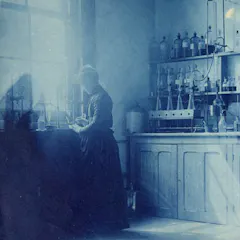
Canadian physician and scientist Maud Menten’s discovery about enzymes was foundational in the work of this year’s Nobel Prize in chemistry recipient.
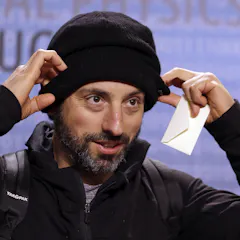
The nomination deadline for science’s most lucrative prize – the Breakthrough Prize – is looming. Why has no Canadian ever received this prize, despite groundbreaking discoveries?
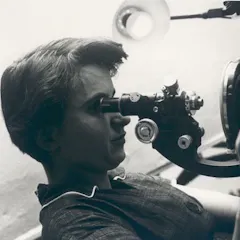
It’s 65 years since the structure of DNA was first published, but the woman who made that possible remains unknown to many people.
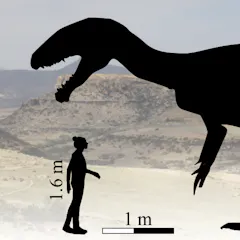
Until this discovery, theropod dinosaurs were thought to be considerably smaller, at three to five metres in body length, during the Early Jurassic.
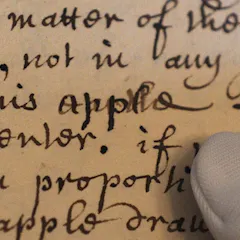
Isaac Newton and Albert Einstein would have bridled under today’s research funding bureaucracy. It’s time to allow scientists to indulge their curiosity again.
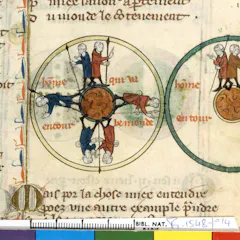
The case for neoclassicism in science.
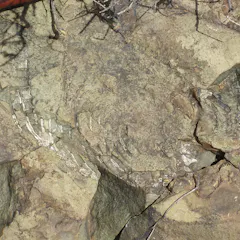
Good science isn’t rooted in chance. It’s based on people with expertise being in the right place at the right time, equipped with enough knowledge to know what they’re looking at.
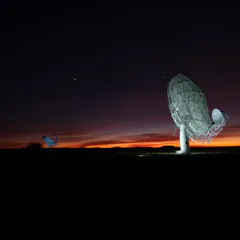
What’s particularly exciting about “first light” images from South Africa’s MeerKAT radio telescope is that they prove Africa is a rising star in the world of astronomy.

Forget the pith helmet and butterfly net. Discovering biodiversity now is much more about metagenomics and the 0’s and 1’s of digital databases.
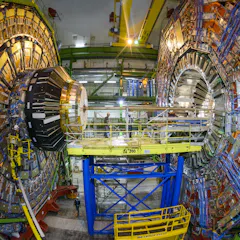
Running the world’s largest particle accelerator requires a lot of energy, but it could reveal the secrets of the universe.
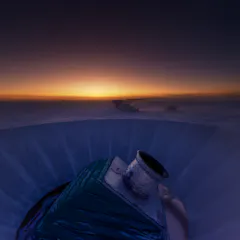
Last March, the BICEP2 collaboration announced that they had used a microwave telescope at the South Pole to detect primordial gravitational waves. These tiny ripples in spacetime would be the first proof…

UNDERSTANDING RESEARCH: What do we actually mean by research and how does it help inform our understanding of things? Today a cautionary tale of why you should be careful of some new announcements made…
Scientists have found a new type of rock form that consists of plastic waste and will one day act as evidence of human impact…
Top contributors
-

Emeritus Robert Reford Professor and Professor of Medicine, McGill University
-
Professor Emeritus, Department of Pharmacology and Therapeutics, University of Manitoba
-
Professor in High Medieval History, Durham University
-
Associate Professor in Experimental Psychology (Perception), University of Oxford
-
SKA Postdoc in Observational Cosmology, University of the Western Cape
-
Researcher and curator, Jurassica Museum
-
Associate professor in Vertebrate Palaeontology, University of the Witwatersrand
-
Royal Society University Research Fellow and Lecturer in Particle Physics, UCL
-
Professor of Natural Philosophy in the Department of Physics, University of York
-
Professor of Astrophysics, Monash University
-
Research Professor of Ecosystem Science and Management, Penn State
-
Professor in Biochemistry, Genetics and Microbiology, and Professor at Future Africa, University of Pretoria, University of Pretoria
-
Associate Professor, Hill and Levene Schools of Business, University of Regina
-
Professor, Chemistry and Biochemistry, Laurentian University
-
Director, Institute for Cellular and Molecular Medicine & SAMRC Extramural Unit for Stem Cell Research & Therapy, University of Pretoria