
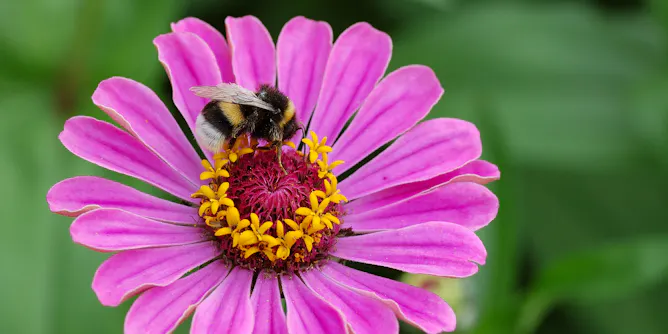
The essays in a new anthology offer two distinct ways of interpreting the Promethean legacy of scientific progress.
Articles on Science writing
Displaying all articles

A biography of scientists Carl Linnaeus and Georges-Louis LeClerc explores the complex, disparate lives of two brilliant men who shaped the study of natural history.

James O'Hanlon’s easy and humorous style makes Silk and Venom a readily digestible and satisfying meal for anyone with an interest in the natural world.

As The Conversation Canada celebrates the fifth anniversary of its launch, the publication’s editors offer their thoughts.
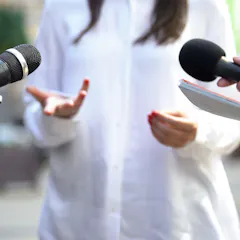
Men still dominate the science media landscape, among both quoted sources and the writers themselves. Confronting this problem is not a job just for women, or just for the media - it’s for everyone.

As we enter an era where once incurable diseases become curable, be prepared for some challenging debates about how to pay for gene therapy and the value of a human life.

The early days of science writing were largely confined to men, with women treated to texts labelled “for the ladies”. Things have changed, but more needs to be done.

The Athena Swan charter commits research institutions to create a gender inclusive workplace, through taking action and being held accountable. 15 Australian institutions are now bronze awardees.
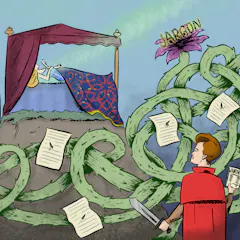
Scientific ideas can get lost in forests of words that lack structure and overuse complex language. Just like Sleeping Beauty, they need rescuing.

If you already write for The Conversation, thank you! But less than 30% of story pitches to our Science and Technology section come from women.

Never underestimate a person with dyslexia - the skills and strategies they’ve developed to survive academia can be the right fit for effective communication.
Five The Conversation authors were selected to feature in a compilation of the best Australian science writing in 2017, and one has won the Bragg UNSW Press Prize.

Science papers are supposed to be communication tools - and yet hardly anyone can understand them, even other scientists.
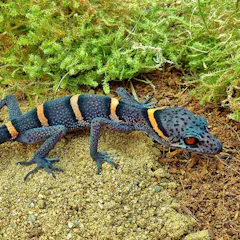
Biologists have a centuries-old tradition of publishing on rare and endangered species. But poachers are using open-access information to target valuable and fragile new species.
The use of “GIFs” has exploded in recent years. They are used for news, views and entertainment but are most commonly seen as a light-hearted medium. Now scientists are beginning to see how GIFs can be…

Popular Science has announced that it will be closing online comments on its news stories. Uncivil commenters have an overly negative effect on readers, it claims, with a small number of negative commenters…
Top contributors
-

Researcher, School of Life and Environmental Sciences, Deakin University
-
Emeritus Professor of Science, Language and Society, School of Sociology and Social Policy, University of Nottingham
-
Associate Professor and Marine Ecologist, Adelaide University
-
Research Chair in Science Education and Public Engagement, University of Calgary
-
Professor of Molecular Oncology, University of Sydney
-
Professor, Sustainable Marine Futures, Environment Institute, Adelaide University
-
Distinguished Professor of Ecology, Fenner School of Environment and Society, Australian National University
-
Research Fellow in Ecology, Australian National University
-
Postdoctoral Research Fellow, Institute for Molecular Bioscience, The University of Queensland
-
Australia's Chief Scientist, Office of the Chief Scientist
-
Associate Professor, Interim Pro Vice Chancellor Learning and Teaching, Australian National University
-
Affiliate, School of Mathematics, Monash University
-
Australian Government Women in STEM Ambassador, Professor of Practice, UNSW
-
Adjunct Senior Research Fellow, La Trobe University
-
Pro Vice-Chancellor (Academic Innovation & Change), Professor of Astrophysics, Swinburne University of Technology