
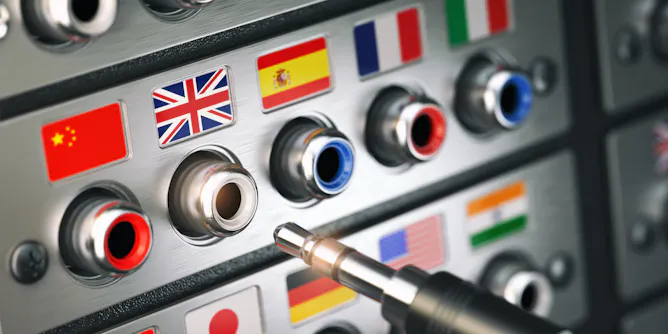
Around 98% of all research is published in English, posing a serious problem for the global scientific community.
Articles on Science
Displaying 221 - 240 of 796 articles

Quantum computing has huge promise from a technical perspective, but the practical benefits are less clear.
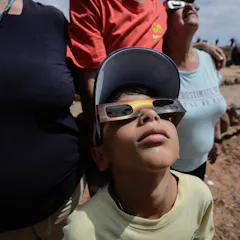
If you have young kids, the solar eclipse on April 8, 2024, represents a rare opportunity to teach them about science.
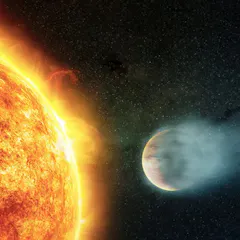
There are several ways in which stars can destroy and swallow their own planets.
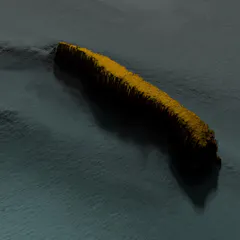
The SS Hartdale was sunk by a German U-boat in 1915 and its final resting place had long been unknown.
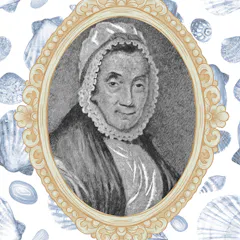
Collecting shells was a common past time in Enlightenment Britain, when elite women were becoming increasingly interested in science.

Could the technology move beyond medical applications and into wide use?
What if there’s no experiment to work out which theory of consciousness is correct?
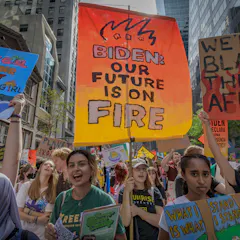
Research shows that climate change had a significant effect on voting choices in the 2016 and 2020 elections – and could also influence the 2024 presidential race.

Students are provided the opportunity to use America’s national parks as case studies for environmental issues and tough conversations in this course.

Climate change is often seen as solely a technical problem. This is a misguided belief. Understanding how to build a better world begins, and ends, with understanding the societies which inhabit it.
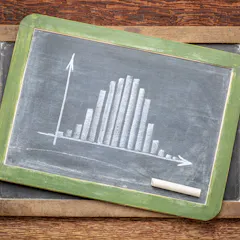
The average might come in handy for certain data analyses, but is any one person really ‘average’?
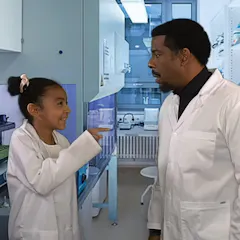
Jokes can be a healing contagion as they expose hypocrisy, spark laughter and open minds.
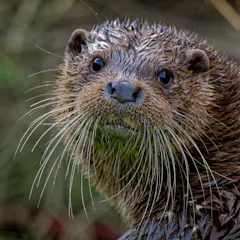
Research has revealed how British otters may have been able to recover from species loss in the 1950s with the help of otters from Asia.

Climate scientist Mark Maslin pairs up with comedian Jo Brand to explain the urgency of the climate crisis. Together, they find that humour cuts through in ways that plain facts just can’t.

The molecules that make micelles are in your dishwashing detergent, your body wash, your shampoo, your toothpaste and even many foods. They are there to help the water interact with the dirt and oils.

If there is an overriding theme in The Worlds I See, it is that human and artificial intelligence form a double helix.
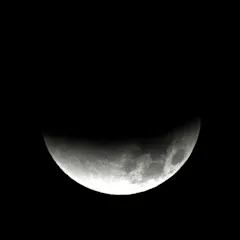
Projects under NASA’s CLPS program – including the Odysseus lander that made it to the lunar surface – will probe unexplored questions about the universe’s formation.

The new Netflix documentary follows identical twins as they adopt different diets. This is a great example of a twin study – a uniquely useful research tool in science.
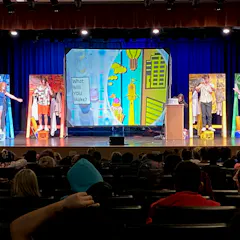
Is it a STEM education or a STEAM education? Integrating arts into science programming and vice versa can pique kids’ curiosity − a play touring Michigan aims to do just that.
Top contributors
-

Professor and Deputy Vice-Chancellor (Research), University of Sydney
-
Professor in Applied Cognitive Psychology, Manchester Metropolitan University
-
Senior Lecturer and Researcher in Cognitive and Parapsychology, Manchester Metropolitan University
-
Open Evidence Research, UOC - Universitat Oberta de Catalunya
-
Professor of Public Affairs, The Ohio State University
-
University Distinguished Professor of Astronomy, University of Arizona
-
Professor of Natural Philosophy in the Department of Physics, University of York
-
Professor, Philosophy of Science, The University of Melbourne
-
Professor of Creative Pedagogies, Edinburgh Napier University
-
Professor of Natural Resources and Environmental Science, University of Vermont
-
Associate Professor in Astronomy, Monash University
-
Dean of Science, University of California, Santa Cruz
-
Professor of Environmental Engineering, North Carolina State University
-
Senior Lecturer in Physics, Nottingham Trent University
-
Honorary Associate, School of Physics, University of Sydney