

The third maths and stats curriculum for primary and intermediate schools in less than three years is being introduced on an unrealistic timeline.
Articles on School assessment
Displaying 1 - 20 of 33 articles

Ask the teacher if – in their view – your child is making an expected or acceptable level of progress, and what evidence tells them this.

The Ukraine war shows how important agile and critical social media use can be. It’s a reminder that our English curriculum in schools is out of touch with our world of digital communication.
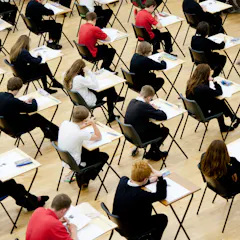
Would formal exams be a better, and fairer, measure of pupil performance than teacher assessments?

The UK government’s announcement on how students work will be graded is too little, too late.

What’s taught in South African schools is at odds with the skills pupils need for the post-school world.

Disruptions to schooling at the lower grades should be remedied, otherwise there could be a serious impact on the quality of Matriculants a decade or more from now.

Indonesian researchers developed an Indian-inspired toolkit to assess literacy and numeracy among elementary-level students. The results were worrying.

Are current forms of standardized literacy tests really measuring children’s capacity to read and interact with our rapidly-changing world?

There are benefits and drawbacks to both formative and summative assessment. Both are important parts of a rigorous assessment program.

In Australian schools, assessment drives learning, but there are better models to consider than the current system of supplementary examinations.

Standardised tests are a powerful tool for building an evidence base of what works to guide education policy.

NAPLAN is good at measuring some aspects of education, including knowledge difference between demographics, but has not produced a positive effect on student learning outcomes.
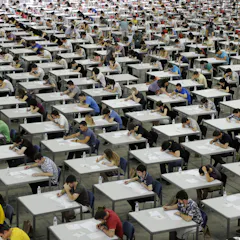
The use of standardised testing is a divisive topic, and most of the disagreement comes down to beliefs about whether using it to control education is a good or bad thing.

My School data does not show the quality of teaching, and school comparisons and rankings can be misleading.

Our current way of assessing students doesn’t let them see the progress they are making over extended periods of time.

Many young children can give the false impression that they are learning to read, when in fact they are mostly guessing words from pictures or context. This test will help to identify these students.

Despite significant reform agendas over the past decade, no real progress in outcomes has been achieved.
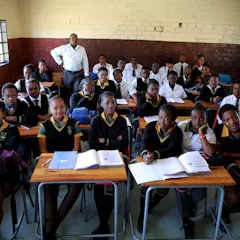
South Africa’s annual matric pass rate obscures important differences in provincial achievements, the rural and urban divide and the unequal outcomes for learners in poorer schools.
Various forms of testing that reduce students’ knowledge, capacities and skills to a single number cannot of themselves help inform improvement.
Top contributors
-

Senior Lecturer in Educational Assessment, Macquarie University
-
Professor, Deakin University
-
Professor of Education and Head of the School of Education, University of Sheffield
-
Professor, School of Education, University of Southern Queensland
-
Dean of the Cardiff School of Education, Cardiff Metropolitan University
-
Lecturer in Modern History, University of Southampton
-
Adjunct Associate Professor of Education Policy, Victoria University
-
Principal Adviser to the Vice Chancellor, RMIT University
-
Head Centre for Global Education Monitoring - ACER, Australian Council for Educational Research
-
Programme Leader, MA in Educational Assessment, UCL
-
Principal Research Fellow, Australian Council for Educational Research
-
Professor of Education Futures, The University of Melbourne
-
Associate Professor of Education Policy, Australian Catholic University
-
Professor of Educational Assessment, UCL
-
Professor of Digital Learning and Play, Northumbria University, Newcastle