
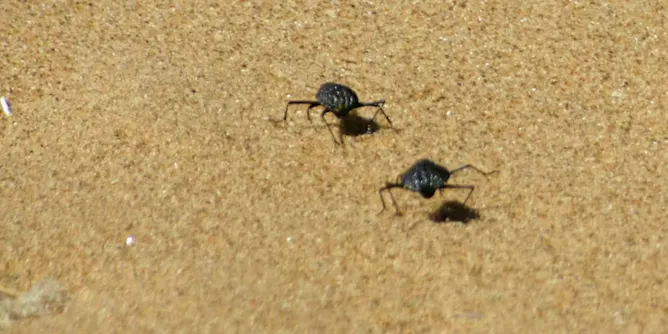
A Namibian desert beetle cools down by running in the sun.
Articles on Sand dunes
Displaying all articles

Understanding the similarities and differences of the deserts on Earth and Mars will help space travelers survive future missions to the red planet.

Huge volumes of sand have been swept offshore by Cyclone Alfred’s waves, leaving beaches and dunes looking very different.
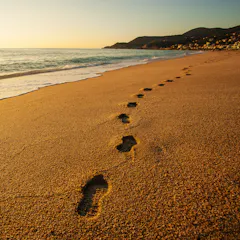
Tracks and traces from long ago are preserved in cemented dune surfaces.
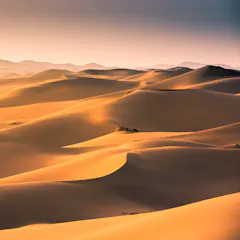
Dunes can preserve a record of historic climate changes and shifting continents.
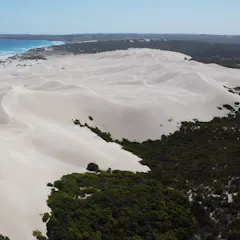
Some Aussie beaches are being reshaped and coastal dunes are marching inland. We used data from aerial photography, field surveys, laser mapping and drones to study incredible rates of change.
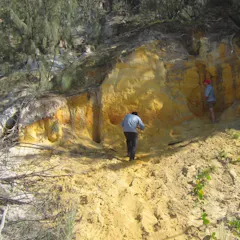
Until now, a limitation of records of past fires is that these have come from sediments laid down in lakes and bogs. Records for dryland regions have been lacking, but dune deposits can fill the gap.
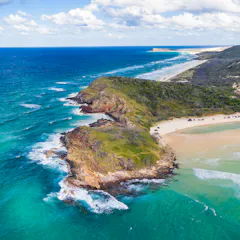
Establishing the age of K'gari (Fraser Island) confirms it emerged before the reef, despite the climate being suitable for coral growth long before then.
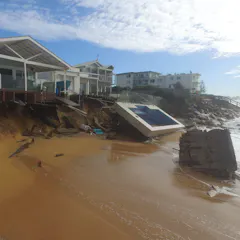
We must heed lessons from past storms and plan ahead, as climate change will only exacerbate future coastal disasters.

From capillary forces to sand grain shape, the simple mix of sand and water hides the complexity within.
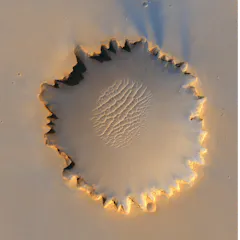
There are many bodies in the solar system we can’t easily access. But observations of their winds and sediments reveal a surprising amount.

We simulated the desert planet to find out.
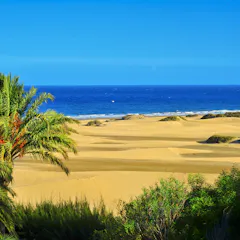
One of Europe’s last intact mobile and vegetated dune ecosystems is in danger of being loved to death. What can be done?

Desertification and climate change are threatening ancient sites in the Sahara.

It appears that the South African Cape south coast’s dunes and beaches formed a vast canvas of sand on which our ancestors could leave their mark.

For some sand-dwelling plants, stickiness is a defense tactic that keeps predators at bay.
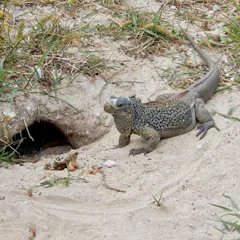
A trace fossil of an iguana burrow was discovered on San Salvador Island in the Bahamas. Estimated to be 115,000 years old, it is the first known fossil of its kind.
Top contributors
-

Research Associate, African Centre for Coastal Palaeoscience, Nelson Mandela University
-
Adjunct Professor, University of Queensland, and Professor and Head of School of Earth and Environment, University of Canterbury
-
Professor, Flinders University
-
Associate Professor in Physical Geography, University of the Sunshine Coast
-
PhD Researcher, Sand Movement in Sudan, University of Nottingham
-
Duncan Mitchell is a Friend of The Conversation.
Honorary Professorial Research Fellow, University of the Witwatersrand
-
Desert Ecology Research Associate, South African Environmental Observation Network, Centre for Environmental Management, University of the Free State
-
Research Associate in Paleoclimate Modelling, University of Bristol
-
Postdoctoral Researcher, Department of Geological Sciences, Stockholm University
-
Assistant Professor of Plant Biology, Ecology and Evolution, Oklahoma State University
-
Professor of Geography, University of Oxford
-
Flinders University
-
Emeritus Chief Scientist, NRF-SAIAB, National Research Foundation
-
Specialist Scientist, Council for Geoscience
-
Honorary researcher, Evolutionary Studies Institute, University of the Witwatersrand