

Republicans are pressing for policy changes based on a misconception that hardly anyone who gets help buying groceries with Supplemental Nutrition Assistance Program benefits is employed.
Articles on Safety net
Displaying 101 - 120 of 183 articles

The emergency status allowed the federal government to cut through a mountain of red tape, with the goal of responding to the pandemic more efficiently.

Even if you don’t live near farm country, you’ve got a stake in the upcoming farm bill – including what kind of farms your tax dollars support.
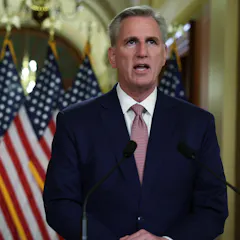
Adults insured by Medicaid who are 19 to 55 years old and don’t have children or other dependents would need to spend 80 hours a month doing paid work, job training or community service.

A team of economists looked at what happened after Supplemental Nutrition Assistance Program work requirements were reinstated in Virginia in 2013.

More than half of working-age adults over 50 with a work-limiting disability didn’t receive any benefits from Social Security in 2016.

Expanding SNAP helped shield low-income children from some of the harm caused by economic upheaval when the COVID-19 pandemic began.

The program’s expenses are rising rapidly as baby boomers retire and health care costs grow.
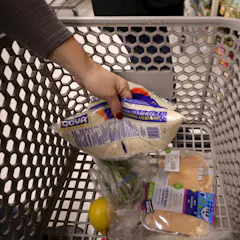
More than 41 million people rely on the Supplemental Nutrition Assistance Program to buy their groceries. When the COVID-19 pandemic began, the program ramped up.

Pandemic-related policies made it easier for states to afford to cover more people and made that coverage more stable for millions of Americans who rely on the program for health care.

States taking the strictest stands against abortion tend to have among the worst statistics in the nation on child and family well-being.

A tax credit expansion played a big role in child poverty reduction. But the government’s failure to reach all eligible Americans meant many families never got that temporary benefit.

Higher Social Security benefits can significantly reduce the odds of an older person’s being food insecure.

An alternative approach to measuring poverty detected a decline in 2021, amid a surge in government support for low-income families.

Despite a series of federal measures requiring greater efforts to preserve family unity, many policies make life harder for people swept up in the system.

When states reduce barriers for low-income children to get coverage, their mothers are more likely to be married and less likely to smoke.

This important benefit does more than just help parents in terms of dollars and cents.

A food policy expert explains how school lunches changed during the COVID-19 pandemic and what’s wrong with going back to the normal system now.

Social scientists determined that body mass index growth declined for children of low-income parents in states that had expanded their Medicaid programs.
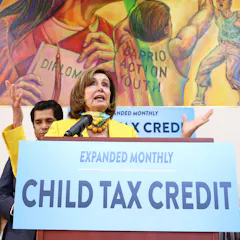
Proponents of using the child tax credit to alleviate poverty need to reach an agreement with those who insist that it must encourage low-income parents to work.
Top contributors
-

Associate Professor of Political Science, University of Richmond
-
Distinguished Professor of Sociology and Public Policy, UMass Amherst
-
Professor of Law, University of Virginia
-
Associate Professor of Public Health, The Ohio State University
-
Professor of Law and Energy Policy, University of Pennsylvania
-
Venable Professor of Law, University of Baltimore
-
Professor of Economics, University of Michigan
-
Professor of Economics and Director of the Private Enterprise Research Center, Texas A&M University
-
Professor of Gerontology, UMass Boston
-
Professor Emeritus of Public affairs and Philanthropic Studies, Indiana University
-
Associate Professor of Social Work, University of Memphis
-
Senior Research Fellow and Lecturer of Gerontology, UMass Boston
-
Assistant Professor of Social Work, University of North Dakota
-
Executive Associate Director of the Private Enterprise Research Center, Texas A&M University
-
Associate Professor of Agriculture and Human Sciences, North Carolina State University