
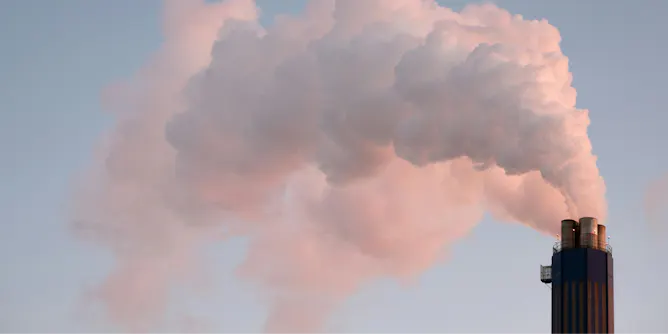
Australia cannot meet its 2035 climate target with existing policy settings: Stronger incentives are urgently needed.
Articles on Safeguard Mechanism
Displaying 1 - 20 of 22 articles

Australia killed off its world-leading carbon price. As budget pressure mounts, economists want it back on the table.
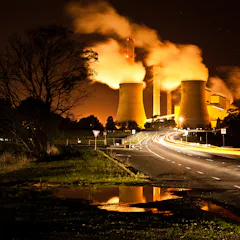
Both major parties agree Australia must reach net-zero emissions. That’s why winding back the safeguard mechanism would be reckless policy.

For Australia to shift to a net zero economy, its big polluters need to cut emissions. A get-out clause buried in the policy makes it unlikely that they will, and the result will be devastating.

Australia’s move towards net zero emissoions by 2020 is in danger of stalling. If it is not to fail, the nation urgently needs a government plan, aligned with industry and with public support.
Australia’s environmental movement is not united. The reasons for that go deep.
The revised safeguard mechanism could form the basis of an economy-wide carbon price.
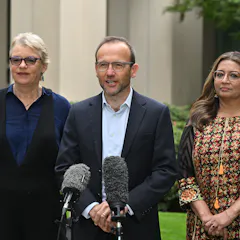
The deal shows the Greens leader has pulled his party towards a more practical orientation, with an emphasis on getting things done.

Australia’s new climate deal contains wins for the Greens – but the negotiations were bruising
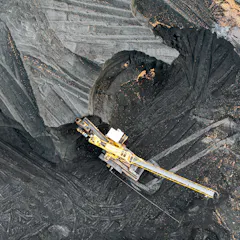
The Greens wanted Australia to rule out new coal and gas projects. Instead, we have a hard cap on emissions – and that should make many fossil fuel projects unviable

Labor must resist the false promise of carbon offsets in its safeguard mechanism. The only thing that matters is actually cutting emissions

Labor has ruled out banning new fossil fuel developments. Even so, there are many climate deals the government and the Greens could strike

In this podcast, Michelle Grattan and Greens leader Adam Bandt discuss climate change, the cost of living crisis and the Voice.

For years, the ‘safeguard mechanism’ has been widely criticised for lacking teeth. Labor’s new reform doesn’t change that much.
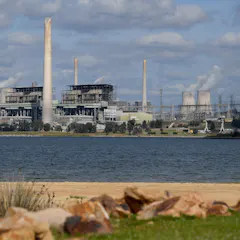
The safeguard mechanism is supposed to stop Australia’s largest polluters from emitting over a certain threshold. It’s been widely criticised for lacking teeth, and is finally under review.
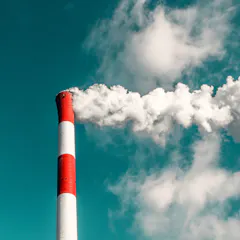
Right now, the safeguard mechanism meant to reduce emissions is not fit for purpose. Labor is exploring ways to fix it - and create a proper pollution market.
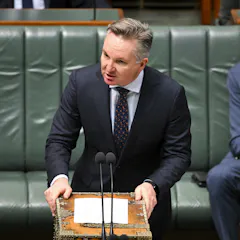
Labor won’t concede to the Greens’ core demands on the bill, but a climate “trigger” on new developments could ensure the bill has real force.
It wouldn’t be a modern Australian election campaign without the words “carbon tax” being thrown around.So lets clear a few things up.
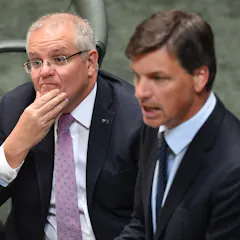
Changes to Australia’s emissions reduction policies may do little more than channel taxpayer money to industry.

Under the current rules, the federal government takes the most responsibility for buying carbon credits. A blockchain-driven market would be faster, smarter, and much more open.
Top contributors
-

Senior lecturer, Australian National University
-
Professor, Crawford School of Public Policy and Director, Centre for Climate and Energy Policy, Australian National University
-
Senior Fellow in Energy and Climate Change, Grattan Institute
-
Professor of Trade Law and Taxation, Queensland University of Technology
-
Research Associate, Institute for Climate Risk and Response, UNSW
-
Professor, Australian Studies Institute, Australian National University
-
Adjunct Associate Professor, Public and Environmental Policy, University of Tasmania
-
Professor, School of Economics, The University of Queensland
-
Professor, Australian National University
-
Professor of Economics, The University of Queensland
-
Lecturer in Sustainability Governance and Leadership, The University of Melbourne
-
Professorial Fellow, University of Canberra
-
Honorary Professor of Public Policy, Australian National University
-
Professor of Law, Deakin University
-
Honorary Associate, School of Chemical and Biomolecular Engineering, University of Sydney