
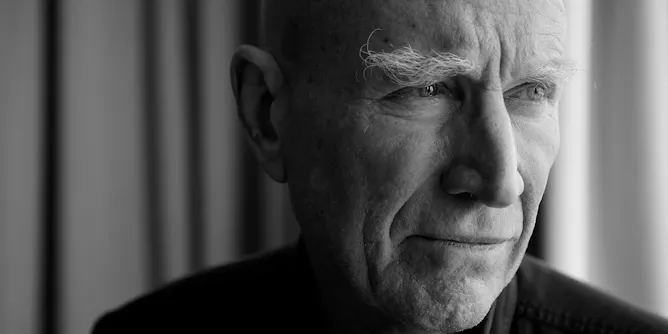
Salgado produced technically flawless, mesmerising images of some of the world’s harshest realities, from the gold mines of Brazil to the horror of the Rwandan genocide.
Articles on Rwandan genocide
Displaying 1 - 20 of 22 articles
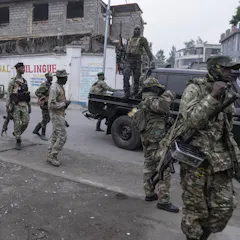
Creating sustainable peace in Congo requires giving justice to the victims of war crimes and preventing the illicit trade in minerals.

The M23 rebel group have captured the city of Goma in the eastern DRC in a major escalation of a drawn-out conflict.
Gov. Tim Walz used geographic information systems as a schoolteacher. How will that experience come into play if he and Kamala Harris win the White House in November?
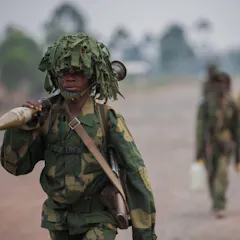
Millions more are now at risk from the escalating violence in the east of the DRC.
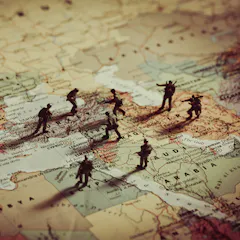
Maps can shape how we see conflict.
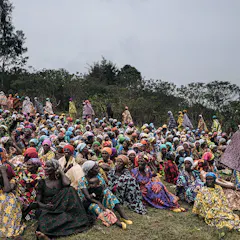
Rwanda shapes conflict in the region by using the Congolese Tutsi to centre its claims of a continued threat of genocide.
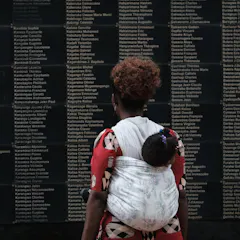
Rwanda is touted as one of the leading nations when it comes to strides toward gender equality. But the role of female ‘rescuers’ in the 1994 genocide is being downplayed.
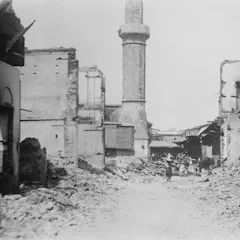
Recent studies on mass violence have turned the spotlight on the resilience of targeted individuals and communities.

Rwandan authors have long been sidelined in debates about Rwanda and other conflict-affected societies.

An expert on rape during war examines the emerging evidence from Ukraine that Russian soldiers raped Ukrainian women and explains the role rape plays in conflicts.

Vladimir Putin has justified his invasion of Ukraine with baseless claims that Ukraine is committing genocide. It isn’t the first time a political leader has cried genocide for political means.
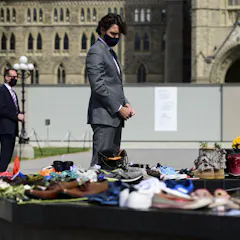
Canada has officially recognized eight genocides that have happened around the world. It has not done the same for its own treatment of Indigenous children who they sent to Indian Residential Schools.
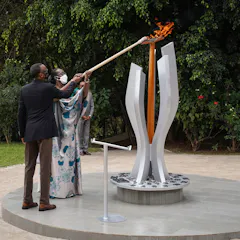
A survey of the commemorations since 2014 reveals the politicking behind the writing of history and Rwanda’s place in the world.

Scholars who study dangerous speech have identified common themes that can lead to violence.
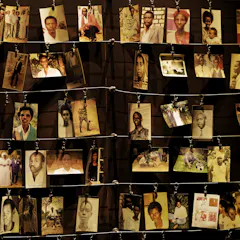
Learning from what actually worked during the United Nations’ infamously ineffective 1994 peacekeeping mission in Rwanda may save lives in the future.
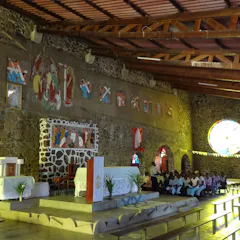
Although many years have passed, the Rwandan genocide still has much to teach us about the centrality of media in cases of state violence.
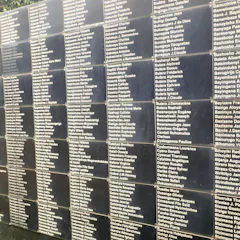
The Rwanda Tribunal convicted people for indescribably horrific crimes and some are asking for early release.
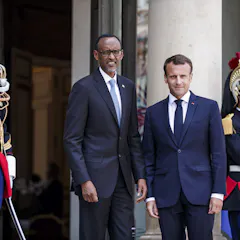
After the 1994 genocide, Rwanda pivoted towards the Anglophone world. But not entirely.
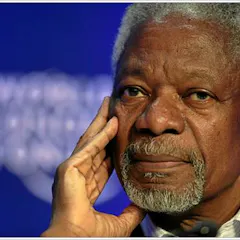
While his appointment as UN Secretary-General was a huge breakthrough, Kofi Annan also led the organisation through some of its ugliest moments.
Top contributors
-

PhD Candidate and Tutor in the School of History, Anthropology, Philosophy and Politics, Queen's University Belfast
-
Associate Professor, Department of Sociology and Social Anthropology, Dalhousie University
-
Clinical Associate, Professor, New York University
-
Professor and Canada Research Chair in Children, Families and Armed Conflict, McGill University
-
Postdoctoral Research Associate, King's College London
-
Emergency Physician at Brigham and Women's Hospital, Director of External Programs STRATUS Center for Medical Simulation, Core Faculty Harvard Humanitarian Initiative, Harvard University
-
Professor of Law, Conflict and Global Development, University of Reading
-
Furman Public Policy Scholar, New York University
-
Ph.D., School of Public and International Affairs, Virginia Tech
-
Professor of International Politics, SOAS, University of London
-
Director of Programs, Aegis Trust
-
PhD student of the sociology of mass violence, The Ohio State University
-
Honorary Associate Professor, College of Arts and Social Sciences, University of Rwanda
-
Professeur des universités, Université Paris 1 Panthéon-Sorbonne
-
Professor of Media and Information Studies, Western University