

Rwanda’s majority Hutu have over time reported feeling more represented by a Tutsi-dominated government.
Articles on Hutu
Displaying 1 - 20 of 32 articles
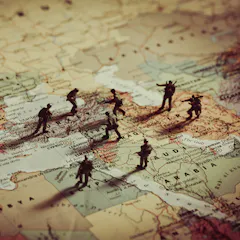
Maps can shape how we see conflict.
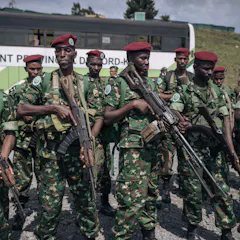
The RED-Tabara armed group operates out of the DRC’s volatile eastern region, which shares a porous 243km border with Burundi.
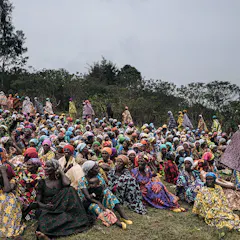
Rwanda shapes conflict in the region by using the Congolese Tutsi to centre its claims of a continued threat of genocide.
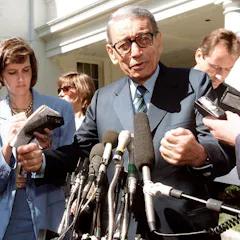
Many believe that the international community could have acted earlier, to prevent the genocide before it started.
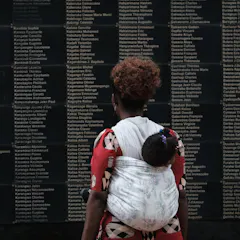
Rwanda is touted as one of the leading nations when it comes to strides toward gender equality. But the role of female ‘rescuers’ in the 1994 genocide is being downplayed.

The 1994 Rwanda genocide has left lasting scars. Children born of sexual violence and mothers have shown immense strength in overcoming their histories of violence.
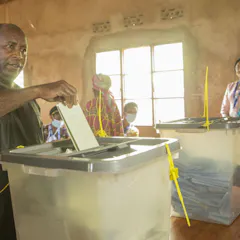
Any state policy looking to increase women’s representation must take into account formal and informal political practices.
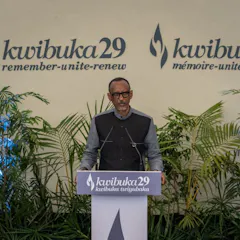
The circumstances, challenges and history of Rwanda are intertwined with Paul Kagame’s own life story.
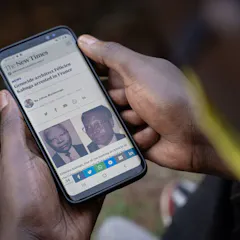
Kabuga’s release raises questions about the international community’s commitment to delivering justice for genocide victims.
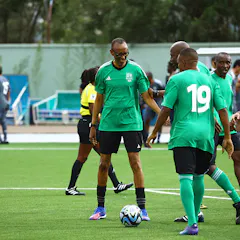
With Africa’s solid support and his pro-west military and policy adventures, Kagame is able to take on critics.
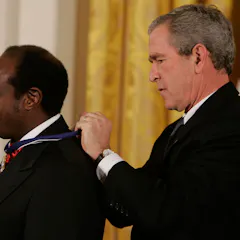
Rusesabagina’s release portrays Rwanda’s president as a pragmatist – one willing to negotiate once a security threat is neutralised.

Rwanda has rebuffed international pressure to release Paul Rusesabagina, a man made famous by Hollywood.
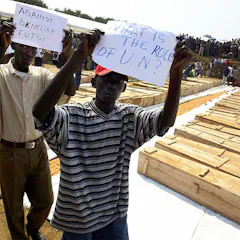
Violence in the Democratic Republic of Congo is used to win a place in government, not to overthrow it. And it keeps working.
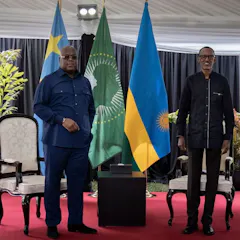
Rwanda believes DRC continues to provide refuge for those behind the 1994 genocide.
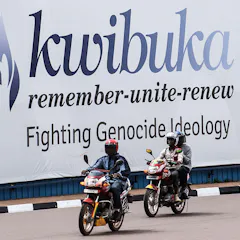
In 2003, Rwanda adopted a policy of ethnic non-recognition. However, for 100 days in a year, it centres ethnicity in the country’s psyche.

The peasantry still provides almost all the resources of the party-state, yet most of the agrarian policy decisions are taken without consultation.
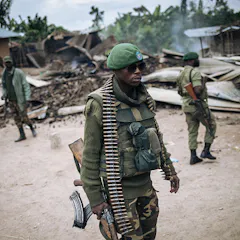
Violence in the DRC can be brought to an end if the geographical scope of the conflict is broadened to include all neighbouring countries.
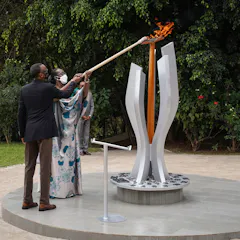
A survey of the commemorations since 2014 reveals the politicking behind the writing of history and Rwanda’s place in the world.
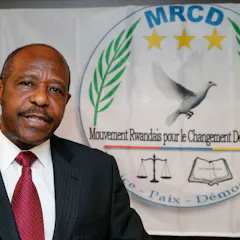
In a political environment as polarised as Rwanda’s, there is no room for moderates and no space for critical voices.
Top contributors
-

Postdoctoral Research Associate, King's College London
-
Professeur des universités, Université Paris 1 Panthéon-Sorbonne
-
Visiting Assistant Professor, UMass Lowell
-
Visiting Professor, SIT Graduate Institute
-
Associate researcher, University of Antwerp
-
Lecturer in Political Science, Binghamton University, State University of New York
-
Professor and Canada Research Chair in Children, Families and Armed Conflict, McGill University
-
Associate Professor, University of Antwerp
-
Lecturer, UMass Boston
-
Professor of Media and Information Studies, Western University
-
Associate Professor, University of Windsor
-
Researcher, Stockholm International Peace Research Institute
-
Professor of Political Science and International Relations, Boston University
-
Associate Professor, University of Antwerp
-
Reader in Cultural Geography and Communication, University of Westminster