
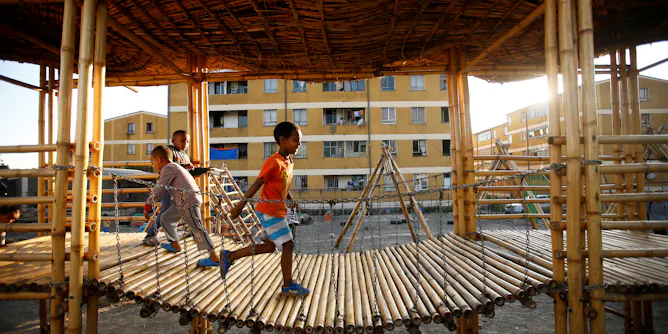
Poor childhood conditions, such as exposure to poverty and stunting, are associated with long-term disadvantages to health, education, social adjustment and earnings.
Articles on Rwanda
Displaying 281 - 300 of 321 articles
There are fears that the withdrawal of countries from the ICC would mark the end of international criminal justice in Africa. This need not be the case.

Increasing legume production can turn the tide for African farmers who struggle with poor soils, declining farm yields and worsening nutrition in one fell swoop
The competition between the two authoritarian regimes has become a fact that, given the regional context, is here to last. It justifies repression and indefinitely postpones democratic expression.

African governments and businesses must do more to assist young people by creating an entrepreneurial ecosystem to support them. Without this support, all of their potential may stutter and die.

Dispensing cash to ensure healthy care for vulnerable children is critical, but it must be supplemented by other interventions to maximise well-being.
Unscrupulous politicians are adept at using regressive story lines that feed insecurities. That could be dangerous ahead of South Africa’s hotly-contested municipal elections.

It’s important to interrogate the key factors that pushed countries from Third World to First World status in the 20th century. Asia’s experiences hold many lessons for Africa.
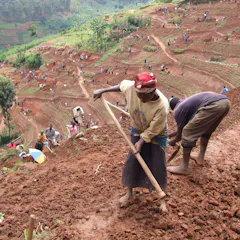
Despite numerous challenges, Rwanda has made significant agricultural strides.
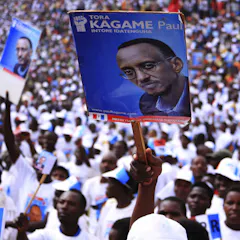
Africa’s democratic promise of the 1990s has lost its shine. Hopes for accountable rule have faded in Uganda, Ethiopia and Rwanda. All have blocked the path to meaningful popular empowerment.
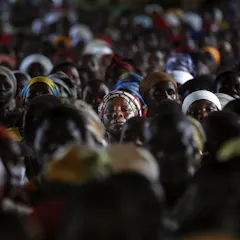
East Africa is dealing with drought, famine, political instability – and hundreds of thousands of people in search of safety.

At least a dozen sub-Saharan Africa countries have raised debt through sovereign bonds. The chickens are now coming home to roost.
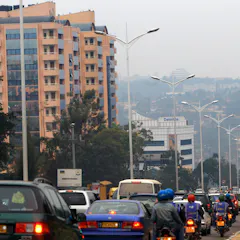
Rwanda has adopted a number of plans to improve its electricity output. There are valuable lessons other African countries can learn from it.
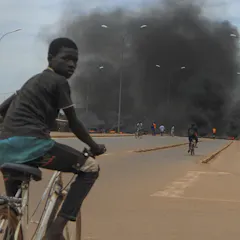
Grassroots protesters are questioning the logic of export-led ‘growth’ and renewed fiscal austerity pushed through the ‘Africa rising’ narrative. They want policies that meet their basic needs.
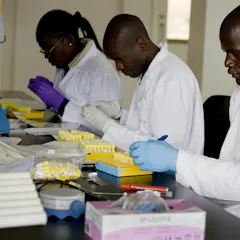
Successful economies are led by innovation and driven by knowledge. For Africa to advance, it needs to make more substantial investments in its research and development sector.

Giving poor people a lot of money or a new asset won’t turn them into entrepreneurs overnight.
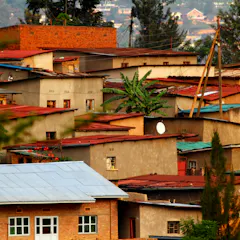
From an economic point of view, low-carbon plans in rapidly urbanising areas can have massive benefits for East African cities.
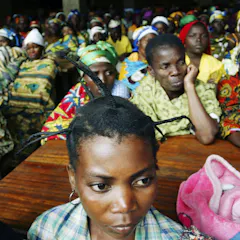
Even with the end of the war in central Africa, continuing instability in the region has triggered an epidemic of rape.
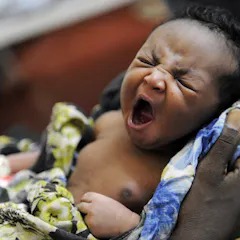
The cases of two women who died in childbirth in two different parts of Uganda are being used in a Constitutional Court battle forcing the government to fulfill its healthcare obligations.
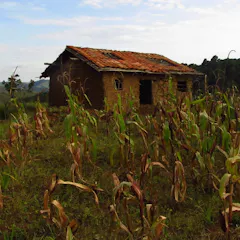
The modernisation of agriculture has been touted by economists and the IMF as a way of reducing poverty in sub-Saharan Africa. But caution about the benefits of the Green Revolution is advisable.
Top contributors
-

Postdoctoral Research Associate, King's College London
-
Associate Professor of International Studies, University of Nottingham
-
Vice Chancellor, University of Global Health Equity
-
Lecturer in Political Science, Binghamton University, State University of New York
-
Senior Researcher at the Feinstein International Center, Tufts University, and Research Associate at the Refugee Studies Centre, University of Oxford
-
Visiting Researcher, University of Leeds
-
Reader in Politics, Governance and Development, Global Development Institute, University of Manchester
-
Professor in International Development, University of Antwerp
-
Lecturer, UMass Boston
-
Honorary Professor of International Relations, University of the Witwatersrand
-
Professor of International Politics, SOAS, University of London
-
Associate Professor, University of Antwerp
-
Postdoctoral fellow, Johns Hopkins University
-
Professeur des universités, Université Paris 1 Panthéon-Sorbonne
-
Research Affiliate, University of Pretoria