

Solar energy is associated with intermittency issues, as it only generates electricity when the sun shines. Certain PV systems can provide cost-effective power reserves for storing electricity.
Articles on Rooftop solar power
Displaying all articles
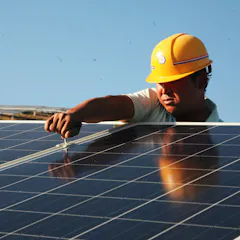
Australia has built millions of mini power stations on detached homes. The next challenge is ensuring people in apartments, units and townhouses can benefit too.
Even small actions, such as choosing the right rooftop solar set-up or changing when we use energy, can make a big difference.
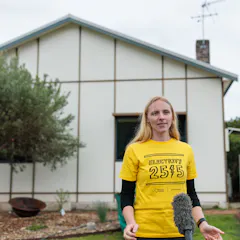
Getting off gas at home is healthier, cheaper and better for the planet. Now the Electrify 2515 community pilot project promises to demonstrate household electrification at scale.
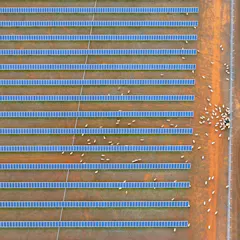
Yes we need land for solar panels, wind farms, batteries, pumped hydro, transmission lines and so on. But the amount of land is surprisingly small, when you do the sums. Here’s why.
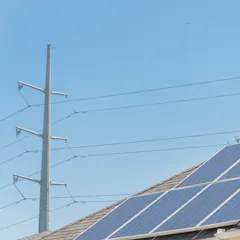
Big changes are needed to create a consumer-centric National Electricity Market that’s able to manage the rise of rooftop solar.

A growing number of people are opting to generate their own renewable energy and escape load shedding.
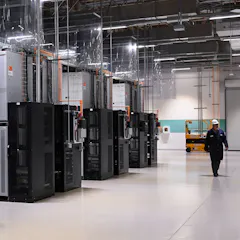
Some power plants don’t have massive smokestacks or cooling towers – or even a central site.
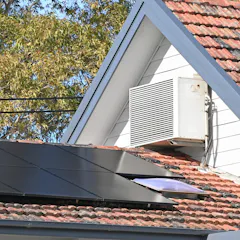
The sunniest days also see the biggest demand for air con.
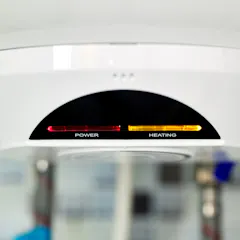
A heater with a 300-litre tank can store as much energy as a home battery at a fraction of the cost. Being able to store surplus solar energy at the right times helps grid stability and cuts emissions.

The need to limit output to the grid costs solar panel owners up to $4.5 million a year in South Australia alone. A bill of rights and responsibilities can make connecting to the grid fairer for all.
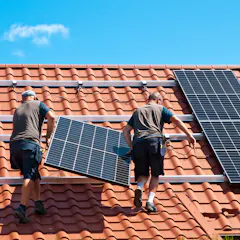
Most of our 10.8 million existing homes are in need of a retrofit to improve their performance and cut household energy use and emissions. The $1.6 billion for energy upgrades covers 170,000 homes.

The very people most in need of the cost savings from installing solar panels are missing out. Better policies are needed to make home solar systems accessible to all Australians.
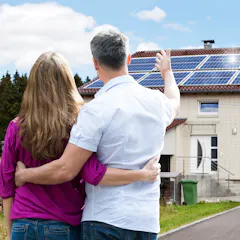
To achieve low or even no electricity bills, there are three areas owners of home solar systems should focus on getting right.

Fixed limits are set for household energy exports because of the uncertain impacts of so many variable generation sources on the network. New energy data and simulation systems may offer an answer.
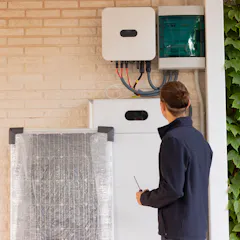
it’s hard to justify buying a battery right now on cost savings alone. If other reasons also matter to you, it’s easier to justify.
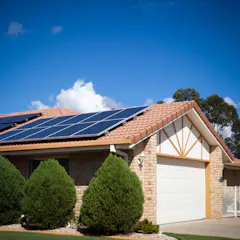
Subsidies are often a policy go-to for governments wanting to encourage more climate-friendly behaviours. But they should be used with caution.
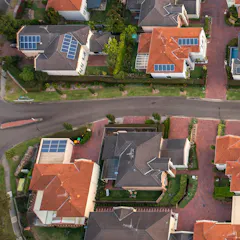
A new analysis shows almost all emissions reductions will be the result of state government policies, and will have virtually nothing to do with the federal government.
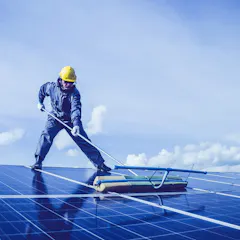
India and China are the cheapest places to install rooftop solar, while the US, Japan and the UK are the most expensive.
Top contributors
-

Professor and Chair in Sustainability, Salford Business School, University of Salford
-
Emeritus Professor of Sustainable Energy Engineering, Adelaide University
-
Associate Professor in Property, Construction and Project Management, RMIT University
-
Visiting Fellow at the ANU Centre for Sustainable Energy Systems, Australian National University
-
Associate Professor of Law at the Faculty of Law, North-West University
-
Professor of Engineering, Australian National University
-
Senior Research Scholar in Energy Systems Modelling at Columbia University's Center on Global Energy Policy, Columbia University
-
Professor of Environmental Mathematics, Adelaide University
-
Research Director - Strategic Energy Collaborations, University of Technology Sydney
-
Professor of Industrial and Applied Mathematics, Adelaide University
-
PhD Candidate, Industrial AI Research Centre, Adelaide University
-
Associate professor, Deakin University
-
PhD Student in Global Energy Engineering, University College Cork
-
Associate Deputy Vice Chancellor in Research & Innovation, RMIT University
-
Professor of Civil and Environmental Engineering, Rice University