
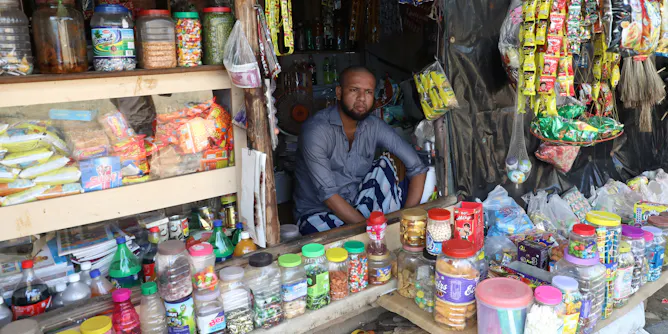
The recent move by Modi’s government to deport Rohingyas from India reveals the religious based-discrimination at the heart of the country’s refugee policies.
Articles on Rohingya
Displaying 81 - 100 of 104 articles

The mass movement of people across the world is nothing new, but migration today is so global and so unrelenting that it may well be the great humanitarian issue of our time.

The idea of relocating thousands of Rohingya refugees to a remote flood-prone island would set a bad precedent for managing human rights crises.
Myanmar’s Rohingya issue has become a full-blown humanitarian crisis that affects all of southeast Asia. ASEAN nations would do well do move beyond their non-interference policy and help.

Long regarded as something approaching a saint, Myanmar’s de facto head of state appears to be running out of moral capital.

Rohingya songs and drawings are a form of resistance against the persecutions they face in Myanmar and in Bangladesh.
The world has waited hopefully for democracy to blossom in Myanmar. But the new regime looks much like the old one.
Unless reconciliation efforts involve people at the grassroots, persecution of ethnic Rohingya will not stop. Indonesian should offer support for dialogue between communities in Myanmar.
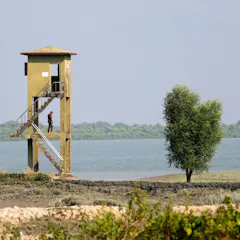
Abuses on Rohingyas have reached new height but neither Myanmar nor neighbouring Bangladesh are taking responsibilities to grant basic human rights to this population.
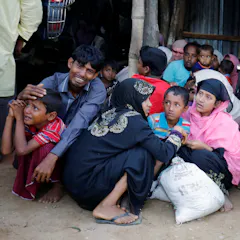
Talks among ASEAN leaders are often limited to political and economic issues, pushing problems with deep social and cultural roots like the persecution of ethnic Rohingya to the margins.
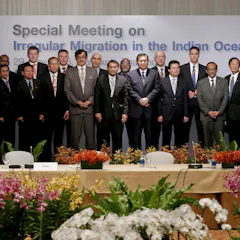
Plans for more robust architecture on forced migration need to be more advanced. Countries in our region must not rest on their laurels.
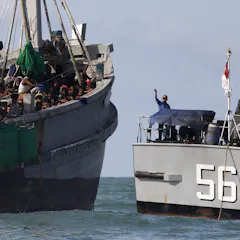
The region is showing signs it is determined to ensure similar mass displacement crises such as that which took place in the Andaman Sea in 2015 are avoided.
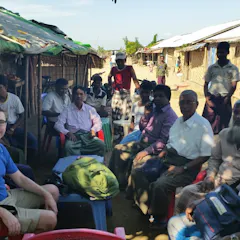
We recently undertook extensive fieldwork in Myanmar to find out what could help resolve the underlying issues that drive the conflict between the Muslim Rohingya and the majority Buddhist Rakhine.
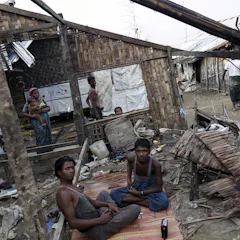
As Myanmar nears a historic election, a long-embattled minority is still struggling to escape lethal violence and trafficking.

Australia should not reserve its help for those fleeing conflict in distant wars. Its first duty should be to those who face death and persecution in its own region.
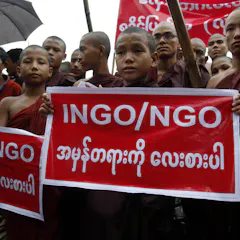
With parliamentary elections looming, the ethnic hatred let loose by Burma’s transition to democracy are running out of control.

Allegations that people smugglers were paid by Australian officials to return to Indonesia should not distract from the search to find a workable solution to the region’s asylum seeker problem.
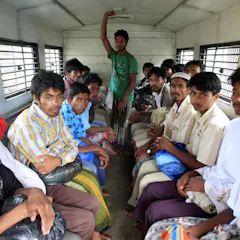
ASEAN stood on the sidelines as thousands of refugees were stranded at sea, but it should apply its policy of constructive engagement to ending the persecution that drives Rohingya people out of Myanmar.
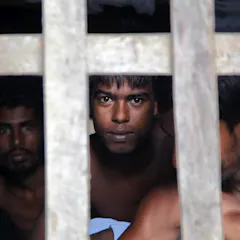
Despite international pressure, Myanmar’s government intends to continue the decades-long program of discriminatory policies against the Rohingya that denies them their human rights.
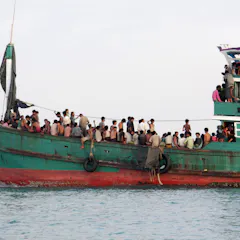
Representatives meeting to discuss South-East Asia’s migrant crisis may learn from the previous refugee crisis that hit the region during the Indochina war.
Top contributors
-

Associate Professor in International & Community Development, Deakin University
-
Lecturer, Department of International Relations, Universitas Gadjah Mada
-
Senior Lecturer in Politics and International Relations, University of Dundee
-
PhD Candidate, UNSW Law; Assistant professor, International Relations, University of Chittagong
-
Leverhulme Trust Early Career Fellow, Loughborough University
-
Deputy Chief Executive, Institute of Strategic and International Studies
-
Visiting Fellow, Crawford School of Public Policy and Visitor, Regnet School of Regulation and Global Governance, Australian National University
-
Doctoral Student, College of Community and Public Affairs, Binghamton University, State University of New York
-
Lecturer, School of Political Science and International Studies, The University of Queensland
-
PhD Candidate, International Relations, Australian National University
-
Honorary Enterprise Professor in the School of Social and Political Sciences, The University of Melbourne
-
Senior Fellow at the ASEAN Studies Center, Universitas Gadjah Mada
-
Research Associate, International State Crime Initiative, Queen Mary University of London
-
Director of the International PhD Program in Human Rights and Peace Studies, Institute of Human Rights and Peace Studies, Mahidol University
-
Researcher, Research Centre for Politics, Indonesian Institute of Sciences (LIPI)