
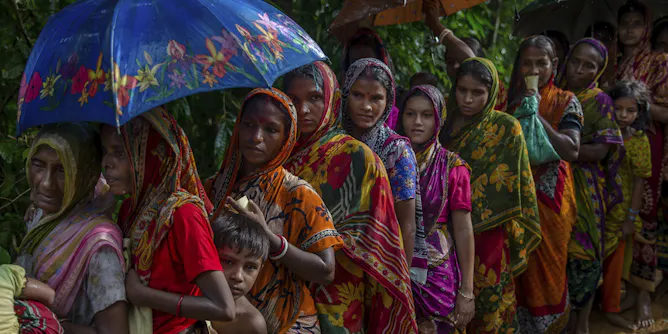
Today, there are more refugees and displaced people than ever before. Sophisticated analytics could be a game-changer for officials on the front lines of the crisis.
Articles on Rohingya
Displaying 61 - 80 of 104 articles
The contestation of Asia will continue this year, with many countries facing internal and external battles.
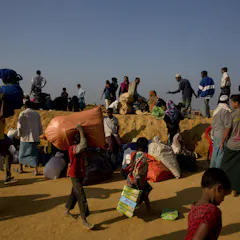
The way Bangladesh has taken in Rohingyas stands in stark contrast to Europe, which faced an influx of Syrian refugees in similar numbers. I saw how refugee camps were being run in an efficient manner.
From an Australian perspective, shifting power in the Indo-Pacific will be of primary importance in 2018 and beyond.
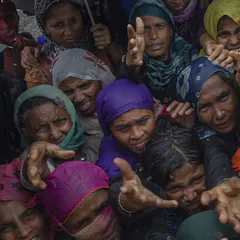
Facebook is unwittingly helping fuel a genocide against the Rohingya people in Myanmar. Does Cuba’s internet model provide lessons to manage social media amid political chaos?
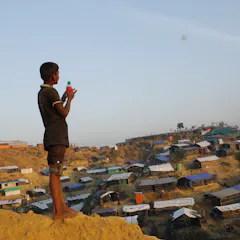
Foreign MPs can strengthen the message that violence towards the Rohingya has consequences for Myanmar’s future relations with European countries.
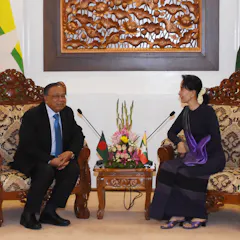
Refugees’ rights are protected by international law. Why are the Rohingya being returned home?
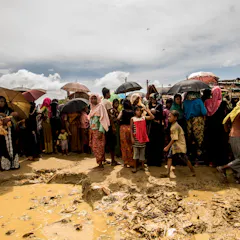
As more than 800,000 Rohingya have now fled Myanmar for Bangladesh, a large-scale humanitarian crisis has unfolded. But what is the most productive way Australia can help?
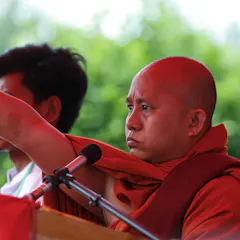
Ten years after the Saffron Revolution in Myanmar, some Theravāda Buddhist monks are now preaching violence against Muslim or Hindu minorities in the name of “holy war”.
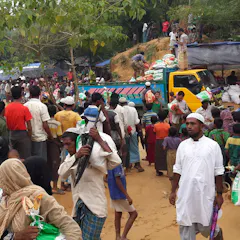
Interviews undertaken in refugee camps on the Bangladesh/Myanmar border paint a grim picture that explains why so many Rohingya fled Myanmar so quickly.
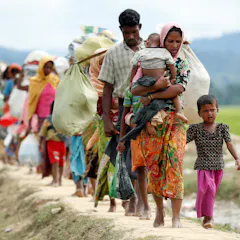
Despite an international commitment to protect civilians from genocidal violence, the world’s response to ethnic cleansing in Myanmar has been feeble. An expert explains the challenges.
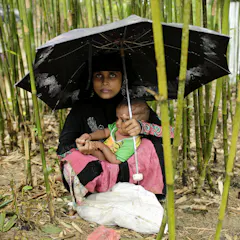
All the signs were there when I was living in Myanmar at the rosiest moment in the transition to democracy.
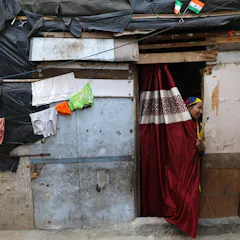
What effect does India’s legal precariousness and lack of institutionalised support have on the ground? Most refugee groups have to rely on themselves.
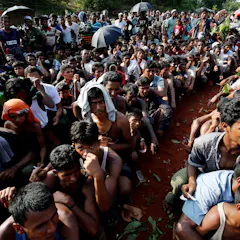
The persecution of the Rohingya goes back to 1948, the year when Myanmar achieved independence from the British.
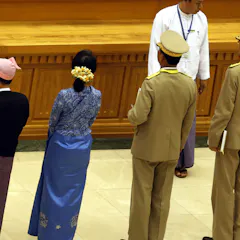
Once a beacon of democratic hope, Myanmar’s ‘civilian’ government is showing its true nature.
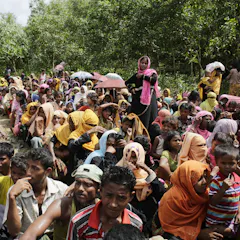
Genocide doesn’t begin with mass murder. It’s a long, insidious process that can be stopped before it’s too late.

Turkey’s humanitarian response to Rohingya’s crisis highlights President Erdoğan ambition to appear as a world champion for Muslim rights.
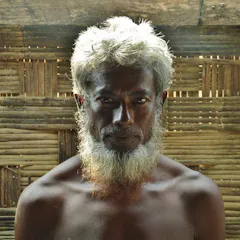
Alongside the present horrors being inflicted against the Rohingya in Myanmar, we must consider the broader political and economic context that continues to marginalise minority groups.
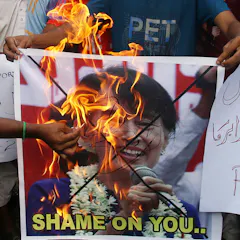
The international community is powerless to stop the Rohingya genocide – mainly because the countries who could have other interests in the region.
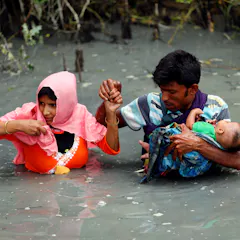
The campaign against Myanmar’s Muslim Rohingya is so extreme and violent with the intent of eliminating them from the country that it meets the criteria for genocide.
Top contributors
-

Associate Professor in International & Community Development, Deakin University
-
Lecturer, Department of International Relations, Universitas Gadjah Mada
-
Senior Lecturer in Politics and International Relations, University of Dundee
-
PhD Candidate, UNSW Law; Assistant professor, International Relations, University of Chittagong
-
Leverhulme Trust Early Career Fellow, Loughborough University
-
Deputy Chief Executive, Institute of Strategic and International Studies
-
Visiting Fellow, Crawford School of Public Policy and Visitor, Regnet School of Regulation and Global Governance, Australian National University
-
Doctoral Student, College of Community and Public Affairs, Binghamton University, State University of New York
-
Lecturer, School of Political Science and International Studies, The University of Queensland
-
PhD Candidate, International Relations, Australian National University
-
Honorary Enterprise Professor in the School of Social and Political Sciences, The University of Melbourne
-
Senior Fellow at the ASEAN Studies Center, Universitas Gadjah Mada
-
Research Associate, International State Crime Initiative, Queen Mary University of London
-
Director of the International PhD Program in Human Rights and Peace Studies, Institute of Human Rights and Peace Studies, Mahidol University
-
Researcher, Research Centre for Politics, Indonesian Institute of Sciences (LIPI)