
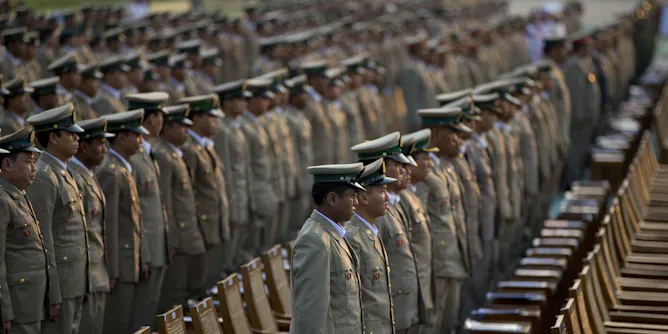
Foreign companies are failing to heed the UN call to stop doing business with Myanmar’s blood-stained military elite.
Articles on Rohingya
Displaying 21 - 40 of 104 articles
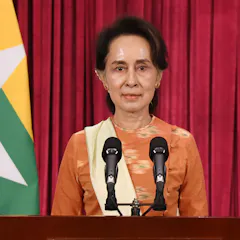
Our project carried out interviews and produced animated films of brave people seeking to bring about real change.
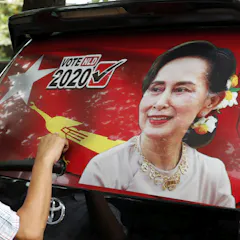
The constitutional change needed to further democratise Myanmar is impossible without the military’s consent, so achieving major political transformation through the election alone seems unlikely.
Australia has maintained military and trade ties with Myanmar. If Myanmar is not fully complying with the ICJ order, this puts Canberra in a sticky position.

As more comes to light about the money-making tactics of social media platforms we need to reevaluate our relationship with them.
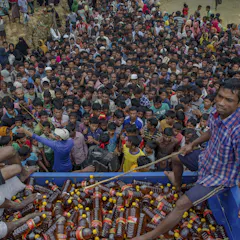
A scholar who spent time in refugee camps argues that Bangladesh’s culture as well as a painful history of a war in which 10 million sought refuge played a role in the country’s opening up of its borders.
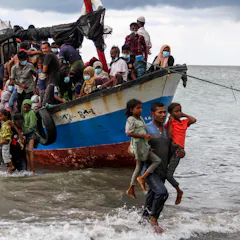
Islamic solidarity, customary law and their experience of conflict and foreign aid can explain the Acehnese greeting people in need with open arms.
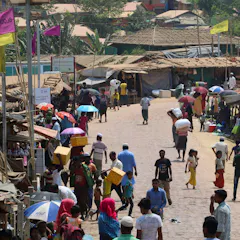
COVID-19 is spreading quickly in Bangladesh. An outbreak in the refugee camps that house some 1 million Rohingya Muslims in cramped, unsanitary quarters would be calamitous.
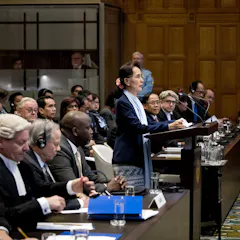
The International Court of Justice has ordered Myanmar to make wholesale reforms at the drop of a hat, wielding a stick of shame rather than a ladder of support.
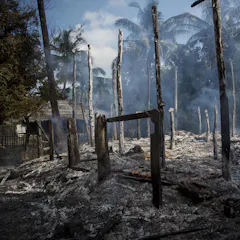
The International Court of Justice ordered Myanmar to protect its Rohingya minority and preserve any evidence relevant to the genocide charges against it. But compliance is not guaranteed.
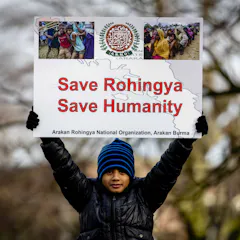
The Rohingya case before the International Court of Justice is politically and legally significant.
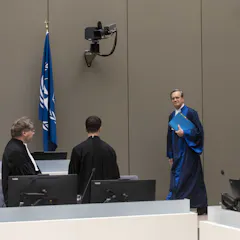
With the ICC facing intense criticism and scrutiny, its member states have met to create a plan to improve the court’s standing and performance.
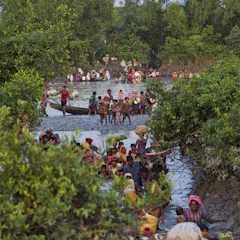
Dozens of Muslim-majority countries are asking the UN’s International Criminal Court to investigate and prosecute a 2017 massacre in Myanmar that killed an estimated 10,000 Rohingya Muslims.
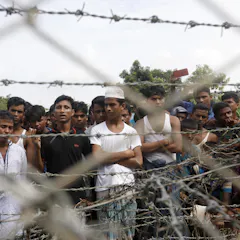
The sheer volume of pregnant women in the refugee camps was an early indicator of the extent sexual violence was used against Rohingya women and girls.
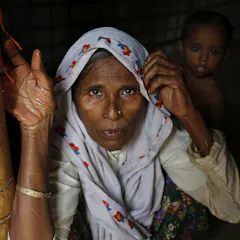
The current repatriation deal signed by Myanmar and Bangladesh fails to guarantee the safety and citizenship of the Rohingya people or address issues of justice for crimes perpetrated against them.
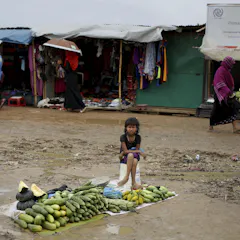
An estimated 500,000 Rohingya children, refugees from Myanmar, are growing up in Bangladesh in overcrowded camps with no access to formal education.
Equipped with rights, knowledge and skills, the global Rohingya diaspora is poised to be influential against the genocidal regime that seeks to erase their people.
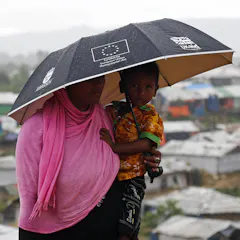
Rohingya refugees in Bangladesh have been stuck in makeshift camps for years. They are now being targeted by criminal gangs, alongside public health and well-being issues.
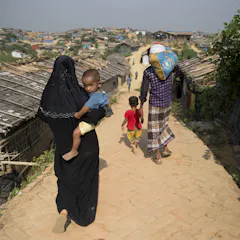
It’s not necessarily because of Islamophobia.
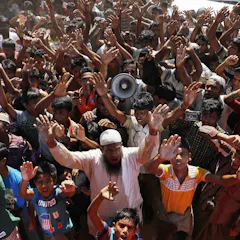
Nearly 15 years after the international community endorsed the Responsibility to Protect (R2P), standards tragically are slipping.
Top contributors
-

Associate Professor in International & Community Development, Deakin University
-
Lecturer, Department of International Relations, Universitas Gadjah Mada
-
Senior Lecturer in Politics and International Relations, University of Dundee
-
PhD Candidate, UNSW Law; Assistant professor, International Relations, University of Chittagong
-
Leverhulme Trust Early Career Fellow, Loughborough University
-
Deputy Chief Executive, Institute of Strategic and International Studies
-
Visiting Fellow, Crawford School of Public Policy and Visitor, Regnet School of Regulation and Global Governance, Australian National University
-
Doctoral Student, College of Community and Public Affairs, Binghamton University, State University of New York
-
Lecturer, School of Political Science and International Studies, The University of Queensland
-
PhD Candidate, International Relations, Australian National University
-
Honorary Enterprise Professor in the School of Social and Political Sciences, The University of Melbourne
-
Senior Fellow at the ASEAN Studies Center, Universitas Gadjah Mada
-
Research Associate, International State Crime Initiative, Queen Mary University of London
-
Director of the International PhD Program in Human Rights and Peace Studies, Institute of Human Rights and Peace Studies, Mahidol University
-
Researcher, Research Centre for Politics, Indonesian Institute of Sciences (LIPI)