
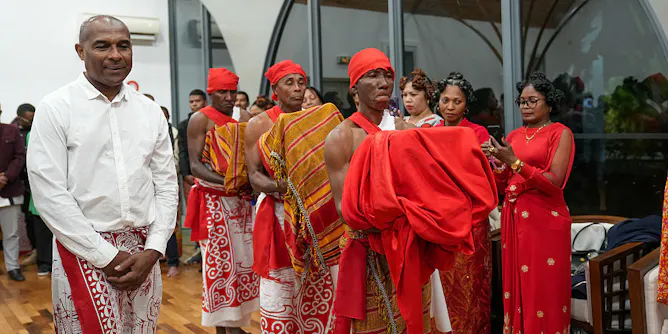
Royal relics in Madagascar confer legitimacy on rulers.
Articles on Ritual
Displaying 1 - 20 of 42 articles

People around the world are gathering in wilderness settings with the intention to initiate contact with UFOs using various techniques.

Two revolutions, two republics and the enduring power of national myths and civic festivities come to the fore in July as France and the US both celebrate national holidays.

Trance states may influence the movements depicted in rock art.

Some of the dances depicted in rock art are just about entertainment, not ritual.
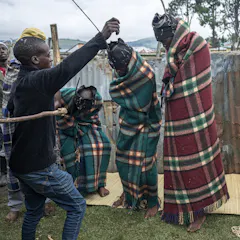
In South Africa’s Makanaskop, the kraal is a sacred space for rituals but small plots with outside toilets undermine this cultural use.
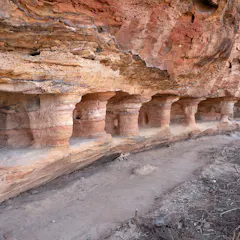
Archaeologists think the rock-cut architecture at Teniky in Madagascar may have been made by a community with Zoroastrian origins.
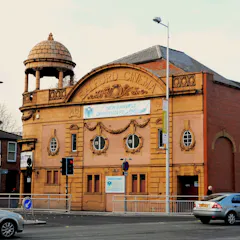
Cinema buildings provide exactly what many faith groups need: space for congregants to take part in communal ritual and worship.
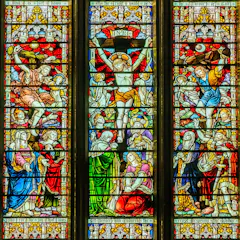
The ancient tenebrae tradition brings churchgoers face to face with the darkest moments of the Christian story.
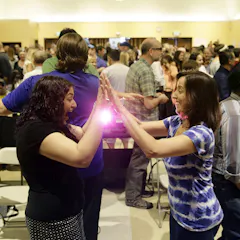
A sociologist of religion explains how atheist churches are helping people find meaning and community – serving many of the same purposes as religious churches.
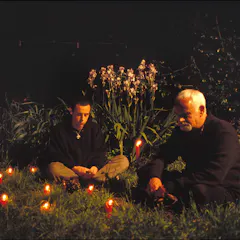
Practitioners of Pagan religions no longer need to go into a forest to find an object for their altars. Commercialization means that sacred objects are available online.
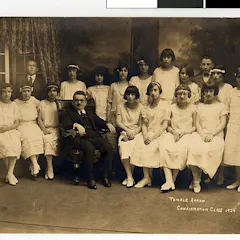
Shavuot, which was originally an ancient pilgrimage festival, has gone through many changes over the years – as has Judaism itself.

From Bali to China, Italy to India, the way people grieve varies greatly across the world.

Rituals have been around for hundreds of thousands of years – but are they still useful today?

Water is sacred in many religious traditions, holding power that can also be dangerous.

England and Wales remain outliers in Britain when it comes to modernising weddings legislation. Couples are looking for laws that accommodate more personal ways of finding meaning.
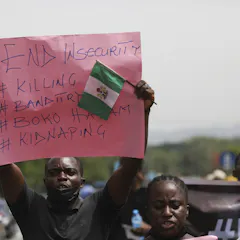
Nigerians are at risk of kidnapping as the cost of committing this crime is far less than its benefits.
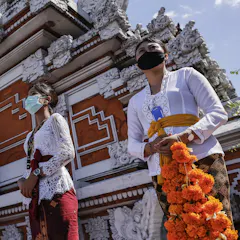
Many Balinese believe COVID-19 cannot be fought with health measures alone, and requires ritual offerings and prayer. But collective ritual places people at more risk.

All that planning, shopping, prepping, serving and cleaning can pay off with better physical and mental health for all members of the family.
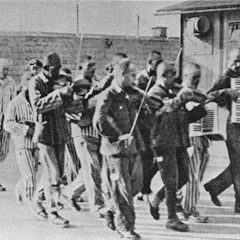
Music is supposed to transcend the mundane and horrific. Yet it has also served as an accompaniment to torture and punishment.
Top contributors
-

Associate Professor of Anthropology and Psychological Sciences, University of Connecticut
-
Associate Clinical Professor of Psychology, Harvard University
-
Postdoctoral fellow, University of Tübingen
-
ICREA Research Professor, Universitat de Barcelona
-
Senior lecturer, Rhodes University
-
Exec. Director, Institute for the Advanced Study of Culture and the Environment; Professor of Anthropology, University of South Florida
-
Lecturer, Rhodes University
-
Postdoctoral research associate, University of York
-
Research Fellow, Centre national de la recherche scientifique (CNRS)
-
Research Fellow, Coventry University
-
Lecturer in Social Anthropology, University of Birmingham; Independent Social Research Foundation
-
Professor of Social Psychology IPU Berlin and Visiting Professor of Social and Political Psychology, Coventry University, Coventry University
-
Director of the Complex Adaptive Systems Research Group, University of Newcastle
-
Dean’s Professor of Religion & Professor of History, USC Dornsife College of Letters, Arts and Sciences
-
Professor of French and Critical Disability Studies, Lancaster University