

AI companies are calling for a coordinated pause to progress – but making it work, and keeping AI safe, won’t be easy.
Articles on Risk management
Displaying 1 - 20 of 57 articles
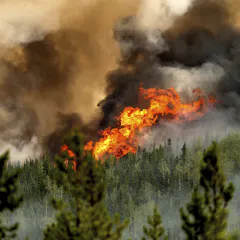
Canadians faces a growing safety crisis yet they remain unprepared. The real danger is complacency.

Because of the federal government shutdown and proposed budget, key federal investigations may stop, including into what happened at a Chevron refinery in California in October 2025.

Claims that sustainability goals are making banks ‘woke’ might be effective populist politics. But undermining their risk management strategies can have unintended consequences.

The Los Angeles fires may be the most costly natural disaster in US history. An expert on safety, risk reduction and complex systems calls for a blue-ribbon commission to analyze their causes.

Our research, spanning 13 countries in the Asia-Pacific region, found that for companies, better carbon management was linked to significantly lower financial risk.
It’s important to produce complex, precise simulations of our future climate. But equally, we need to make sure businesses can actually understand and use them.

Many big companies hate thinking about and preparing for so-called ‘black swan’ events –major catastrophies that are hard to predict. That isn’t a wise approach.

We don’t yet know the full cost and scale of the damage, or how long it will take supply chains to fully recover.
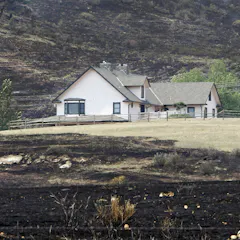
Roofs, windows and siding all affect how vulnerable a home is and how likely it is to survive a wildfire. So does what’s around it in the ‘home ignition zone.’

Our study shows the way bank bosses talk about risk can negatively affect financial stability.
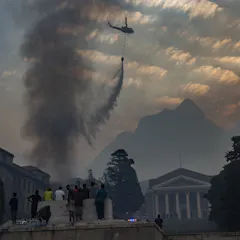
Autumn extreme fire weather around Cape Town in South Africa has become 90% more likely in a warmer world.

Market volatility and rising development costs have led to an increase in the risk premium in recent years.

What’s really causing food prices to rise?
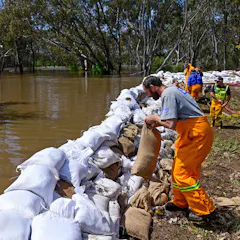
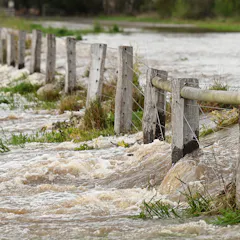
After storms of rain come storms of blame. But the blame game is circular. To stop disasters, we must prepare for disasters.

Researchers have a number of responsibilities when embarking on their work - not least of all to the participants.

People assume event organizers have their best interests at heart, but just like many businesses, organizers often operate on a tight budget and sometimes corners get cut creating disastrous results.

A study into the hierarchical relationship between first officers and their captains has shed light on the risk taking that occurs during the critical moment of landing an aircraft.
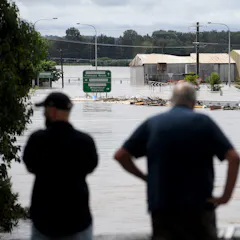
There is a huge amount of legislation talking about ‘shared responsibility’ but it isn’t clear what this means or who needs to do what and when.

The microbiologist who directs the National Emerging Infectious Diseases Laboratories at Boston University explains all the biosafety precautions in place that help him feel safer in the lab than out.
Top contributors
-

Emeritus Professor of Sociology, Australian National University
-
Professor of Accounting, Banking and Finance, University of Canberra
-
Emeritus Professor, Australian National University
-
UNSW
-
Master of Climate Change Program, Australian National University
-
Adjunct Professor, Crawford School of Public Policy, Australian National University
-
Professor of Finance, Queensland University of Technology
-
Professor of Hydrology, School of Geographical Sciences, University of Bristol
-
PhD; Lawrence Berkeley Laboratory (retired) and Research Fellow, University of California, Davis
-
Chair of Cognitive Psychology, University of Bristol
-
Assistant Professor, East Carolina University
-
Associate, Business School, University of Technology Sydney
-
Professor, Accounting and Finance, City St George's, University of London
-
Honorary Fellow, Marine and Atmospheric Research, CSIRO
-
Ingénieur de recherche en prévision hydrologique, Inrae