
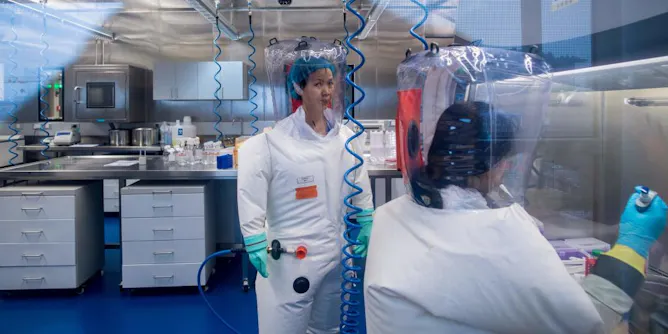
The lab accident theory of the origins of Covid-19 has gained traction in recent months. We need a proper investigation to find out what really happened.
Articles on Risk management
Displaying 21 - 40 of 57 articles

The event, worth R672 million to the country’s Western Cape economy, was one of the first to be impacted by COVID-19 on the global marathon stage.

People are turning to quarantine bubbles as a way to see friends and family while limiting the risk from the coronavirus. Research shows that this can work, but it’s not easy to be in a quaranteam.
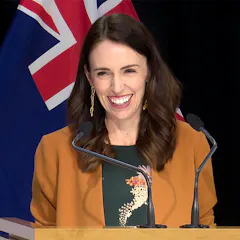
New Zealand has “eliminated” COVID-19 “for now”, Prime Minister Jacinda Ardern has declared. Two key epidemiologists who worked on NZ’s elimination strategy explain the news, and the challenges ahead.
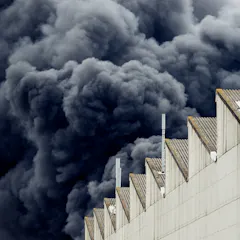
Ensuring a building will be safe against fire requires careful consideration from not only fire engineers, but also from builders, architects and building owners.

Better public awareness about Australian jellyfish is vital, especially as many Aussies head to the beach for likely the last time this Easter.

Council’s approach to risk management has added insult to injury for the residents and businesses adjacent to the Mackintosh.

Three Mile Island, Chernobyl and Fukushima demonstrated the difficulty of managing a disaster at a nuclear power plant. What is the situation in France?

Company directors have been put on notice about their duty to consider and disclose climate change risks. And to do that properly they need to call on the expertise of accountants.
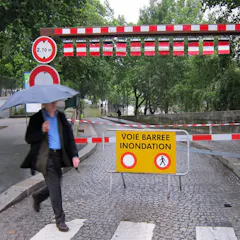
Although it is unlikely to find a scenario similar to that of the major flood of 1910, France’s national flood forecasting network is closely monitoring the level of the Seine.

New research by scholars, conservationists and the insurance industry shows that coastal wetlands provide hundreds of millions of dollars’ worth of protection from flooding, boosting the case for protecting them.
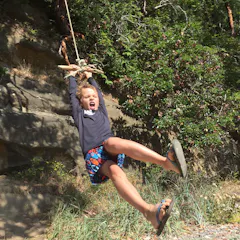
Did you know there has never been a safer time to be a child in Canada? Research shows that kids need freedom outdoors to explore exhilaration and fear, and discover their own limits.
Risk has to do with uncertainty; people struggle to conceptualise and manage that which they’re unsure about. This is true in the higher education sector, too.

New research shows increasing female staff numbers is, on its own, unlikely to change the way risk is managed in banks.
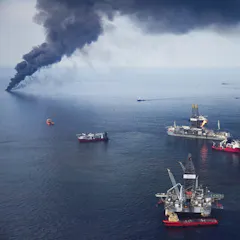
BP’s plans for the Bight say it would take 10 days to begin dispersing an oil spill at source, and 35 days for well-capping equipment to reach the site – making it likely that oil would hit the coast.
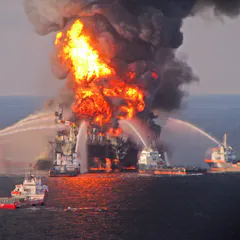
As BP plans to drill for oil in the Great Australian Bight, questions can be asked about whether it has made the right changes to its working practices to avoid a repeat of the 2010 Gulf of Mexico disaster.

Weighing up the costs and benefits in a dangerous world.

The increasing use of social media in the financial sector has made it difficult for companies to exercise control, while at the same time allow employees freedom of expression in the workplace.

A much-delayed report into the collapse of HBOS paints a picture of risk-taking by the bank’s board.

Software freebies can help businesses grow, innovate and attract staff – assuming they’ve worked out how to protect against the dangers.
Top contributors
-

Emeritus Professor of Sociology, Australian National University
-
Professor of Accounting, Banking and Finance, University of Canberra
-
Emeritus Professor, Australian National University
-
UNSW
-
Master of Climate Change Program, Australian National University
-
Adjunct Professor, Crawford School of Public Policy, Australian National University
-
Professor of Finance, Queensland University of Technology
-
Professor of Hydrology, School of Geographical Sciences, University of Bristol
-
PhD; Lawrence Berkeley Laboratory (retired) and Research Fellow, University of California, Davis
-
Chair of Cognitive Psychology, University of Bristol
-
Assistant Professor, East Carolina University
-
Associate, Business School, University of Technology Sydney
-
Professor, Accounting and Finance, City St George's, University of London
-
Honorary Fellow, Marine and Atmospheric Research, CSIRO
-
Ingénieur de recherche en prévision hydrologique, Inrae