

Some people argue the absence of evidence is not evidence of absence, you just need to keep looking. But there are occasions where finding no evidence is all you can do.
Articles on Research methods
Displaying 21 - 32 of 32 articles

What contributes most to being at high risk of diabetes – diet, genes or something else? Big research questions need robust research approaches, so let’s break it down.

Important research questions can almost always be answered better with a combination of methods – where both quantitive and qualitative data play a role.
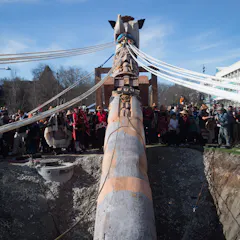
Calls to “indigenize” universities must start with listening - to Indigenous scholars and nations. And real reparation will be painful for settlers, for it will be unsettling.

The process of decolonising research methodology is an ethical, ontological and political exercise rather than simply one of approach and ways of producing knowledge.

“What have we failed to know and at what cost?” An education professor draws upon Indigenous literature to support a personal journey into classroom decolonization.

One First Nations community stands out in northern Ontario, for its low rates of suicide and other mental health challenges. The residents say it’s all about their connection to the land.

A team of archaeologists strived to improve the reproducibility of their results, influencing their choices in the field, in the lab and during data analysis.

Partly in response to the so-called ‘reproducibility crisis’ in science, researchers are embracing a set of practices that aim to make the whole endeavor more transparent, more reliable – and better.

Researchers need to be able to draw conclusions based on previously published studies in their field. A new aggregation method synthesizes prior findings and may help reveal more of the big picture.
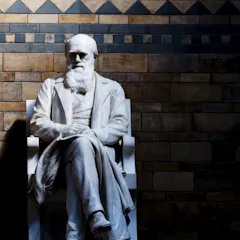
In science, the word ‘theory’ has a very specific meaning that’s easy for nonscientists to misunderstand or misconstrue. Here’s what a theory must withstand to be accepted by the scientific community.

Embracing more rigorous scientific methods would mean getting science right more often than we currently do. But the way we value and reward scientists makes this a challenge.
Top contributors
-

Program Head of Psychology, University of Guelph-Humber
-
Professor, University of Wollongong
-
Professor and Chair of Epistemologies of the Global South, University of Bareuth, Germany, University of South Africa
-
Georgia Institute of Technology
-
Assistant Professor of Psychology, Grand Valley State University
-
Professor of Physics and Astronomy, Bucknell University
-
NHMRC ECR Fellow, Adelaide University
-
Distinguished Professor, Department of Curriculum, Teaching and Learning, Ontario Institute for Studies in Education, University of Toronto
-
Professor of Archaeology, University of Washington
-
Associate Professor in Public Health, Flinders University
-
Assistant Professor of Indigenous Studies, University of Lethbridge
-
Associate Professor, Systems Science and Policy, Harvard University
-
Visiting associate professor, Massachusetts Institute of Technology (MIT)
-
Postdoctoral Research Fellow in Psychiatry and Behavioral Sciences, Medical University of South Carolina
-
Senior Clinical Lecturer & Consultant Psychiatrist, King's College London