

Helping distressed wildlife without seeking advice may sometimes do more harm than good – as two experts explain.
Articles on Rehabilitation
Displaying 1 - 20 of 84 articles

Since 2019, a number of workshops have been held in the Darwin Correctional Precinct, as part of an ongoing prison education project.

Long COVID shows why patients need assessment, respect and careful support that includes the brain-body connection.
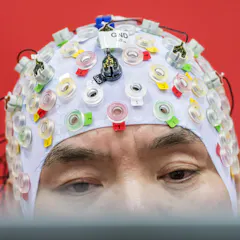
Paralysed people are already using brain-computer interfaces to turn their thoughts into text. But there are risks to this technology.

A loud ‘pop’ and immediate pain may mean you’ve torn your ACL. Two exercise experts explain why it’s more than a physical injury.

Every state and territory must have these programs, but as was recently revealed in New South Wales, they’re often ineffective. There are better ways.

Helping patients navigate disability outside the clinic is critical to rehabilitation for physical conditions. People with psychiatric conditions can benefit from the same philosophy.

Rehabilitation from stroke has traditionally focused on improving the function of the most severely affected arm. But training the other arm might actually lead to more gains.

A standard definition of recidivism would make it possible to identify what works to reduce reoffending.

Immigrants face a double challenge when they are injured at work — healing and making their voices heard in a system that struggles to recognize their experiences.

Nearly half of New Zealand’s prison population is on remand. But these units are not suitable for successful rehabilitation, and most people are not eligible anyway.
Anti-money laundering rules make it very difficult for ex-prisoners to open a bank account – meaning it’s harder to get paid or receive a benefit.

The brains of young people are developing until about age 25, limiting their ability to make rational decisions and control impulses. Youth justice policies that ignore this risk failure.

While still a small minority of sexual offenders, abuse perpetrated by women in Australia has increased by more than 200% since 2008. The system isn’t set up to deal with it.

Community notifications are intended to be helpful, however, they can also make reintegrating back into the community challenging for released individuals.
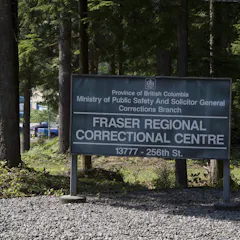
British Columbia’s proposed ban on name changes could impact people’s Charter rights and undermine the rehabilitation and reintegration of those convicted of crimes.

A major new report identifies how a ‘trauma-informed’ justice system would acknowledge and act on the deprivation and mental health problems experienced by so many offenders.

Understaffing and budget cuts mean prisoners often struggle to complete rehab programmes, even when they want to. ACT’s Parole Amendment Bill risks having the opposite of its intended effect.

Education and advice, as well as exercise, can play a role in the management of shoulder pain.

Inmates who are mothers tend to be accused of being bad parents.
Top contributors
-

Adjunct Professor at the National Drug Research Institute (Melbourne based), Curtin University
-
Lecturer in Criminology and Social Policy, Loughborough University
-
Research fellow, North-West University
-
Professor of Criminology, Australian National University
-
Professor, Mental Health and Addiction, Rural Health Research Institute, Charles Sturt University
-
PhD Candidate, Criminal Justice, University of Canterbury
-
Research Fellow in Brain Plasticity and Pain, Neuroscience Research Australia
-
Dean, School of Law, Deakin University
-
Senior lecturer, The Open University
-
Professor of Cognitive Science, Western Sydney University
-
Research Assistant, Institute of Criminology, University of Cambridge
-
Adjunct assistant professor and Statewide Medical Director VPRS, Murdoch Children's Research Institute
-
Senior Research Fellow, NHMRC Career Development Fellow, The University of Melbourne
-
Associate Professor of Population Health, New York University
-
Senior Lecturer in Social Work, University of Salford