
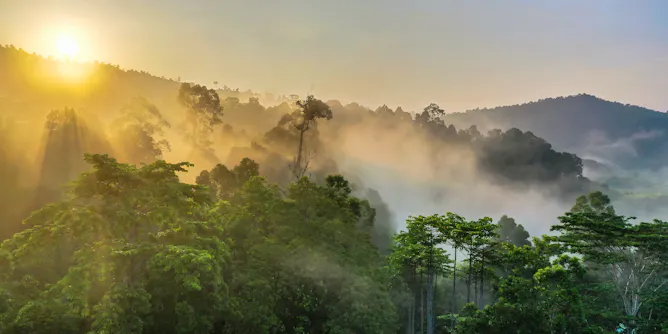
Planting trees can sometimes be a carbon-offset box-ticking exercise, but reforestation is a long-term commitment that supports communities, promotes biodiversity and tackles the climate emergency.
Articles on Reforestation
Displaying 41 - 58 of 58 articles

Large-scale tree-planting projects are politically popular and media-friendly, but without effective planning and long-term management, they can do more harm than good.
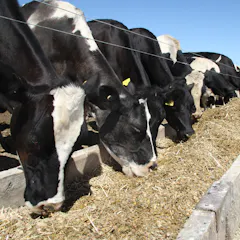
No-one says reducing emissions from the agriculture sector will be easy. But it must be done, or farmers will suffer the most.
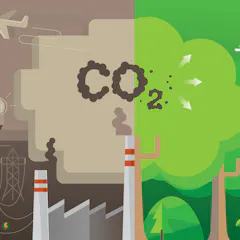
Zero emission? Carbon neutral? Carbon negative? What does it mean to achieve ‘net-zero’ emissions?
Energy Minister Angus Taylor is this week expected to release the government’s first Low Emissions Technology Statement. It’s likely to include ways to remove CO₂ from the air – but do they work?
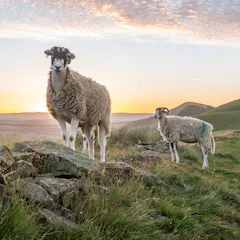
New research finds forest regeneration on sheep pasture is an economically viable way to fight climate change.

The age of a forest can influence how effectively it offsets our emissions.
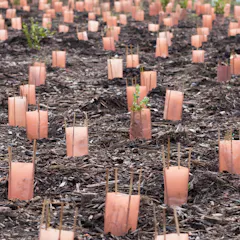
If agricultural land was used to grow crops, it would limit methane emissions from livestock, but not store a substantial amount of carbon. Growing trees is what makes the difference.
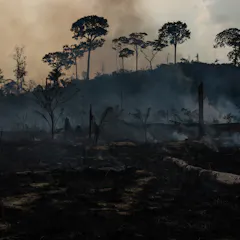
A new study finds 70% of Amazonian dung beetles were killed by the severe fire and droughts of 2015 to 2016. By spreading seeds and poop, dung beetles fertilize forests and aid regrowth of vegetation.
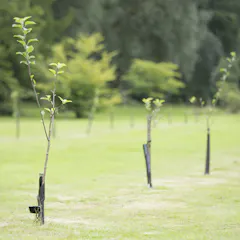
The UK’s official climate advisor recommends up to 50,000 hectares of new woodland each year by 2050.

Without care, reforestation projects can damage ecosystems and be useless as carbon stores. Here’s how to go about it the right way.
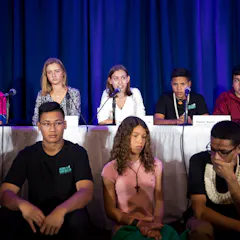
From 3D printing using plastic waste to growing cherry trees in the Himalayas, young people are not sitting idle while the world burns.
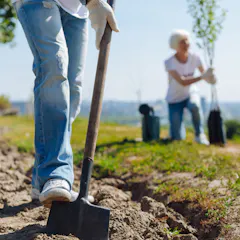
‘Biodiversity offsetting’ is a globally-significant conservation practice, but new research reveals offsets have mixed results.
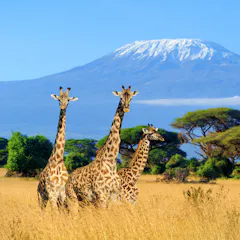
Ecological literacy is needed to guide global tree planting initiatives to avoid damaging some ecosystems.
At best, planting trees won’t be enough on its own to slow climate change. At worst, it’s a dangerous distraction.
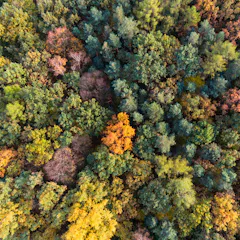
Could our best shot at stopping climate catastrophe be restoring forests on a massive scale?
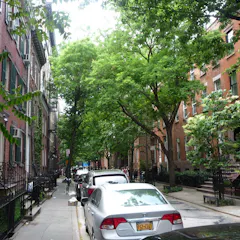
Trees clean urban air, store carbon, slow floodwaters and can be used to design safer streets. Scholars are starting to calculate what these services are worth – a fitting topic for Arbor Day.
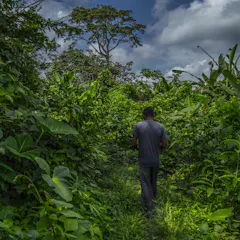
Forest communities have seen little or no change in improving livelihoods and stopping deforestation.
Top contributors
-

Chief Research Scientist, CSIRO Environment; Executive Director, Global Carbon Project, CSIRO
-
Senior Research Fellow, School of Geography, Earth and Atmospheric Sciences, The University of Melbourne
-
Senior Researcher, Center for International Climate and Environment Research - Oslo
-
Royal Society Research Professor of Climate Change Science, University of East Anglia
-
Professor of Physical Geography and Land Use Systems, Department of Geography, Ludwig Maximilian University of Munich
-
PhD candidate at the Centre of Ecology and Conservation, University of Exeter
-
Professor of Earth System Science, UCL
-
Chair, Mathematical Modelling of Climate, University of Exeter
-
Senior Researcher, Center for International Climate and Environment Research - Oslo
-
Helmholtz Young Investigator group leader and deputy head, Marine Biogeosciences section at the Alfred Wegener Institute, Universität Bremen
-
Agente de transfert de connaissances pour le Centre de recherche sur la boréalie (CREB), Université du Québec à Chicoutimi (UQAC)
-
Professor of Forest Restoration, Universidade de São Paulo (USP)
-
Research Associate in Climate Change Mitigation, University of Sheffield
-
Professor of Plant Biology, University of Sheffield
-
Lecturer in Atmospheric Radiation, Composition and Climate, University of Reading