

Understanding the technological shift from a literary to a post-literary society is crucial for rethinking AI’s place in learning environments.
Articles on Reading skills
Displaying all articles

Reading is arguably the most difficult task one must learn. To understand why it is difficult, one must understand the physiology of reading.

Low levels of literacy cost the US more than $2 trillion every year.

Any activity that you and your child enjoy can be educational, sometimes with just small tweaks.

Girls don’t just outperform boys when it comes to reading skills. They also say they like reading more than their male counterparts.

It’s counterproductive to push your child to read a whole chapter book independently if they are not ready. You might turn them off reading altogether. Here’s what to do instead.

Developmental language disorder affects more than seven per cent of children, yet is not well known. If your child struggles in school, social interactions or reading, the underlying issue may be DLD.

Turning on the subtitles can have a range of benefits for children’s reading and language learning.

Playful activities that involve choice, active engagement and moments of delight are what children need this summer during the pandemic.

The fact that teachers in Uganda’s rural schools weren’t trained in the local language means they can’t teach children in their mother tongue and this leads to poor literacy acquisition.
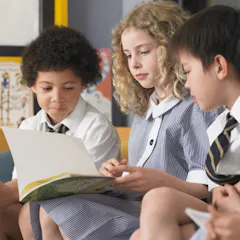
Closing the reading achievement gap continues to be a pressing global challenge.

For learners in the early stages of reading, the best way to counteract the loss of literacy skills over the summer is not by forcing study but by boosting play that develops fine motor skills.
Top contributors
-

Professor, Canada Research Chair in Determinants of Child Development, Owerko Centre at the Alberta Children’s Hospital Research Institute, University of Calgary
-
Associate Professor in Language in Education, University of Wollongong
-
Professor of Psychology, Western University
-
Distinguished Professor, Faculty of Education, Brock University
-
Emeritus Professor, Faculty of Health and Applied Sciences, University of the West of England
-
Adjunct lecturer, Linguistics, University of Adelaide, Adelaide University
-
Professor, Werklund School of Education, University of Calgary
-
Senior Lecturer, School of Education, University of New England
-
Professor of Reading and Literacy, The Ohio State University
-
Senior Lecturer in English, Literacy and Language Education, University of New England
-
Lecturer in Interpreting (with Spanish), University of East Anglia
-
Assistant Professor, Department of Psychology, Université de Montréal
-
Postdoctoral Research Fellow, Department of Psychology, University of Calgary
-
Lecturer, Department of African Languages, Makerere University
-
Manager, Community Partnered Research and Engagement, University of Calgary